
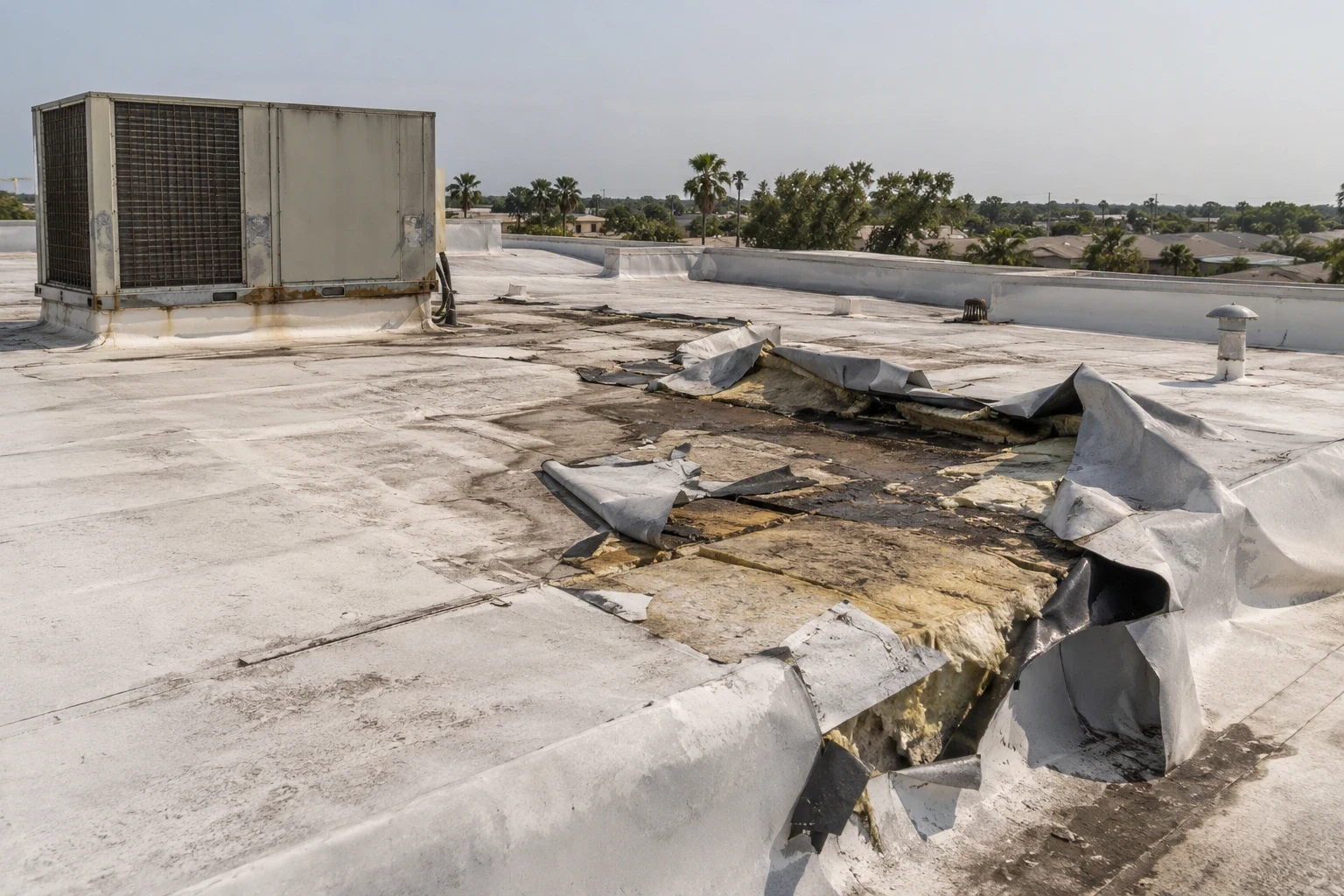
A puncture can be smaller than the water path it creates. A screw, dropped tool, sharp debris, or repeated foot traffic may cut or abrade a membrane. We record the opening, nearby access route, roof system, and interior report before choosing a patch. A field photograph includes a scale where useful and a wider view that identifies the roof zone. The record distinguishes a confirmed hole from scuffing or surface wear.
Commercial sites in Palm Bay vary from modular flex space at Palm Bay Flex Business Park to retail near Bayside Lakes and industrial listings at Port Malabar. Each roof has its own access controls and maintenance traffic. We do not assume that a mark came from a recent storm. A separate wind damage inspection records event-related findings, while a hurricane damage review addresses cyclone reports. Palm Bay has documented impacts from Hurricanes Irma, Ian, and Nicole, along with an F-1 tornado in 2005. Those events are regional history. The inspection determines what is physically open at this property and whether moisture reached concealed layers.
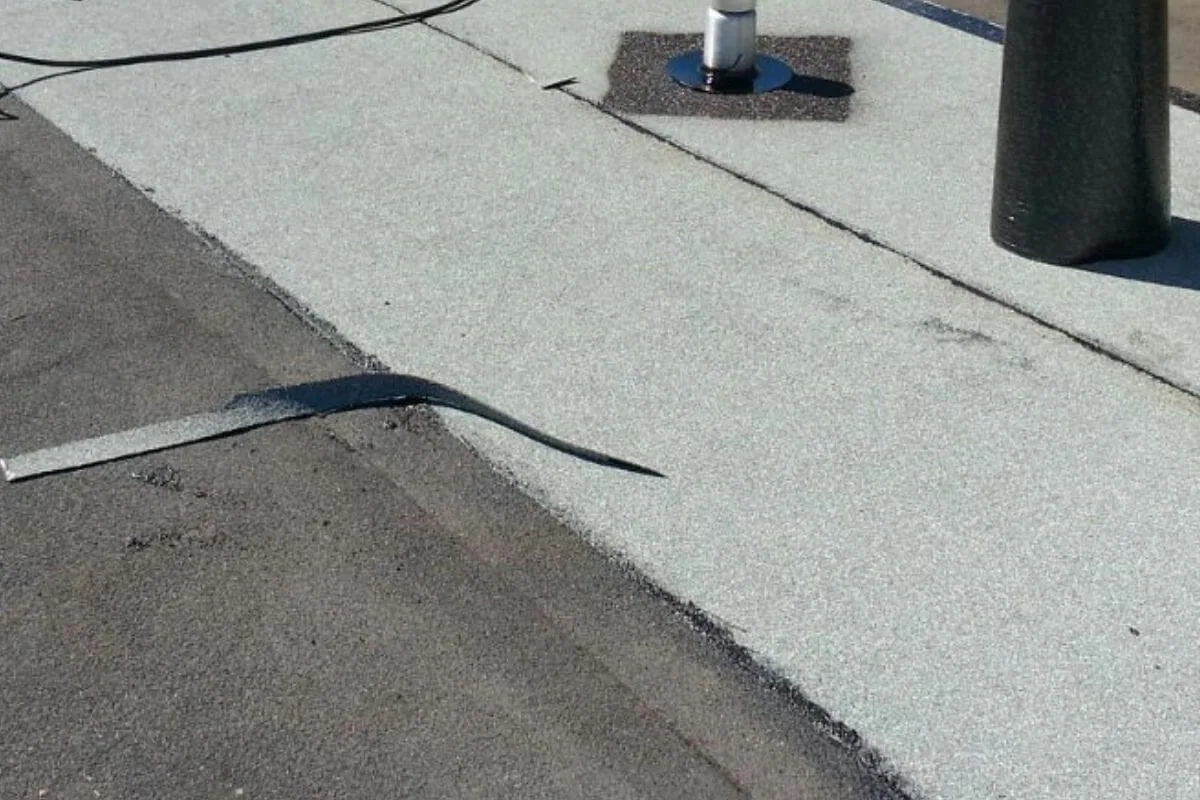
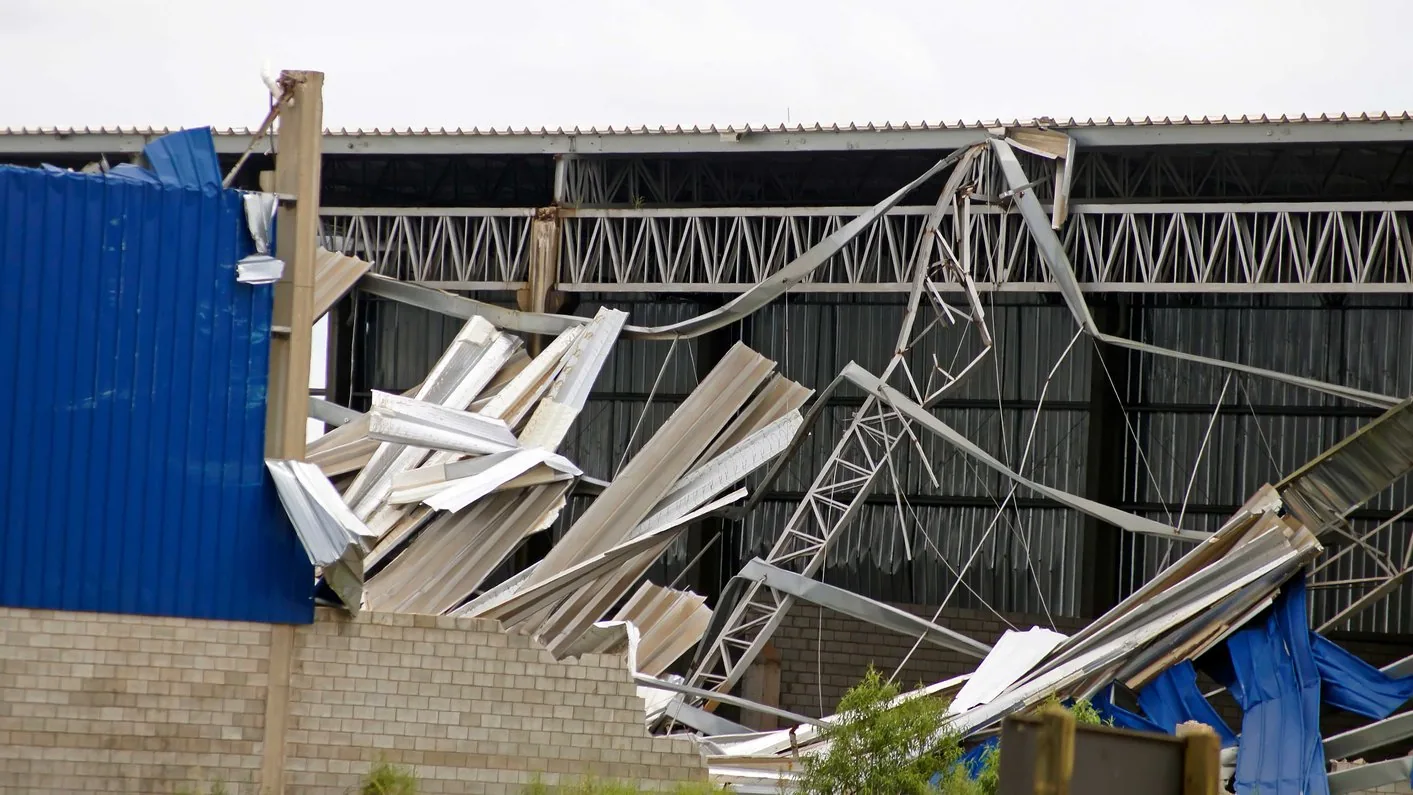
We first identify whether the membrane is cut, punctured, worn through, or separated at an attachment. Nearby seams, curbs, pipe supports, service paths, and abandoned fasteners are checked for related damage. A small opening can admit water that moves sideways before it reaches a ceiling. We compare the roof zone with reported interior staining, then note whether the path is supported, possible, or unresolved. Any soft substrate or trapped moisture is recorded separately from the surface puncture.
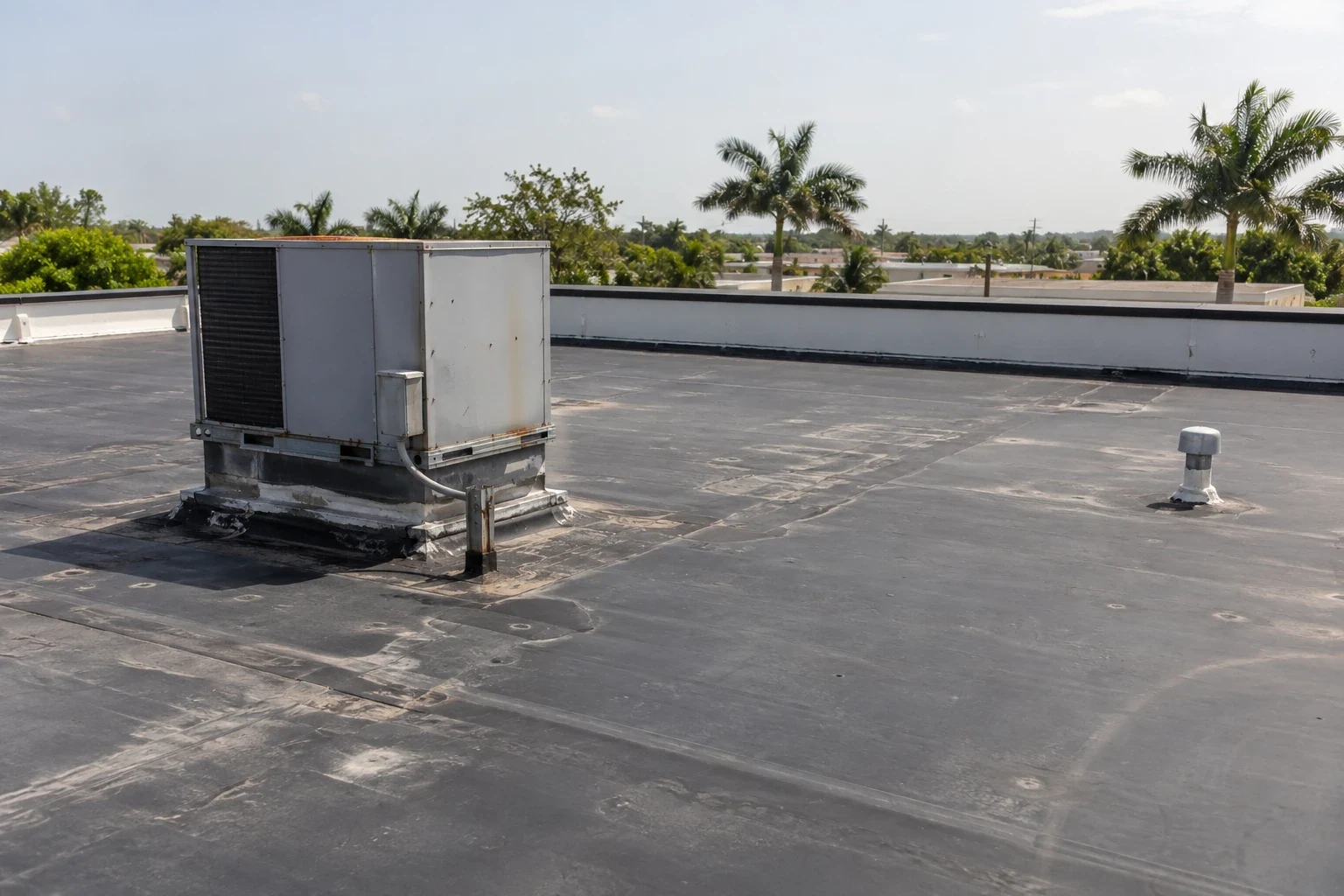
Traffic patterns can help identify repeat exposure. We inspect designated walk pads, roof hatches, ladder exits, and routes to HVAC equipment. At a building with frequent service visits, the same area may need protection after repair. An equipment curb and support check can identify nearby penetrations that were crossed during access. The work order names the observation and does not assign fault without evidence.
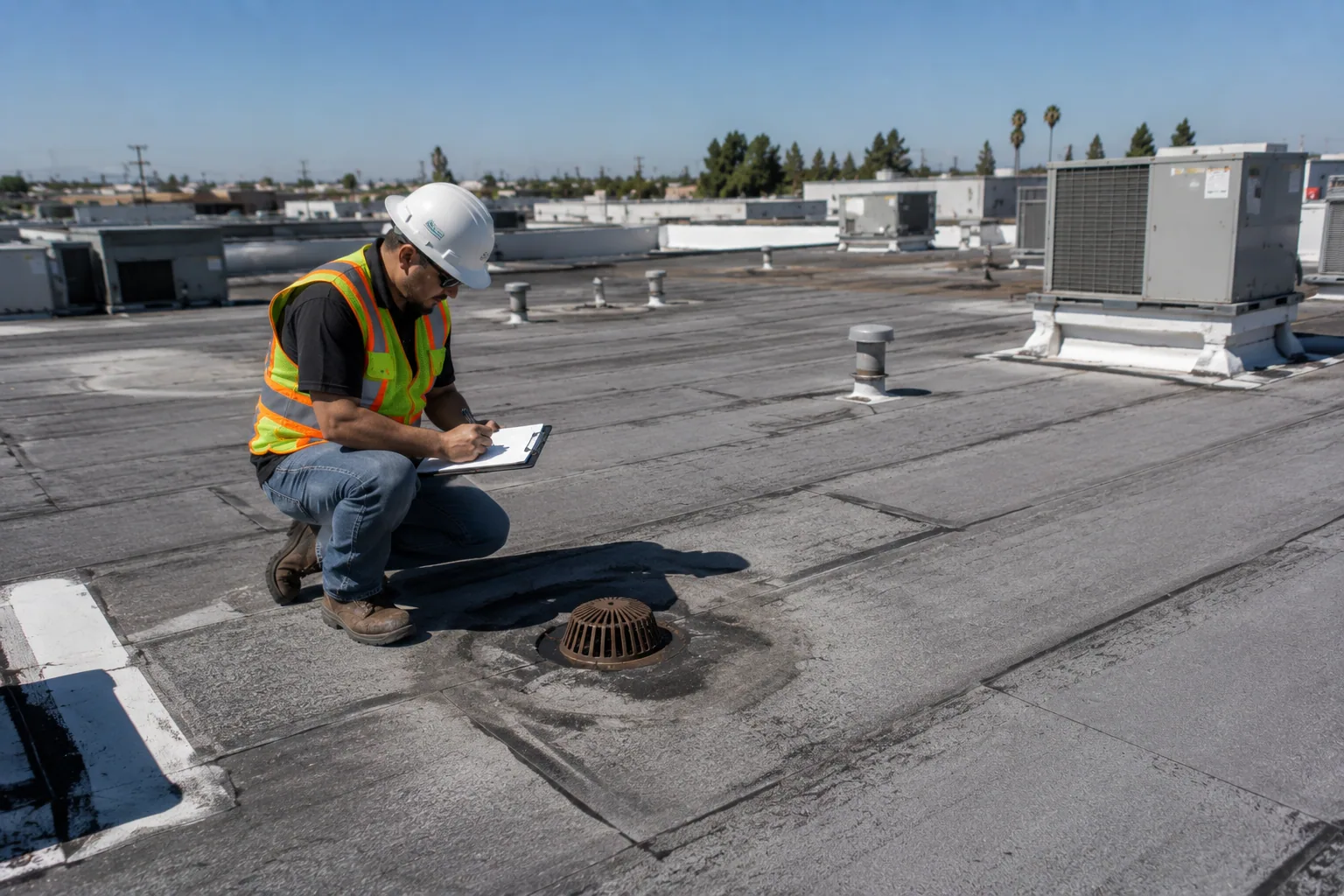
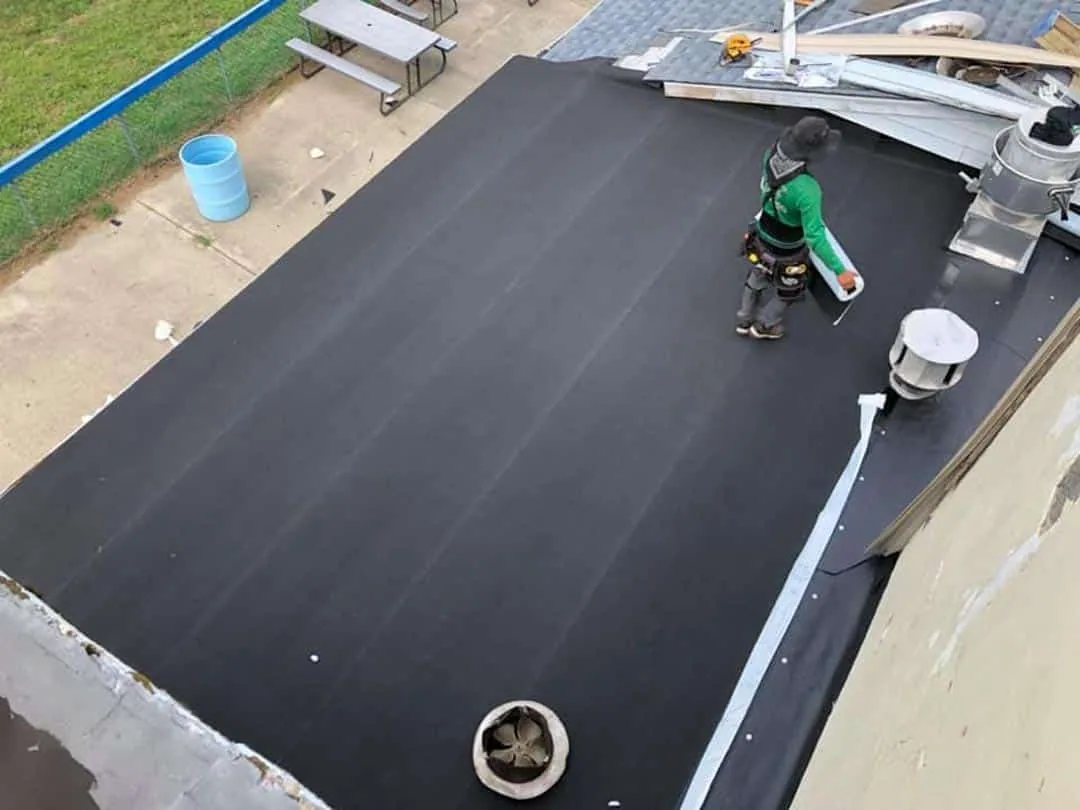
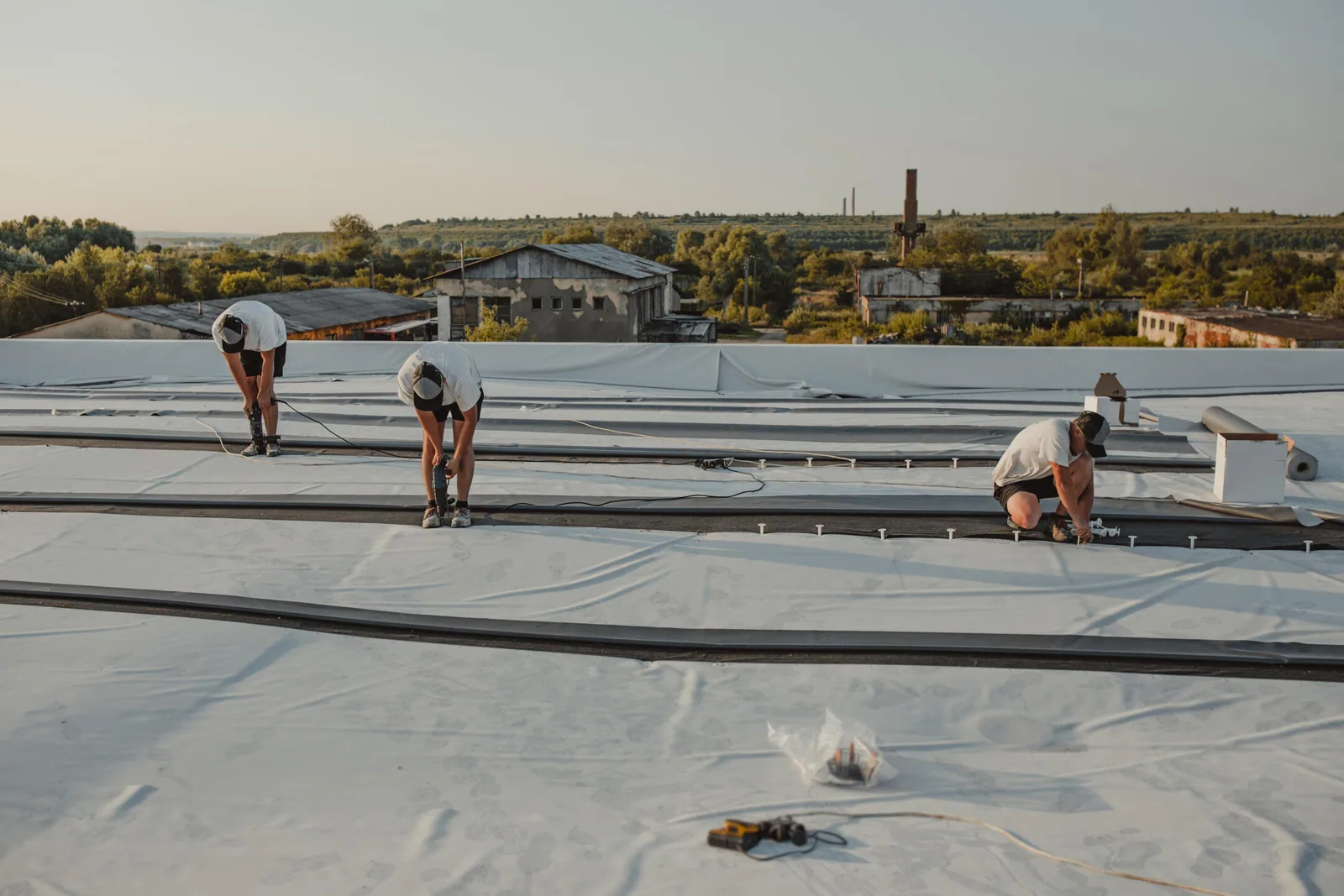
Repair materials depend on the roof system and membrane condition. Thermoplastic patches require clean material and compatible welding. EPDM uses its own primer, tape, and flashing details. Modified bitumen, metal, and coated surfaces require different preparation. We remove loose or contaminated material only as needed to expose a sound tie-in. A patch placed over dirt, moisture, or a moving substrate may not stay attached.
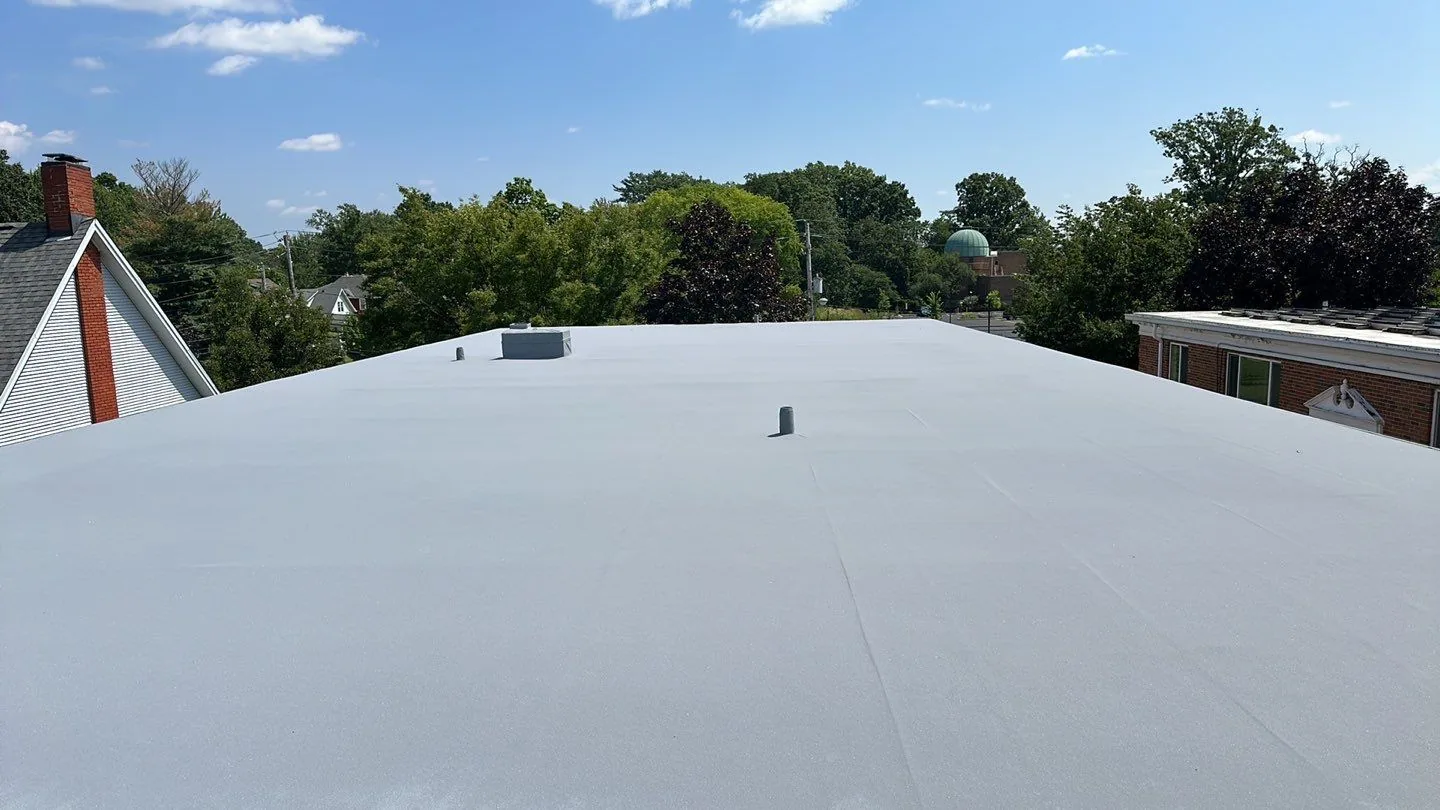
When the roof type is unclear, we confirm it before specifying the repair. The scope identifies surface preparation, patch limits, and any need to replace wet insulation beneath the opening. For a TPO roof puncture, the tie-in needs compatible sheet and heat-weld conditions. A separate EPDM repair method applies when that membrane is present. The report avoids carrying one material assumption across different roof zones.
If water is entering, temporary protection covers the active exposure while a permanent repair is arranged. We state what the measure covers, how it is secured, and its limits. It is not described as a finished repair. Nearby Melbourne climate normals show warm-season heat and substantial rainfall. Actual roof temperature, surface dryness, and the forecast on the work date determine whether a permanent patch can be installed and tested.
For an active opening, confirm safe access, document any temporary protection, and set the return step with the property contact. On an occupied retail site such as Palm Bay Station, roof access and the space below may require a set time window. At the Palm Bay VA Clinic on Babcock Street, the owner may need to coordinate access with weekday operations. We document contact and access restrictions before mobilizing. An emergency roof visit can establish the initial protection and inspection record.
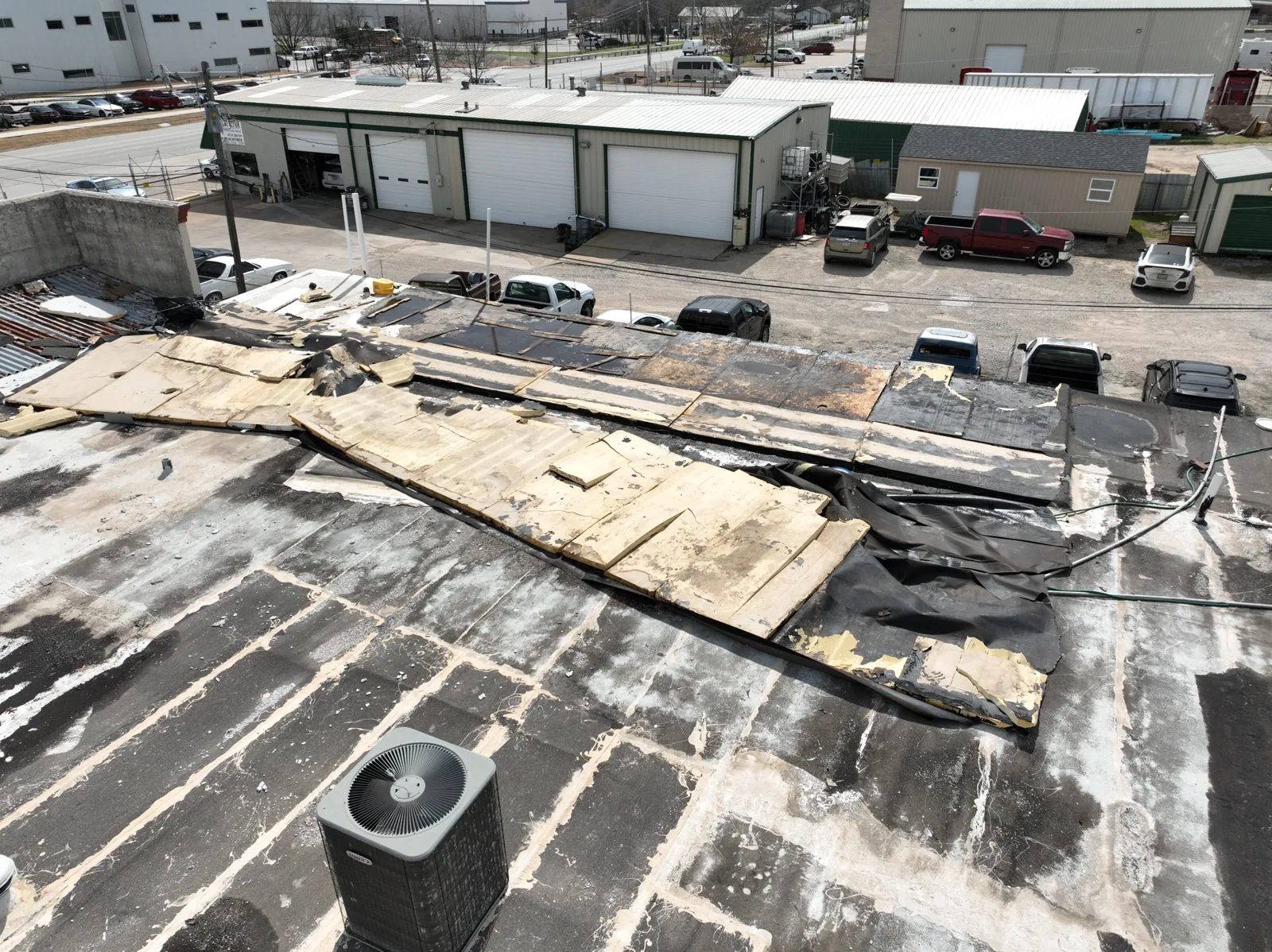
The visible puncture may be one layer of a larger condition. If testing shows wet insulation, delamination, or a damaged deck, we document the opening and ask for scope direction before extending removal. The report states the test method, exposed materials, and whether the additional area is confirmed. A limited surface patch can proceed when the surrounding membrane is stable and dry. Broader replacement is considered when the assembly cannot provide a sound repair boundary.
Cost and timing reflect access, roof height, membrane type, number of openings, concealed moisture, and building operations. Work after heavy rain may wait for dry conditions. A defined repair scope lists included punctures and any allowance for concealed conditions. Separate roof zones are not folded into one line when their materials or causes differ. This lets the owner review what is known before work begins.
Closeout photographs show the patch and surrounding surface, with the repair boundary labeled by roof zone. The record names the material installed, the event or discovery date, any temporary measure removed, and follow-up needs. If foot traffic likely contributed, we can recommend a durable walkway or marked route where appropriate. The finding should describe the observed condition, not infer who caused it. A maintenance visit can revisit known access routes and track recurring damage.
At a multi-tenant flex site or shopping center, access may cross several roof areas. Palm Bay Flex Business Park lists modular units beside the L3Harris campus, while Palm Bay Station is a retail project on Bayside Lakes Boulevard. Those property facts do not specify the roof assembly. We use them only to plan coordination and access. The closeout records the actual roof surface, repair limit, conditions left open, and the date of any follow-up inspection.
Learn more →
Learn more →
Learn more →
Learn more →
Learn more →
Learn more →
Learn more →
Learn more →