
A storm report, ceiling stain, or loose roof detail starts an inspection. It does not establish how far damage extends. Palm Bay experienced an F-1 tornado in 2005, and Hurricane Irma brought heavy rain to named reporting points in the city. Each observation belongs to its date and location. We record the reported event separately from what the crew observes at the property, then identify any temporary protection and follow-up work.
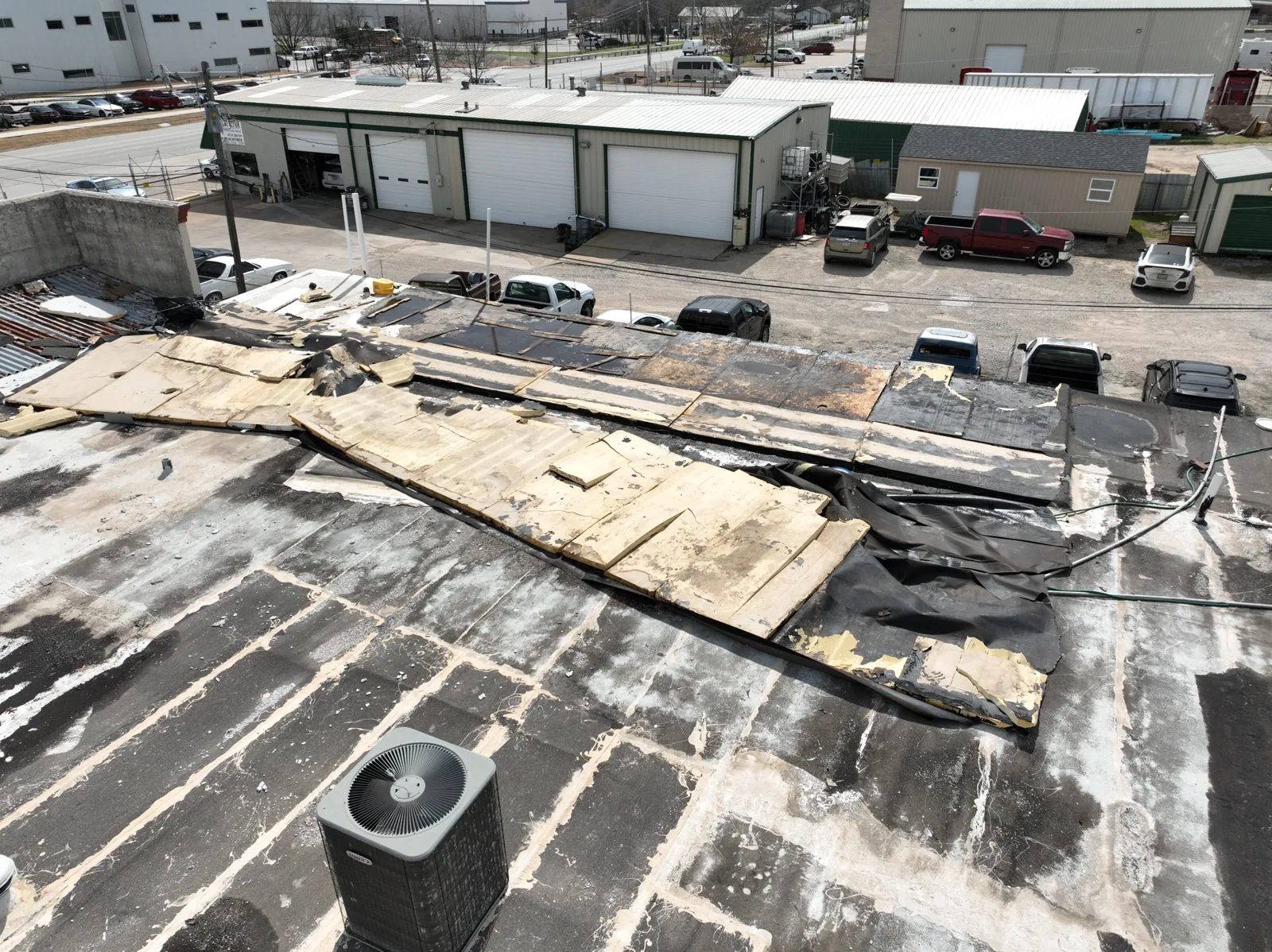
Document wind-related roof conditions in Palm Bay, separate reported damage from confirmed openings, and define temporary protection and permanent repair.
Learn More →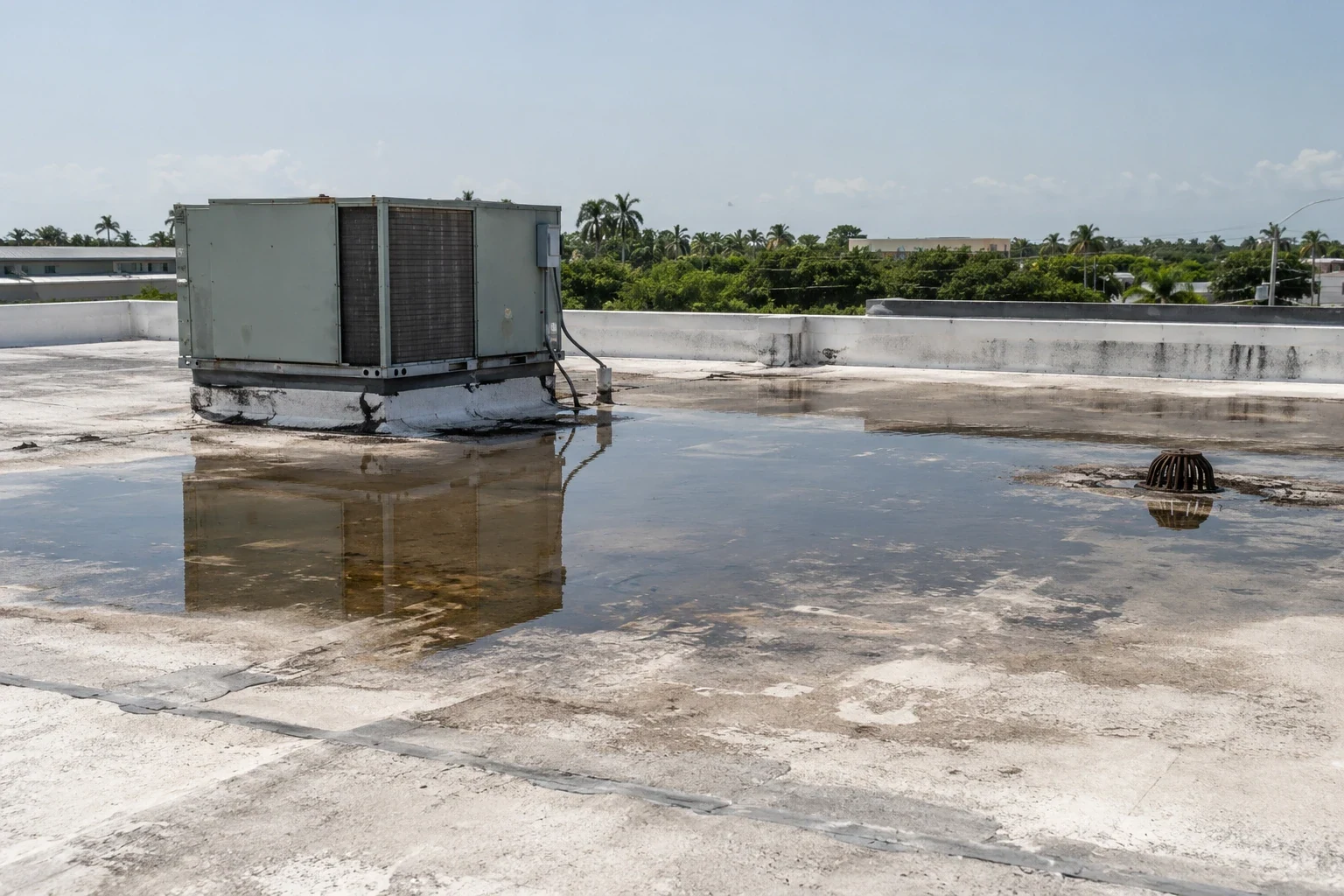
Trace standing water on Palm Bay commercial roofs to drainage, deflection, or membrane conditions, then document the repair boundary and follow-up.
Learn More →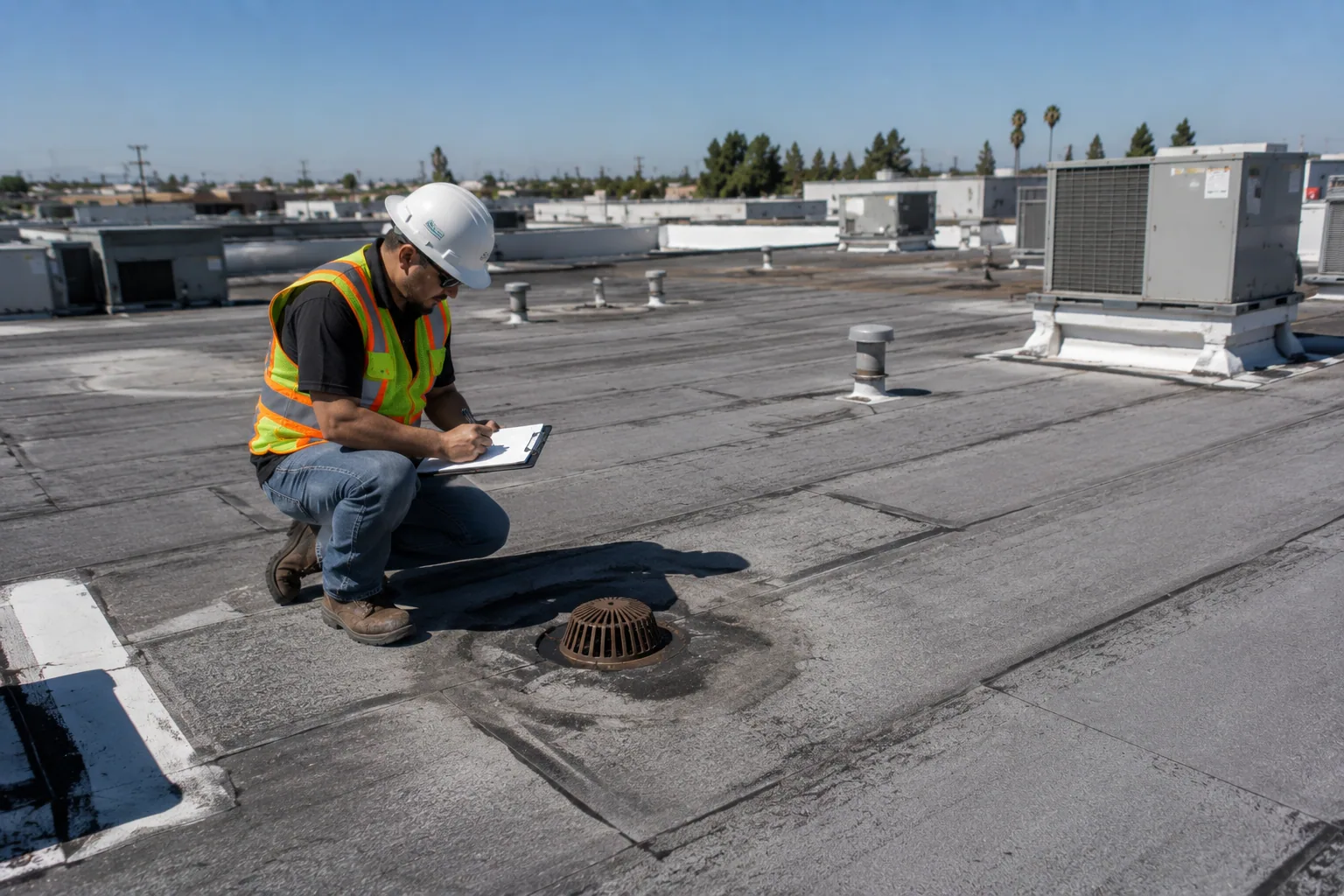
Repair failed commercial roof flashing in Palm Bay by tracing the opening, checking adjacent materials, and recording a clear boundary for permanent work.
Learn More →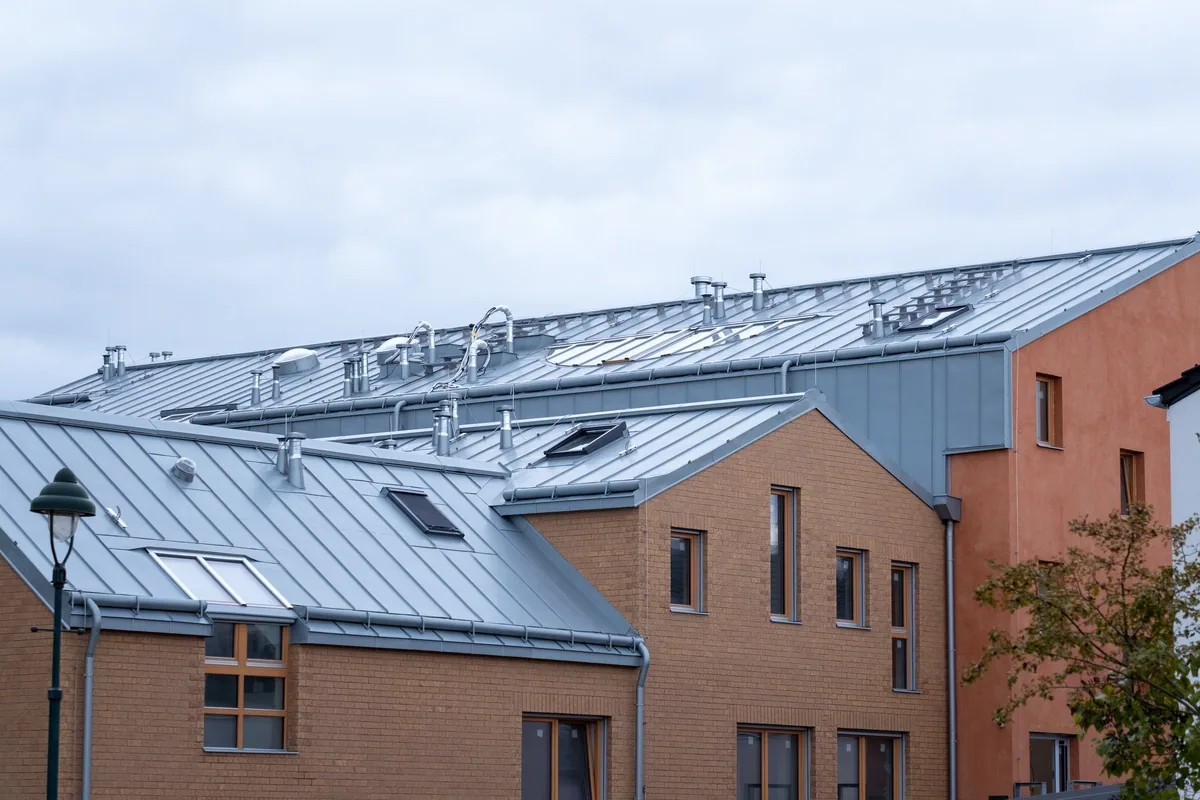
Find and repair open commercial roof seams in Palm Bay with system-specific inspection, documented boundaries, and a closeout record for follow-up.
Learn More →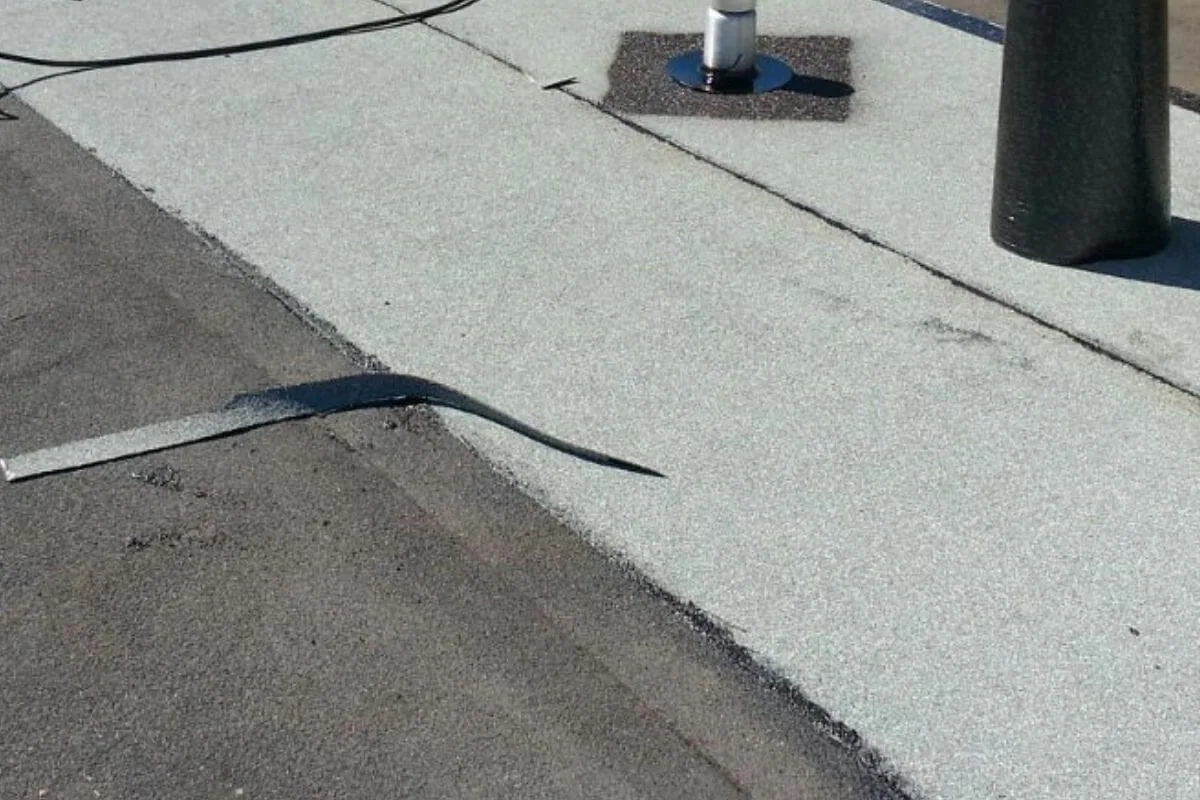
Locate punctures and foot-traffic damage on Palm Bay commercial roofs, protect active openings, and document the material-specific repair and follow-up.
Learn More →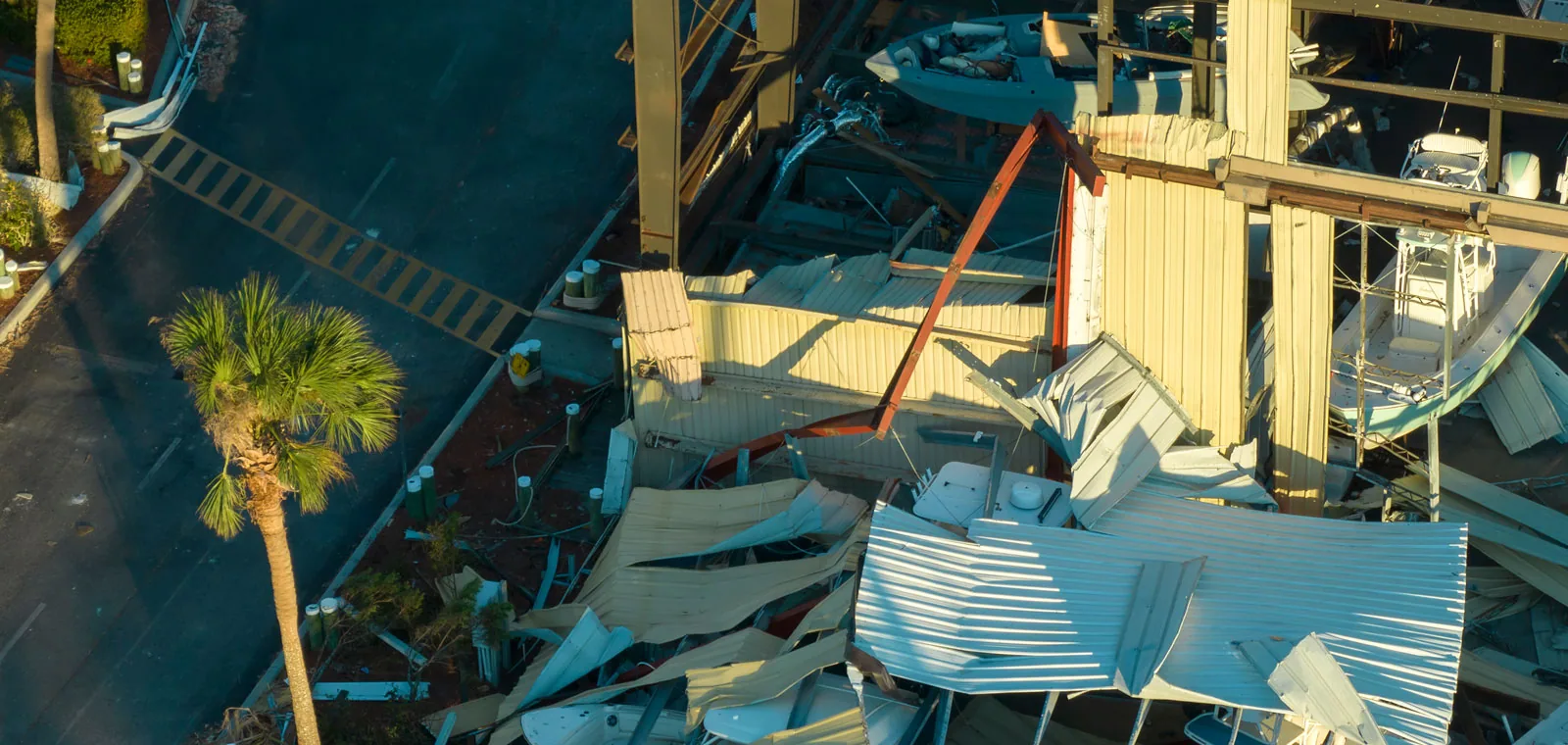
Document fire, heat, smoke, and suppression-water effects on Palm Bay commercial roofs before setting a safe repair boundary and closeout record.
Learn More →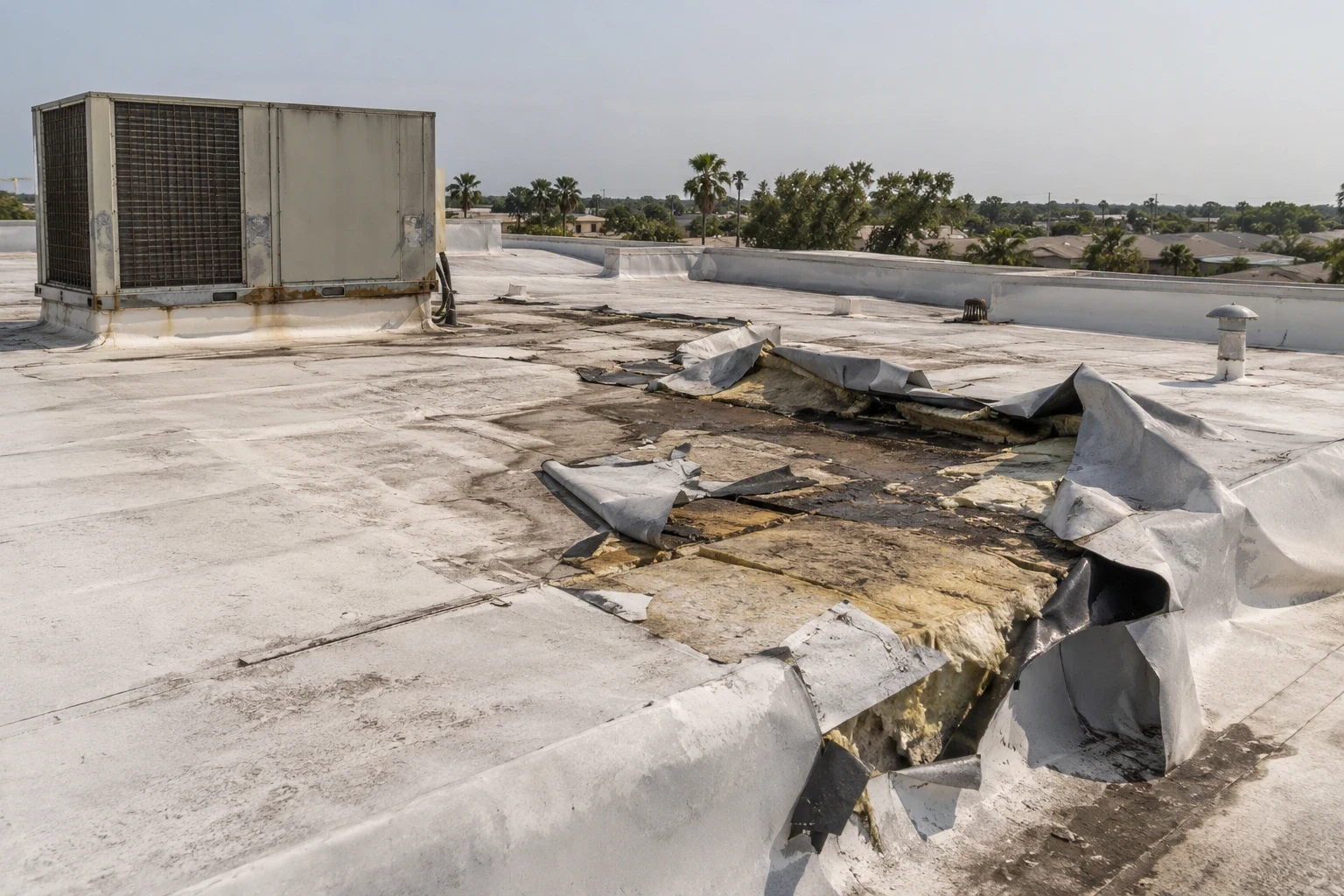
Assess Palm Bay commercial roofs after a hurricane, document observed wind and water effects, and separate temporary protection from permanent repairs.
Learn More →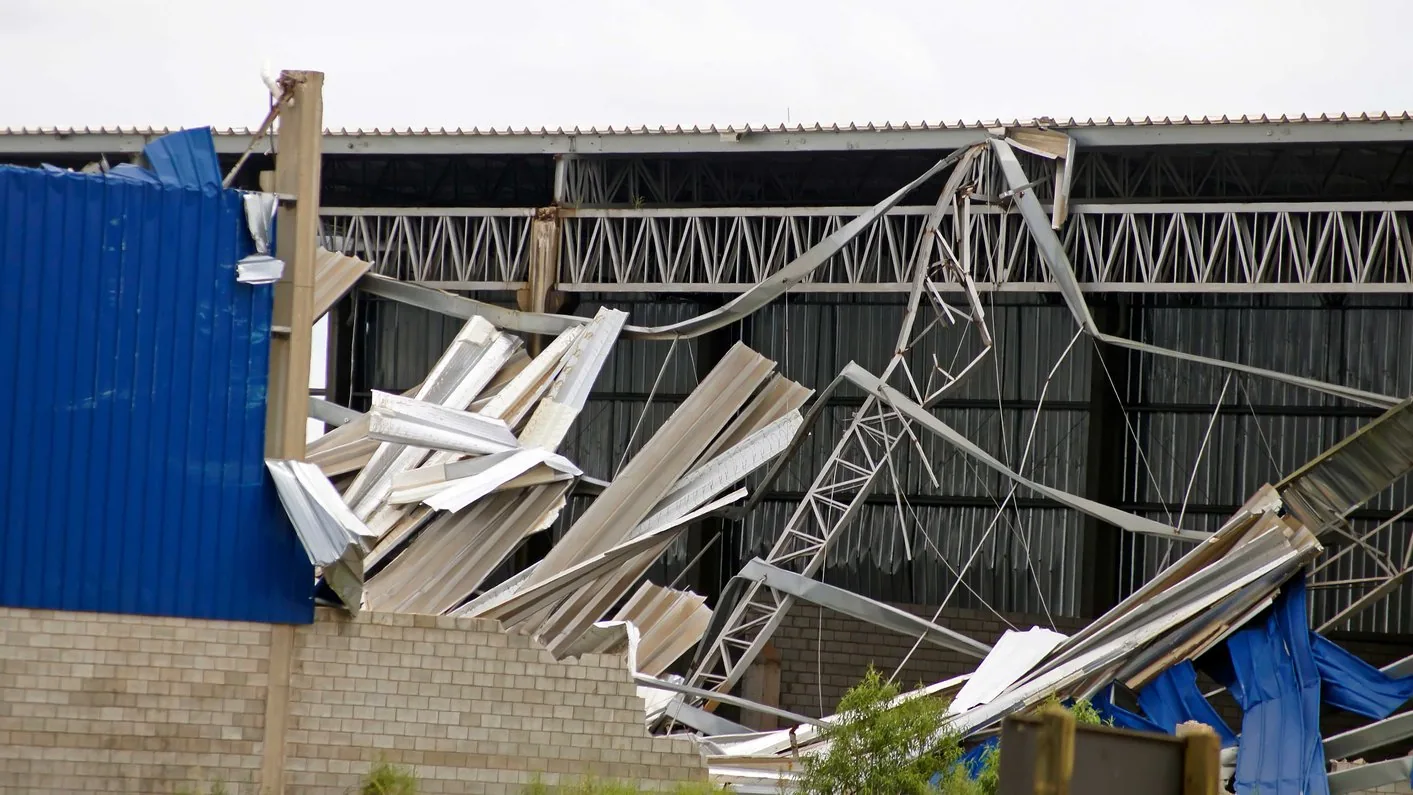
Document tornado-related roof damage in Palm Bay by zone, separate debris and wind findings, and define a safe temporary and permanent repair scope.
Learn More →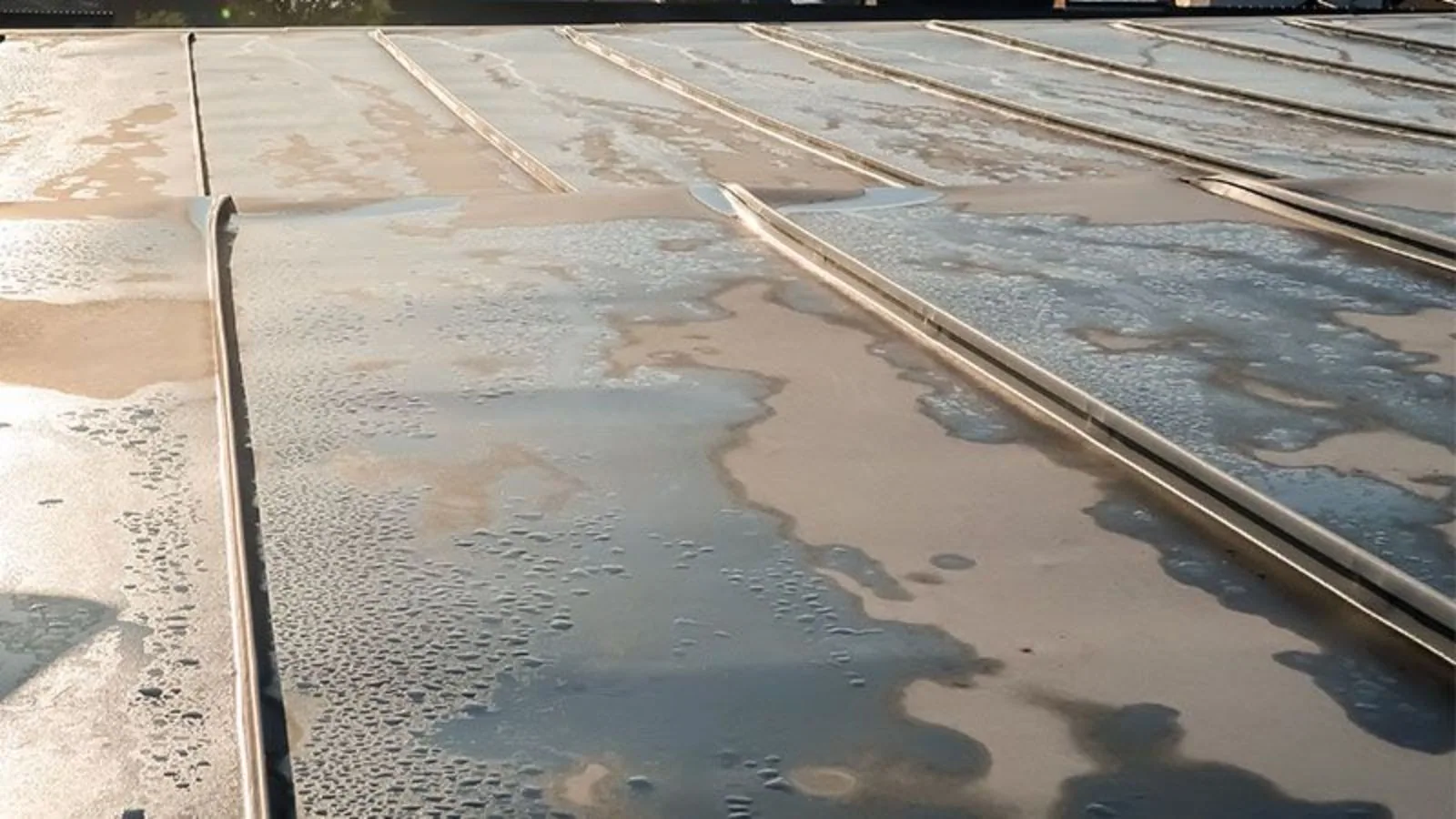
Assess heat and UV wear on Palm Bay commercial roofs, distinguish surface aging from failure, and document coating or membrane repair limits.
Learn More → Water can cross a roof before it appears indoors. We inspect ponding areas, wall and curb flashings, membrane seams, and puncture locations. Each photo names the roof zone and visible condition. If moisture may sit below the membrane, an approved test opening can define the affected layer and repair boundary.
June and September are typically the wettest months in Melbourne, which averages 55.28 inches of precipitation a year. For a Palm Bay building, the field check is more specific: inspect drains, overflows, scuppers, and water marks. A blockage, slope issue, and wet insulation each call for a different response.
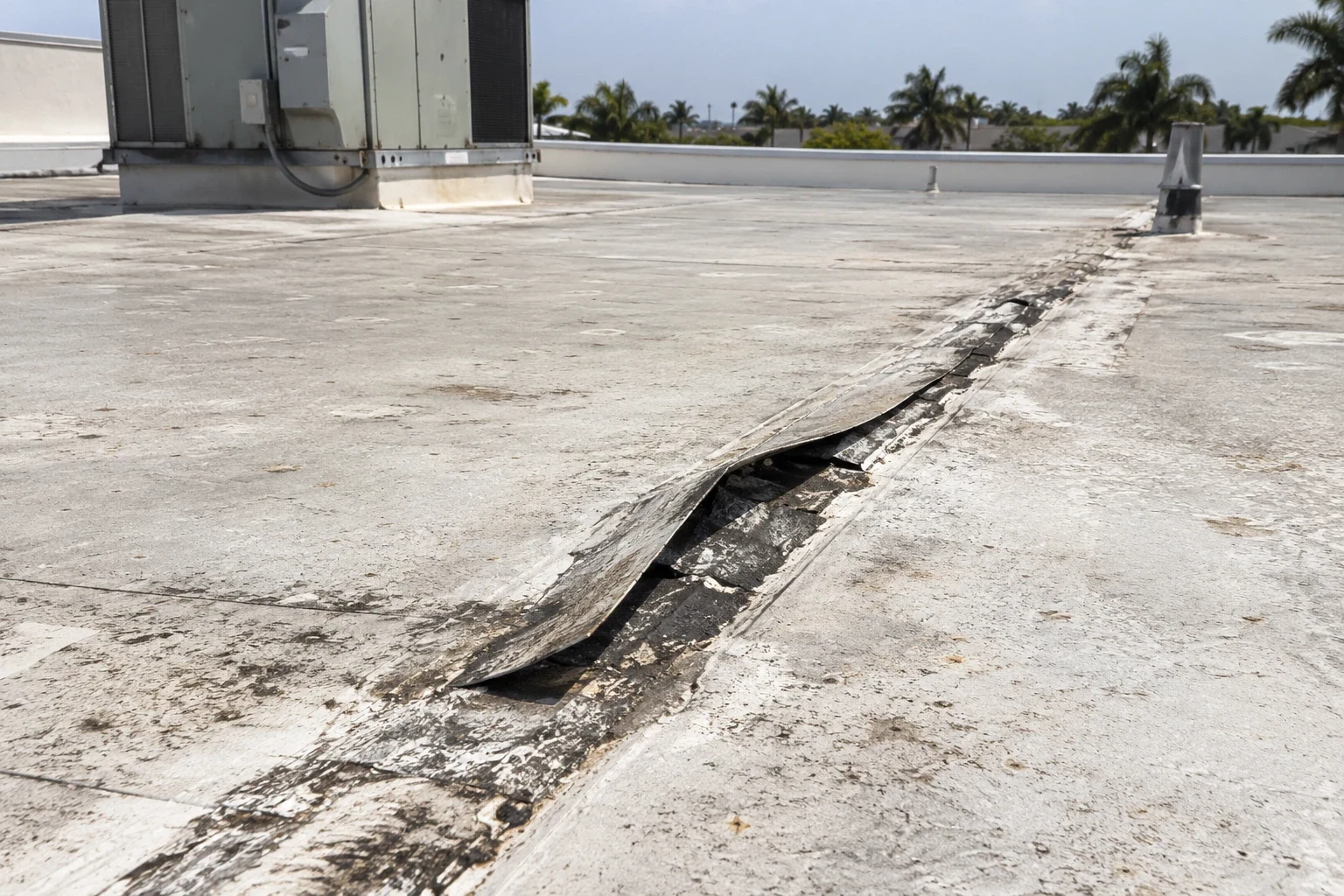
Wind damage, hurricane-related damage, and tornado damage require a dated field record. A gust or rainfall total at one reporting point does not prove damage to another building. We photograph displaced metal, open seams, punctures, and interior water indicators where present. Areas blocked by equipment or access limits stay listed for follow-up.
Heat and sunlight can affect membranes and exposed details. The heat and UV review looks at surface wear, brittleness, and prior patch condition. Fire damage repair begins with a safe access boundary and inspection of the affected roof layers. We name what can be seen and what needs a test or specialist review.
If water is entering now, temporary protection gets its own location, photograph, and return plan. Permanent repair follows after the material and substrate are identified. The emergency response documents immediate control. claim documentation can preserve dated photos and repair details for the owner. Neither step replaces the inspection that defines observed damage.
Repair, recover, coating, or replacement depends on attachment, moisture, deck condition, drainage, and failed details. Timing and cost also reflect access, tear-off, insulation, staging, and protection below the roof. A hospital roof report or an industrial inspection in Palm Bay receives a property-specific work boundary and closeout.
Start with a wide view that locates the roof zone, then take detail images of the opening, edge, seam, or surface mark. Label each with the event date, location, and whether it was observed before or after temporary protection. If an opening reveals wet insulation or damaged deck, stop at the agreed boundary, record the exposed layers, and obtain direction before expanding repair. The return visit closes the temporary measure separately from permanent work.
Share the event date, address, affected interior area, roof access contact, and active water status. We will document the inspection and protection boundary.
Request a Roof Assessment →