
Active local weather warning
The National Weather Service has issued a coastal flood warning covering Palm Bay. Heavy rain and drainage loading can expose roof leaks, blocked drains, and ponding water. This is a weather exposure advisory; it does not establish damage to a specific roof.
Do not access a roof during hazardous weather. Protect people first, avoid water near electrical equipment, and request roofing help when conditions permit.
National Weather Service · Updated Oct 28, 2026, 6:40 AM UTC
A ceiling drip beneath a new roof opening needs action before the next rain band arrives. We start by recording the event date, affected room, roof access contact, and whether water is still entering. The first inspection follows after safe access is confirmed. The crew checks safe access, locates the reachable opening, and applies temporary protection when conditions allow. Tarping or dry-in controls immediate exposure. It stays separate from the permanent repair, which follows after the roof material and damage boundary are confirmed.
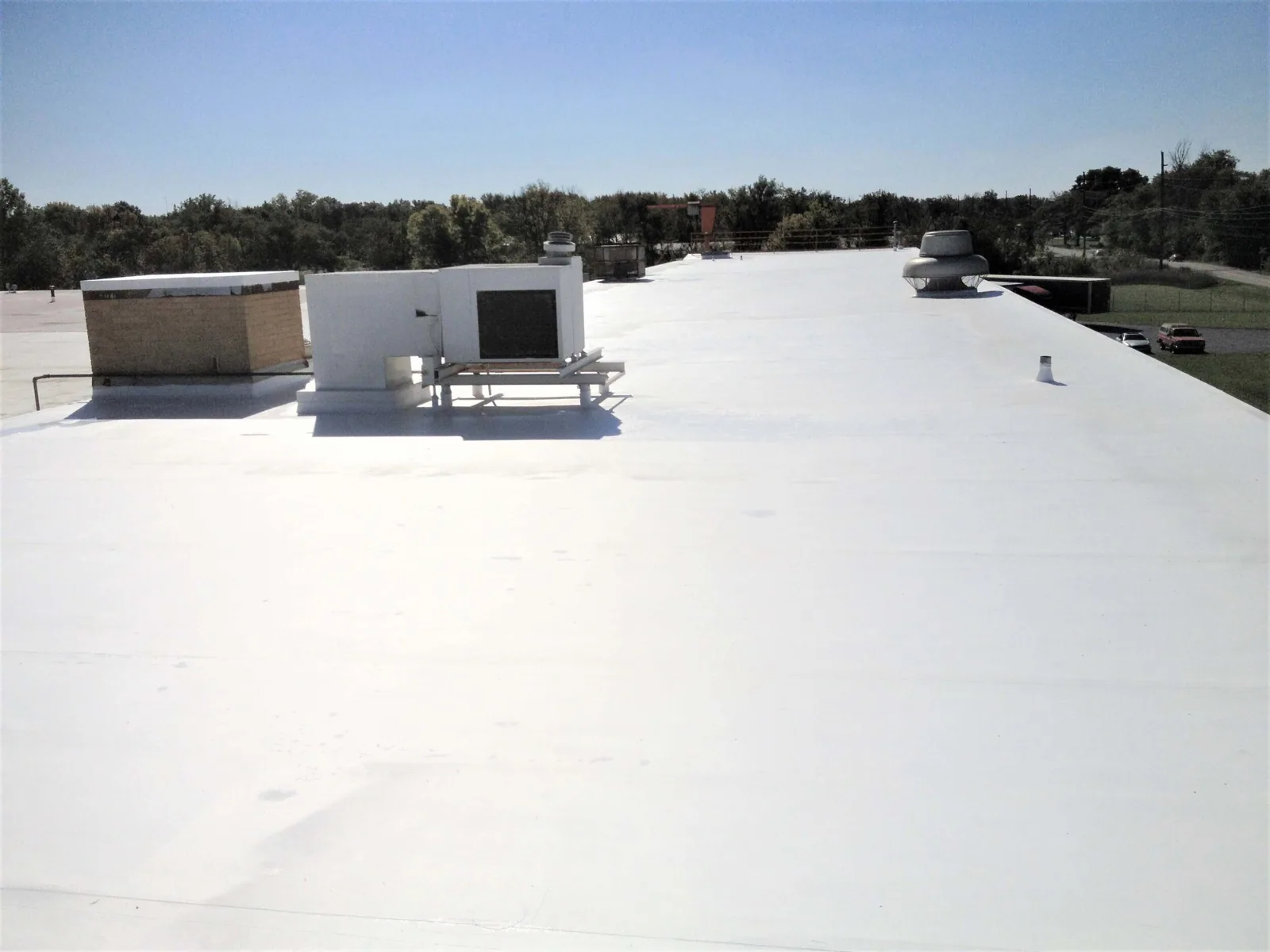
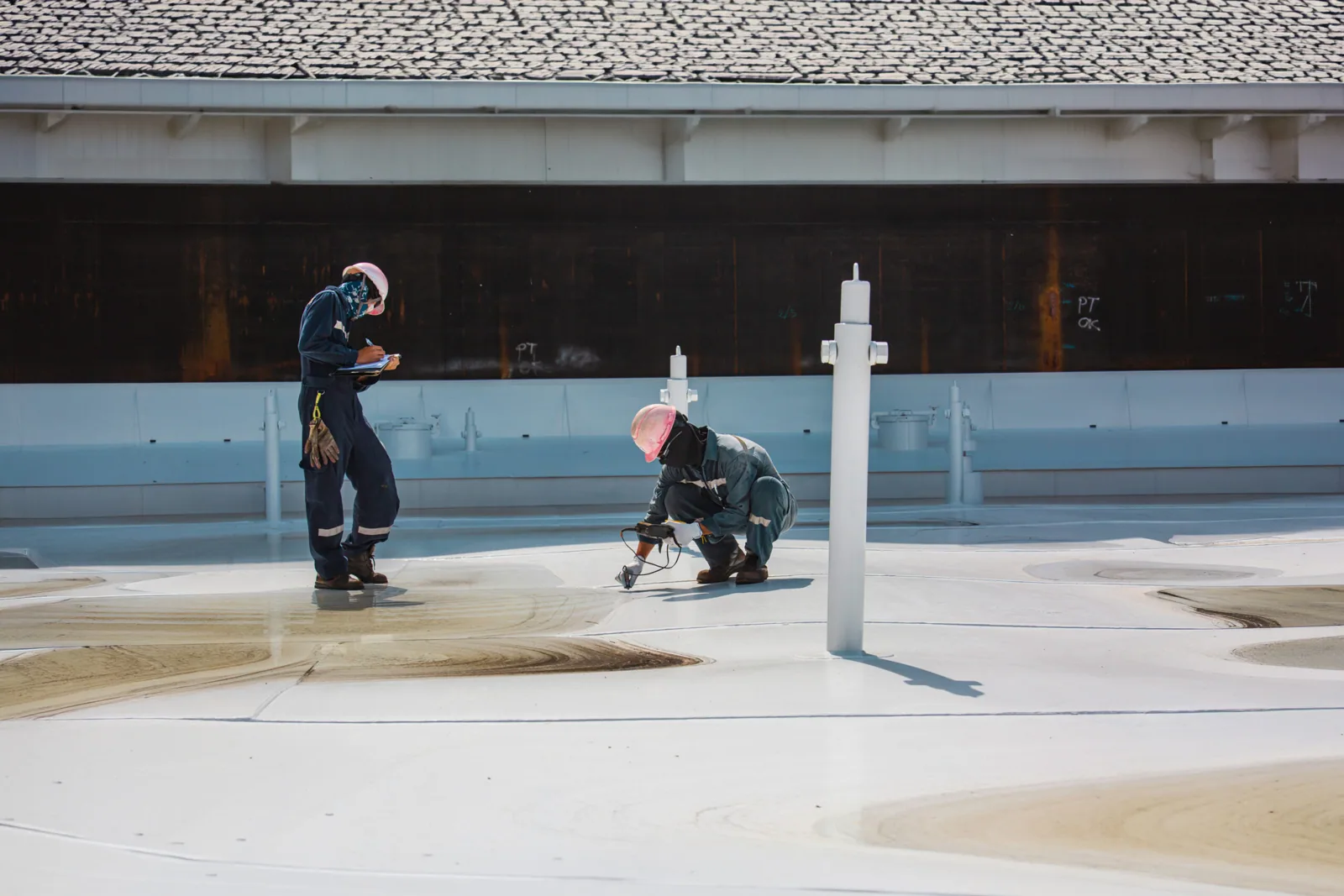
Give us the building address, callback contact, active leak location, and any access or safety restriction. Tell us whether water is near electrical equipment, production lines, medical areas, stock, or occupied tenant space. Those details help set the first response. The emergency crew still has to confirm roof access and weather conditions before opening or covering a section.
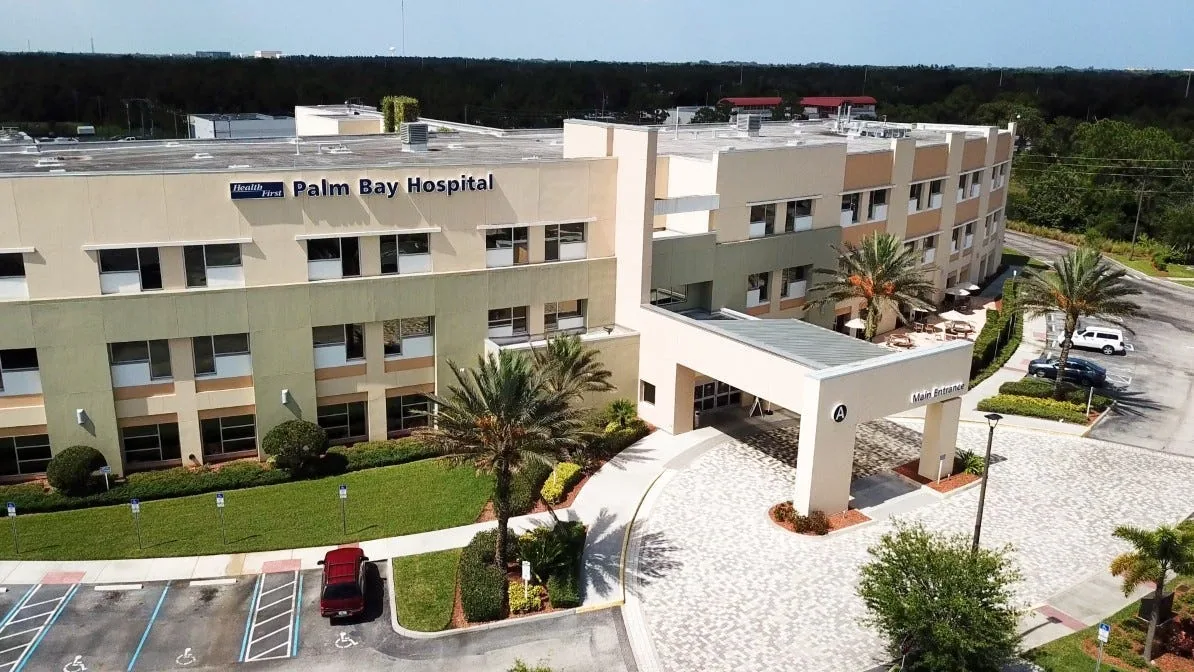
We ask for the time water started, the reported weather event, and any interior protection already in place. A facility contact can identify roof hatches, ladders, keys, escort rules, and equipment that cannot be shut down. Palm Bay Hospital provides emergency, inpatient, surgical, imaging, and rehabilitation services. The facility contact sets access and interior-control requirements. At Port Malabar Industrial Park, a multi-tenant address may require a specific suite contact and loading entrance. We confirm those details with the property rather than assuming a shared emergency plan.
A hospital roof response may need to coordinate with clinical staff. An industrial tenant may need a different service window. We log the building, roof zone, and contact so each person knows which opening the crew is protecting. A leak investigation can continue after the immediate risk is controlled.
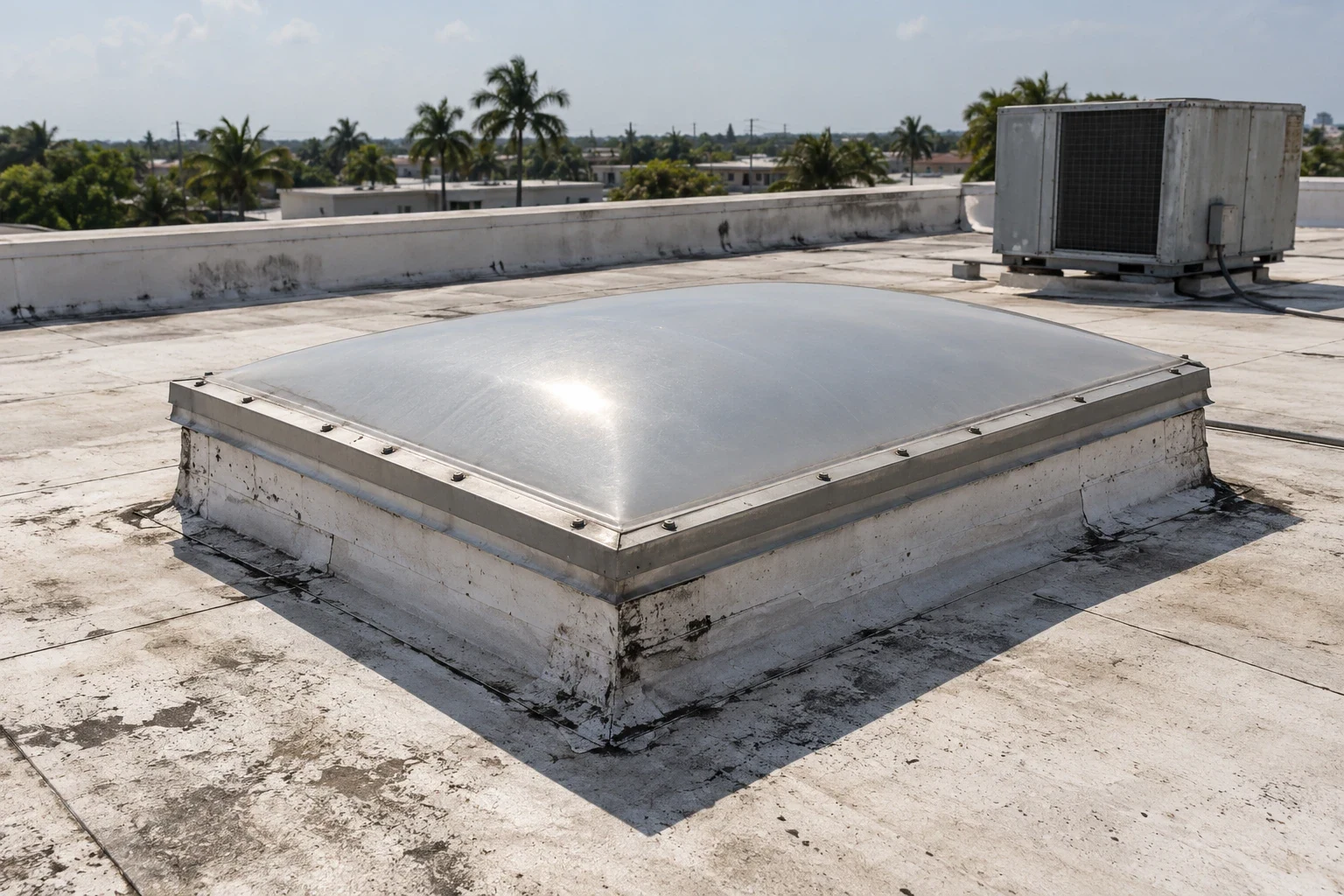
Wind, lightning, standing water, darkness, damaged ladders, or exposed electrical hazards can make a roof unsafe to enter. Dispatch notes do not override the crew’s field safety check. If roof access is delayed, the site contact can move people or equipment away from the affected interior, collect water where it is safe, and protect sensitive contents. We state the access limit and next update time.
Once access is safe, the crew looks for a direct opening, displaced edge material, separated flashing, puncture, loose membrane, or a drain that is backing up. Water can travel beneath the roof before it reaches a ceiling. The first visible stain may not identify the source. We photograph the affected area and note what could be reached without dismantling the assembly.
For a property with several connected roof levels, we mark the section that was inspected. A storm report may guide where to look, but it does not establish damage at all roof zones. During Hurricane Irma, nearby Palm Bay reporting points recorded more than 13 inches of rain. That event context does not prove damage at this property. The current roof inspection determines which conditions are visible at this property.
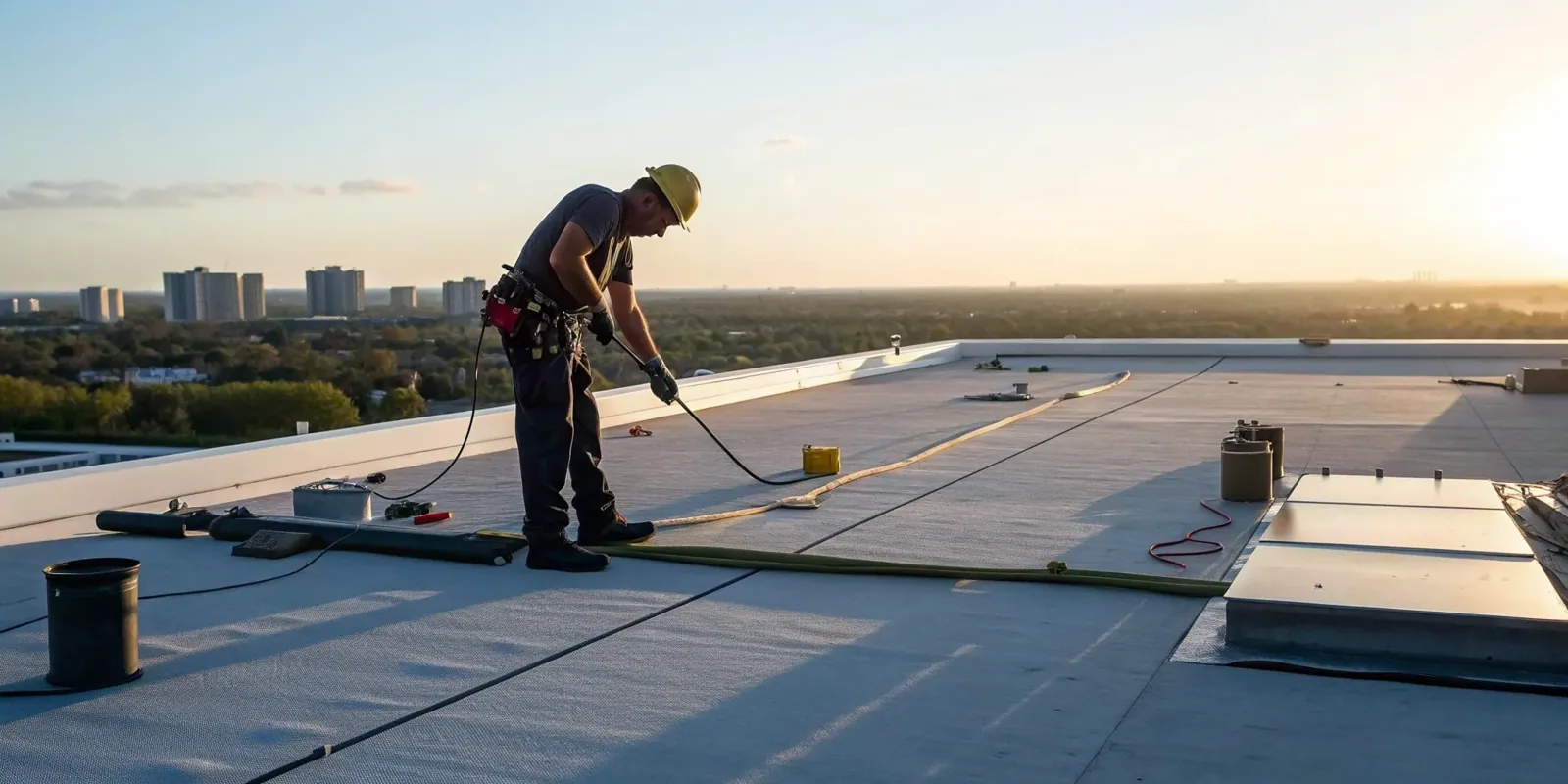
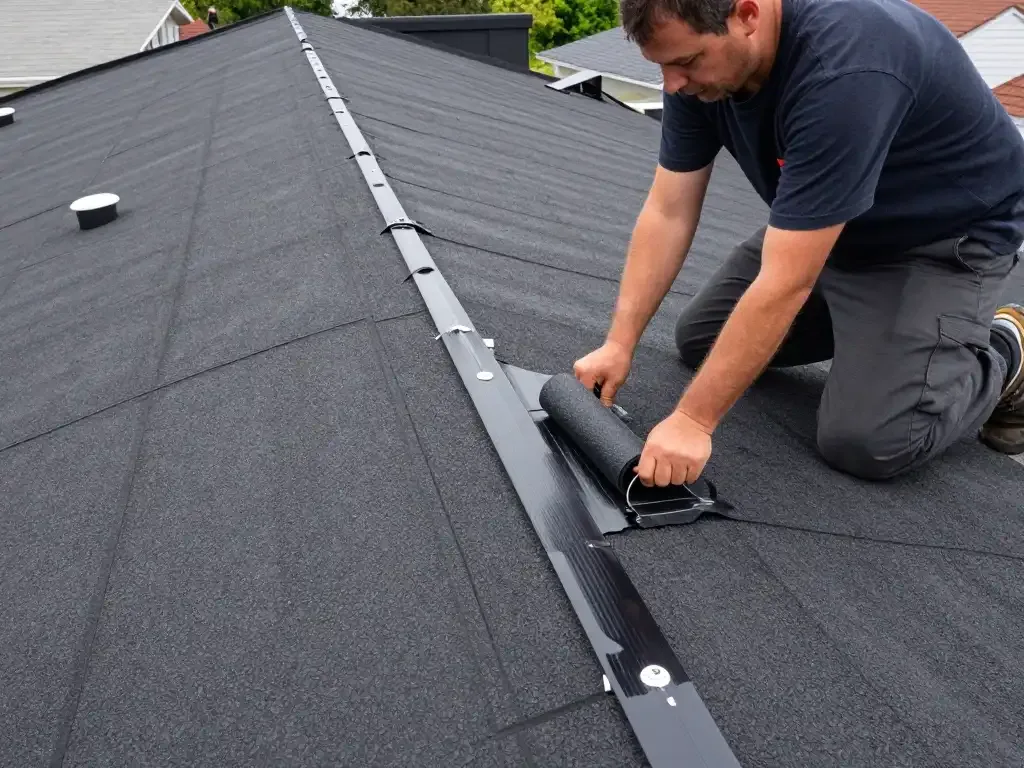
Temporary protection is selected for the opening, roof surface, and expected weather window. A tarp needs secure attachment and a path for water to shed without directing it into another roof joint. A temporary membrane patch or dry-in may suit a smaller exposed area when the surface can be prepared safely. We record the material, covered boundary, attachment, and any limits on how long it is intended to remain.
The dry-in is an interim measure. It does not replace wet insulation, restore damaged decking, or correct a failed flashing assembly. We identify when the crew should return and what permanent work remains. If the initial protection cannot cover the full suspected path, the report names the area that is still exposed so the owner can manage interior risk.
Before leaving, we confirm that the temporary work is secure from the accessible side and that interior contacts know the protected zone. Photographs show the condition before and after protection. If water continues, the site contact can report the changed room or roof area. We update the record rather than assuming the first tarp stopped every path.
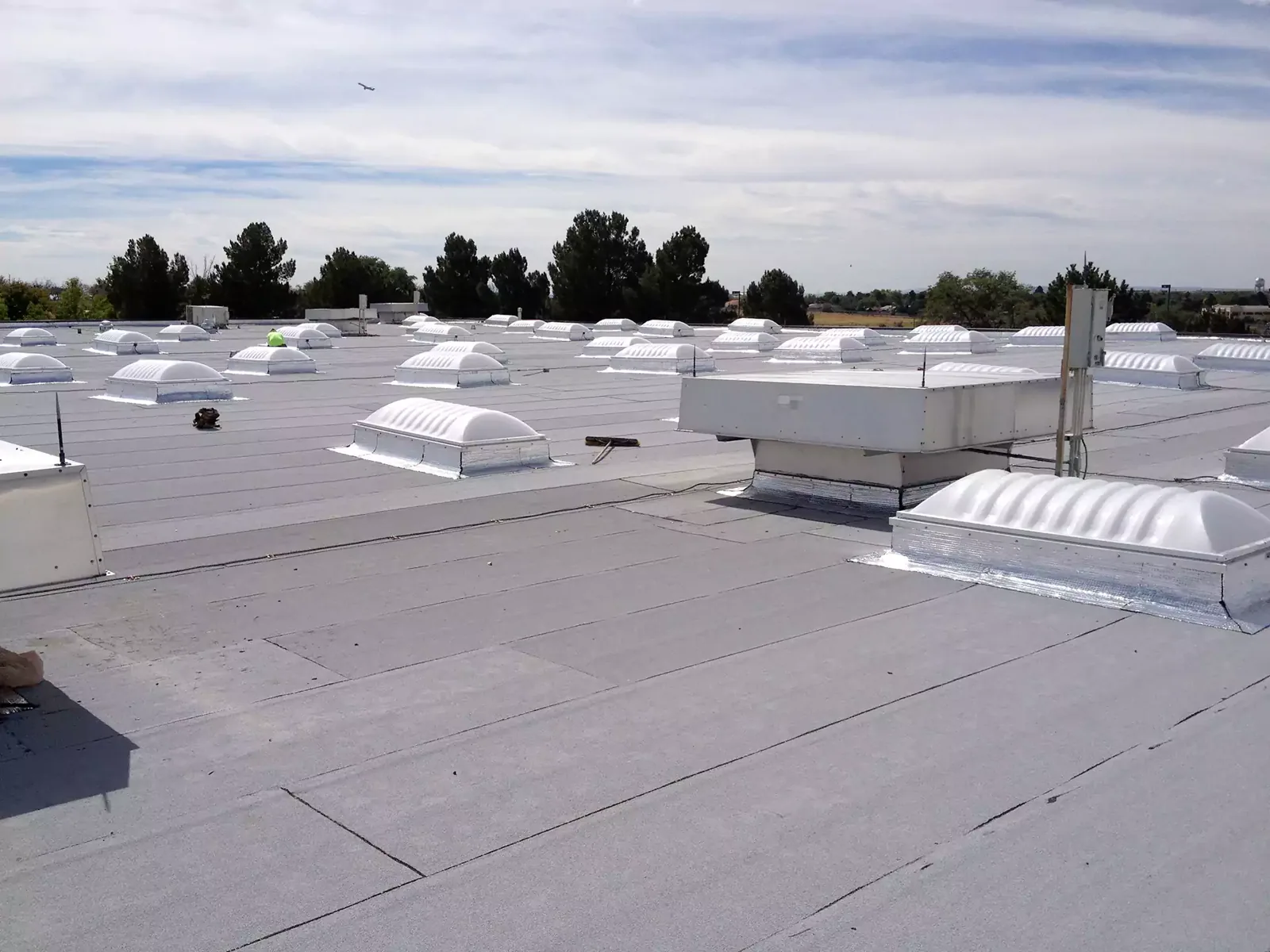
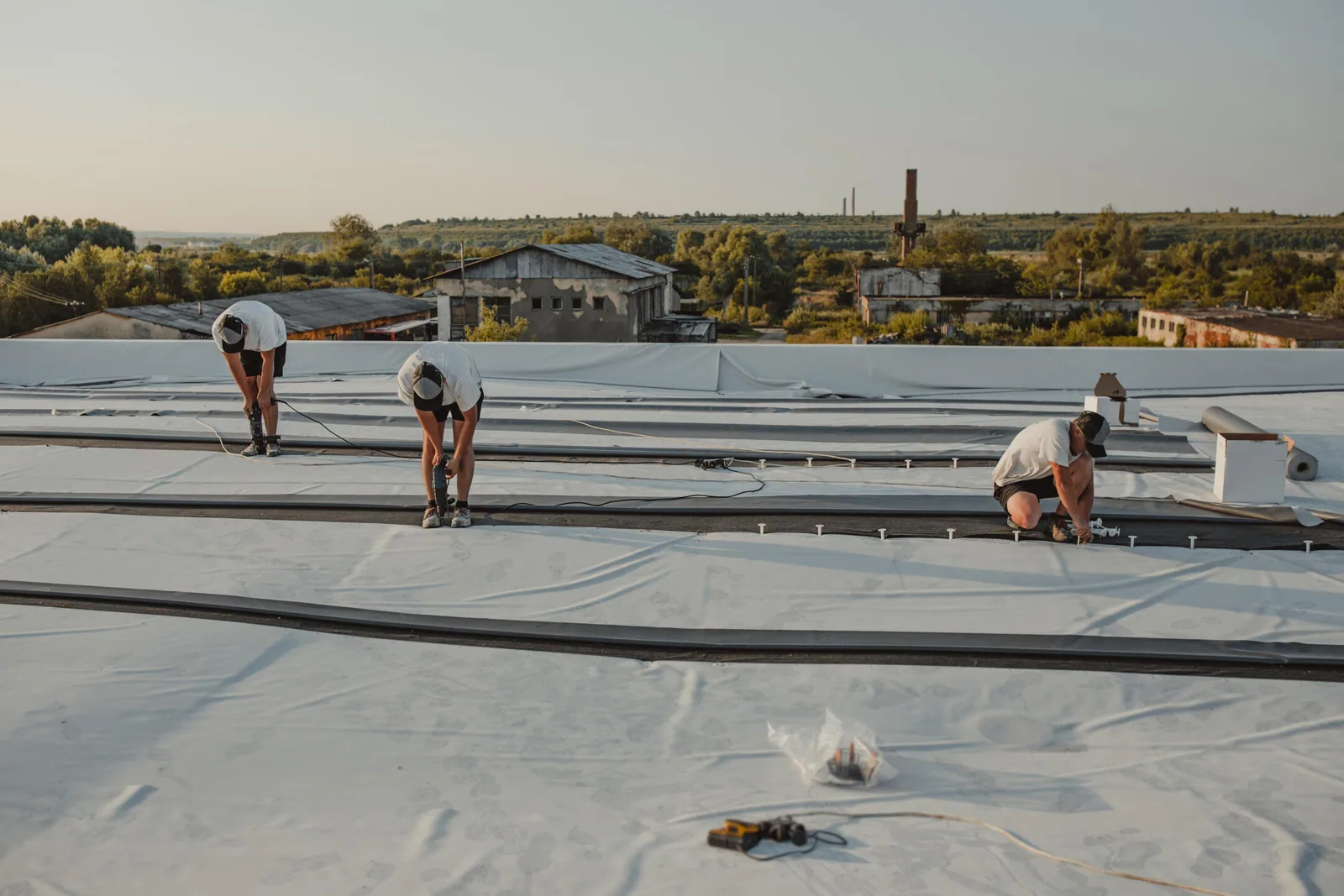
After the building is stabilized, we inspect the protected area and nearby details. The permanent scope may include a membrane patch, seam correction, curb flashing, edge metal, drain work, or replacement of wet insulation. The repair boundary identifies what is included and what needs a test opening or added approval. If the assembly is damaged beyond the accessible area, we note that rather than burying the uncertainty in the emergency invoice.
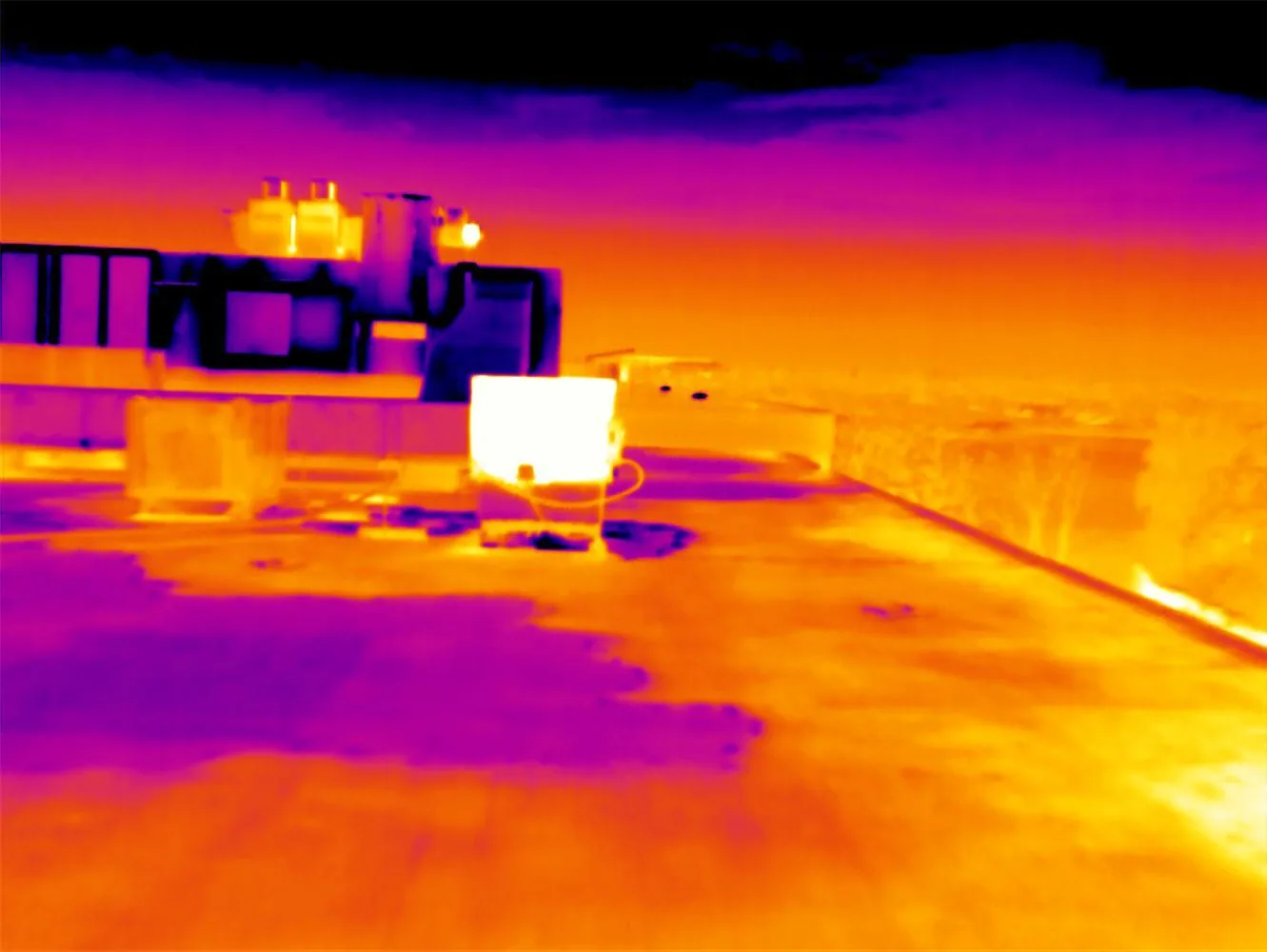
Moisture can remain below the surface after the leak stops. Infrared review or test cuts may help determine whether insulation is wet and how far the condition extends. A moisture survey records its scan area and test limits. When the roof surface is dry enough, a permanent repair uses materials compatible with the existing system and restores the exposed detail.
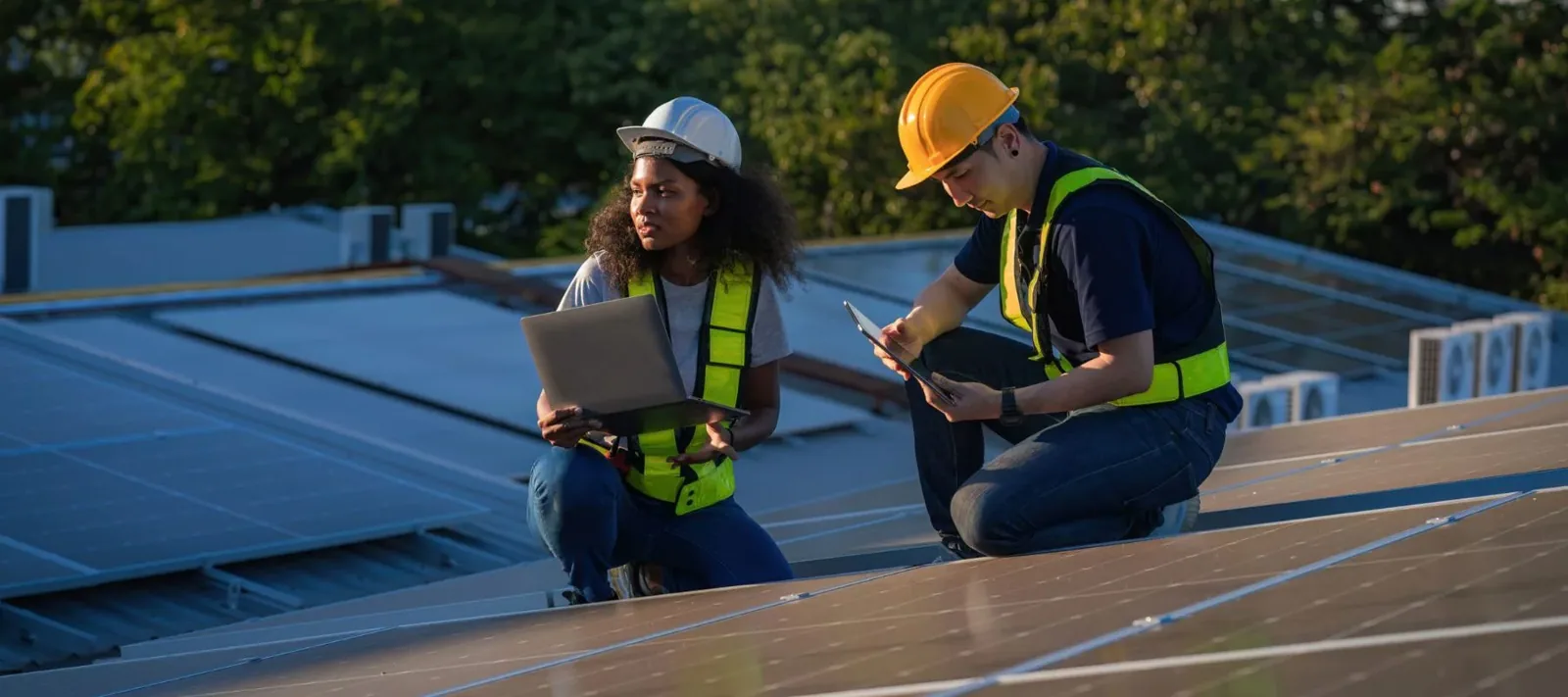
On a large commercial roof, a follow-up inspection may be more useful than extending emergency work without a complete condition record. If the building is part of a portfolio, dated findings keep temporary protection and permanent repairs distinct for the next reviewer.
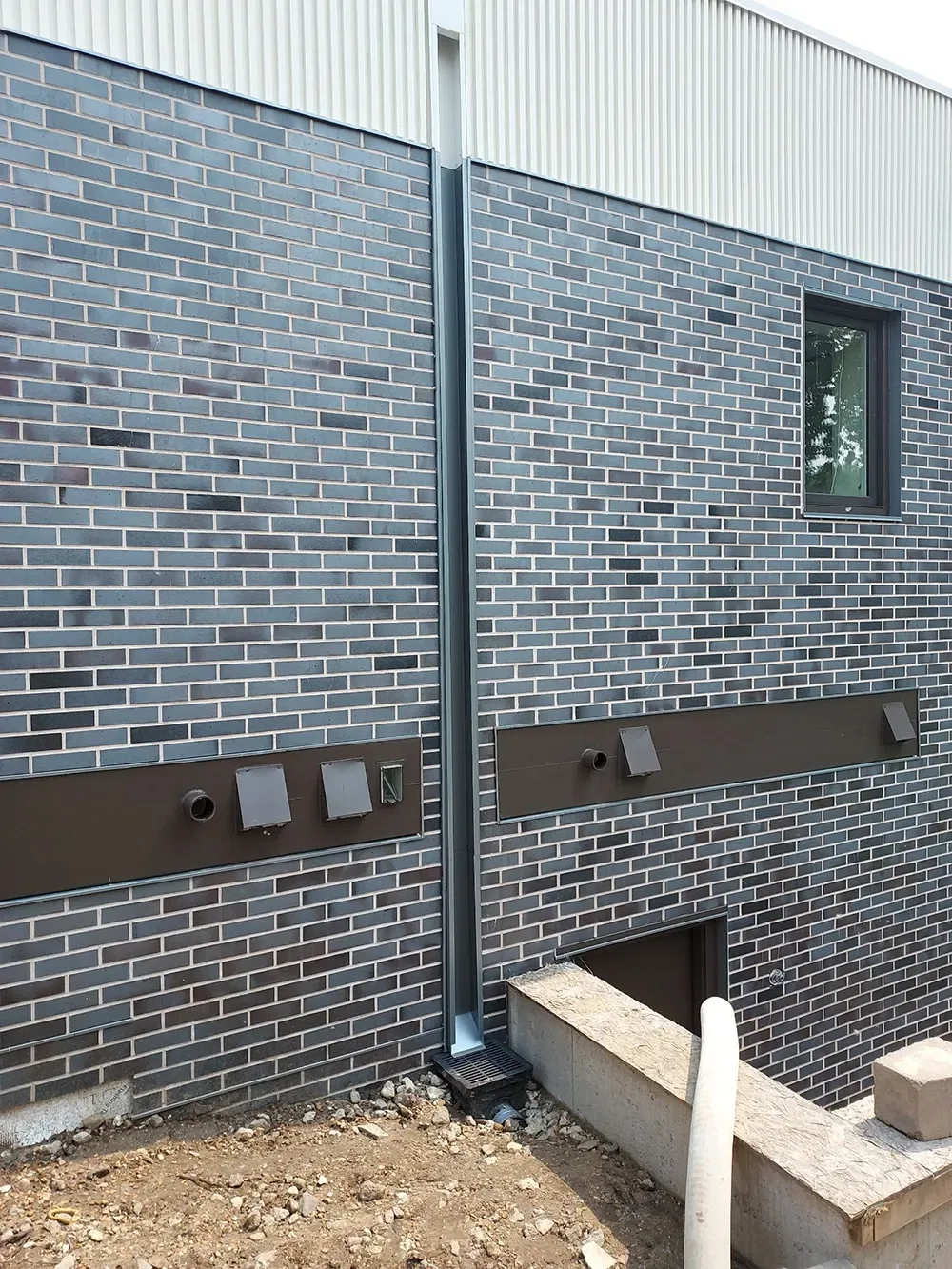
The emergency closeout gives the reported event date, observed condition, roof zone reached, access limit, temporary work, and remaining action. We include field photographs and note whether water was active when the crew left. If the source was not verified, the record says that clearly. If the owner requested a larger scope, we identify what still needs pricing or testing.
A storm report can establish weather conditions for a named event and location. It does not prove that a particular membrane, drain, or edge was damaged. We keep event documentation separate from the repair finding. If the owner needs insurance records, claim documentation support can organize photographs and observations. Coverage decisions remain tied to the policy and carrier review.
Follow-up timing depends on the protection installed, expected conditions, and the permanent materials required. We list the return item and the contact responsible for releasing access. After completion, a maintenance visit can check seams, drains, and temporary repair transitions. The file closes only when the permanent work and remaining limitations are recorded.
Learn more →
Learn more →
Learn more →
Learn more →
Learn more →
Learn more →
Learn more →
Learn more →