
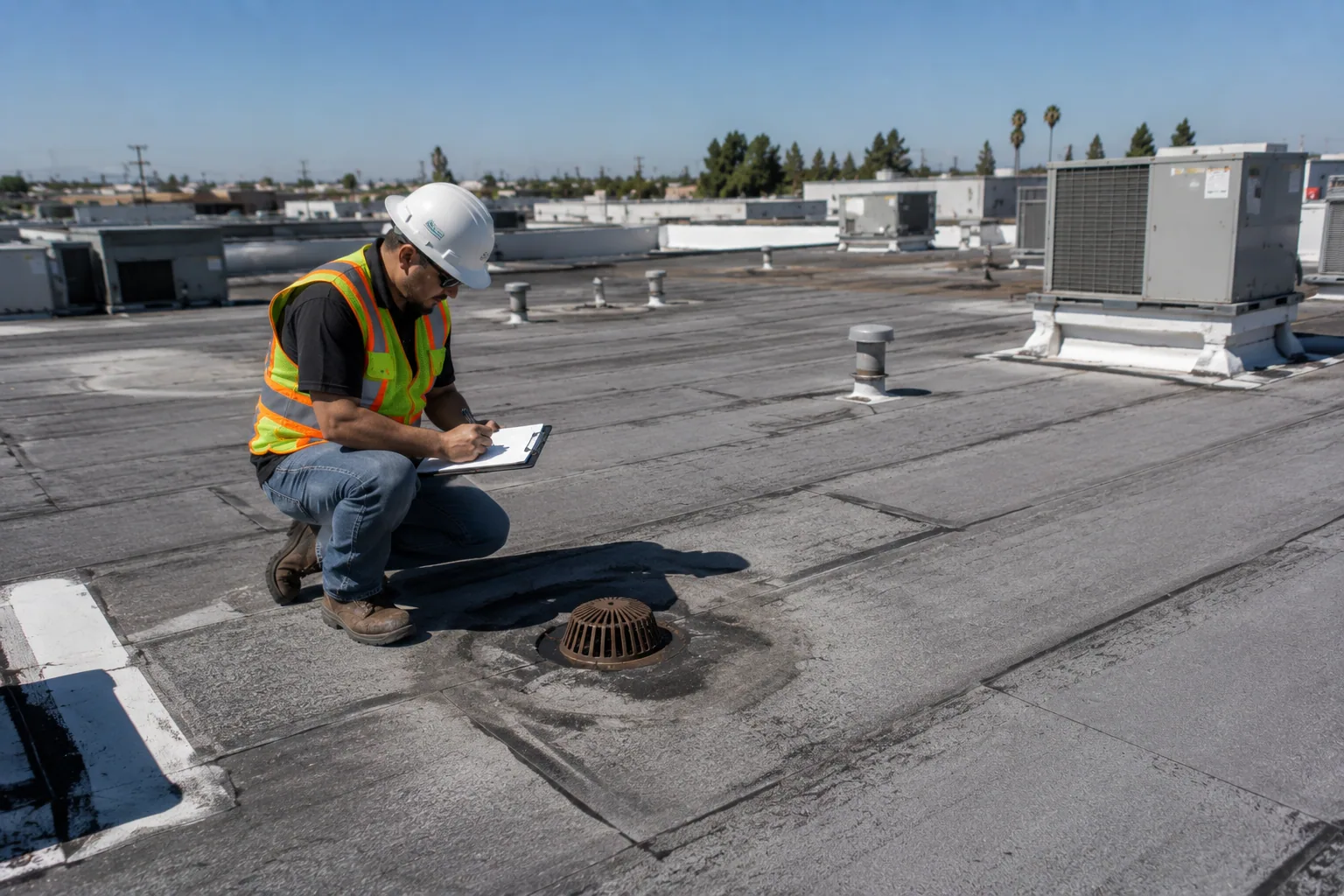
A dark split along a roof lap deserves a close inspection before anyone calls it a leak. The separation may be at a field seam, end lap, cover strip, or repair patch. We record its direction, length, nearby penetrations, and any interior report. The event date is separate from the observed condition. That distinction matters after wind or heavy rain, when a seam can be blamed on weather without evidence of when or how it opened.
Palm Bay has documented rainfall during Hurricane Irma and surveys for Ian, Nicole, and a local 2005 tornado. Those records establish local weather history, not the cause of a particular seam failure. We inspect the roof assembly at the property. A flex tenant at Palm Bay Flex Business Park, a retail unit near Palm Bay Station, and a warehouse in Port Malabar Industrial Park can have different membranes, access points, and operation limits. Each finding is tied to its actual roof zone.
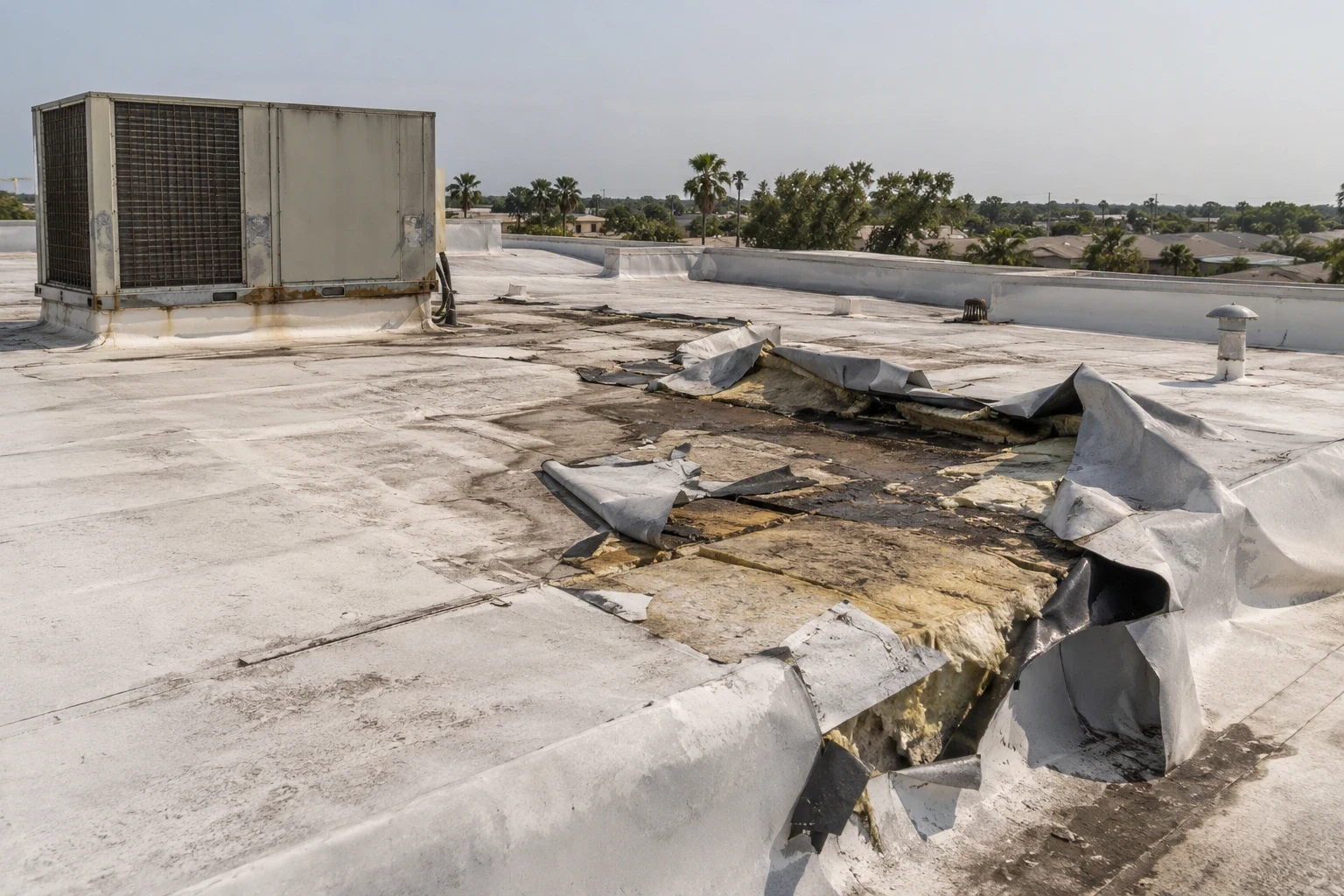
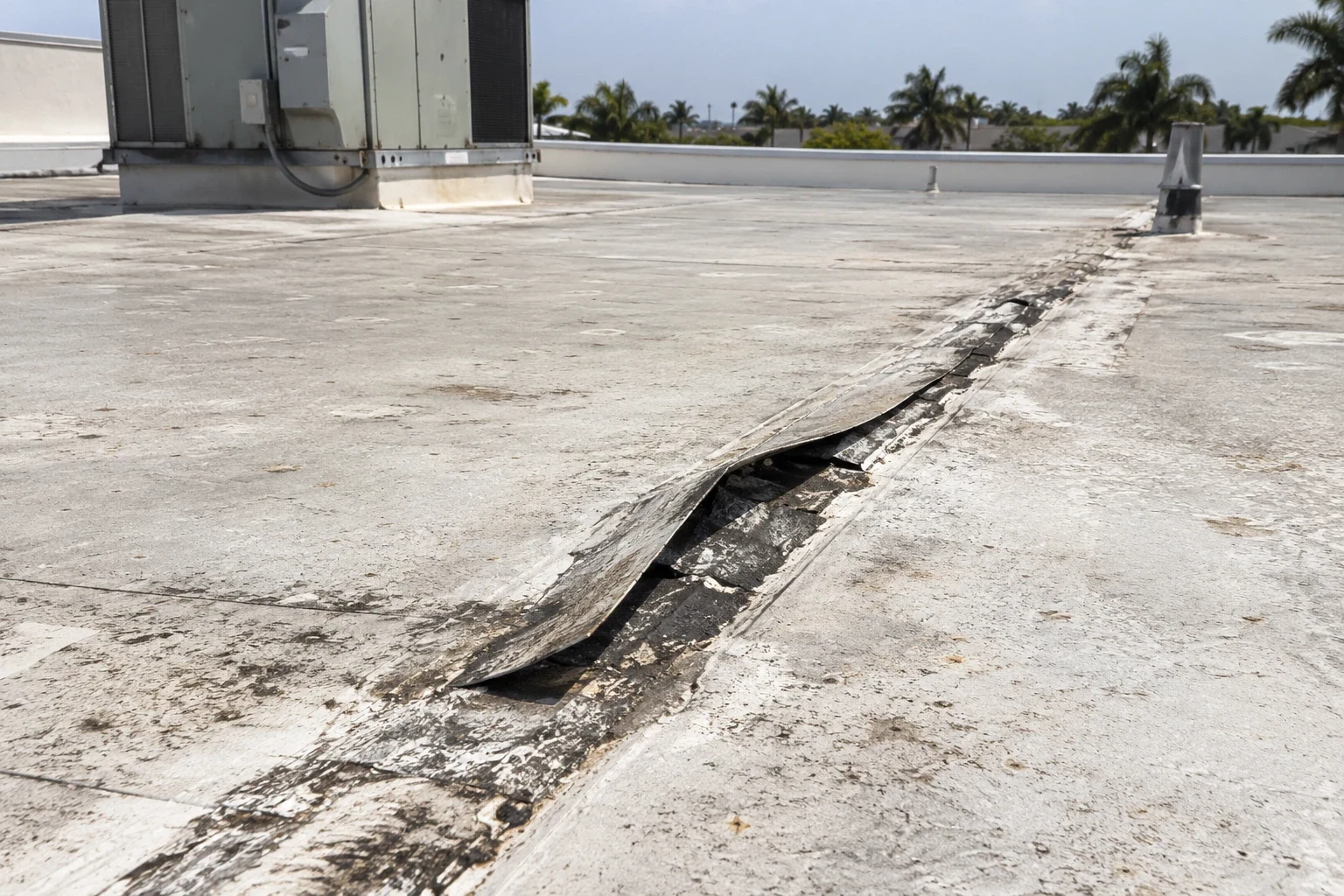
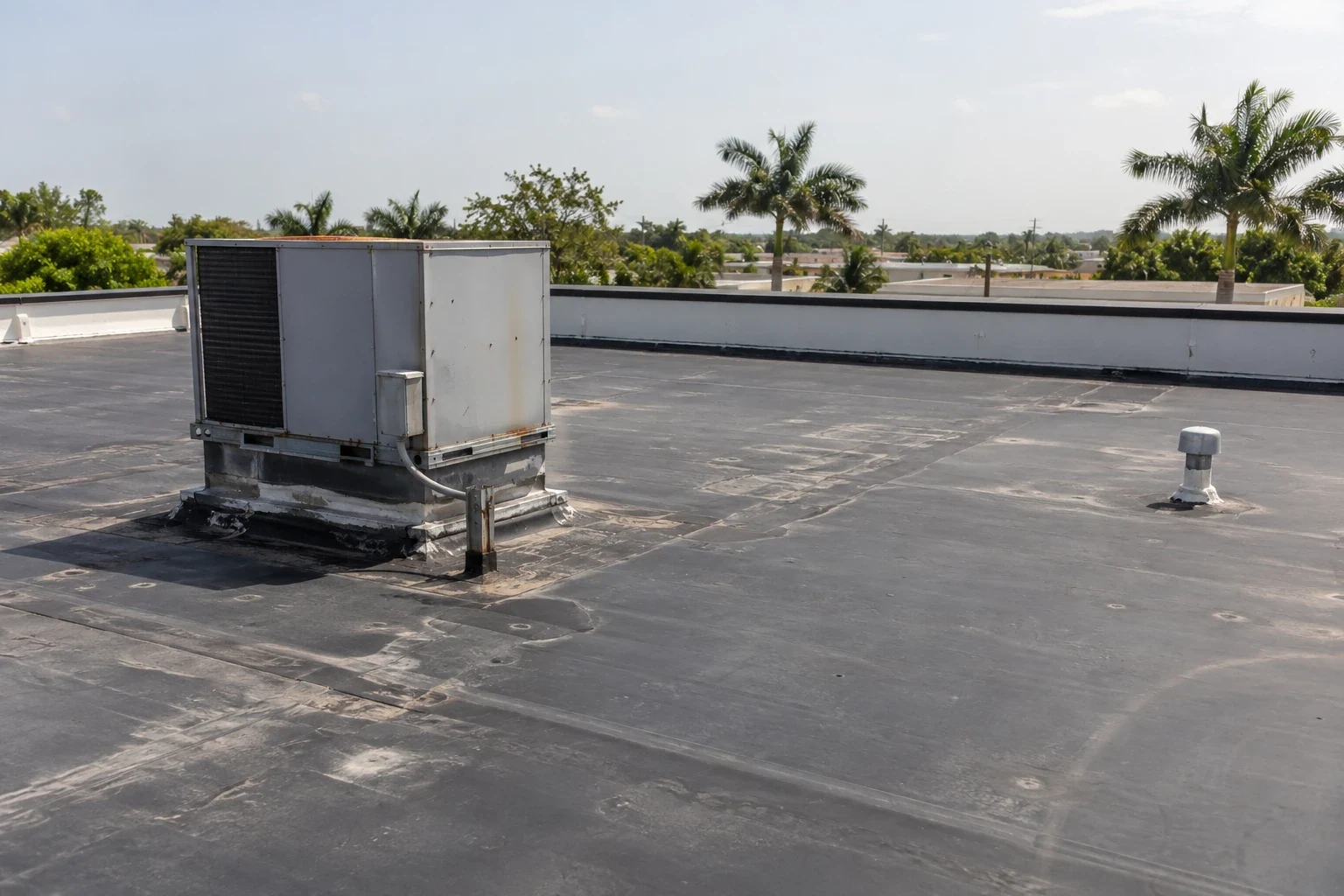
Seam construction changes by system. Thermoplastic membrane seams are heat welded; EPDM seams use adhesive or tape; modified bitumen laps are bonded by the installed method. Metal roof joints and coating transitions need a different inspection. We identify the material, then examine the seam for separation, contamination, wrinkles, fishmouths, failed adhesive, or movement. A field photograph should show both the defect and enough surrounding surface to locate it later.
We probe and test only where the assembly and safe access allow it. A small opening may stop at one point or continue beneath an overlay. We mark the repair limit and note adjacent areas that remain sound or uncertain. If the seam sits beside a wall or curb, the flashing transition is checked separately. The visible split is not the entire diagnosis until the nearby water path is reviewed.
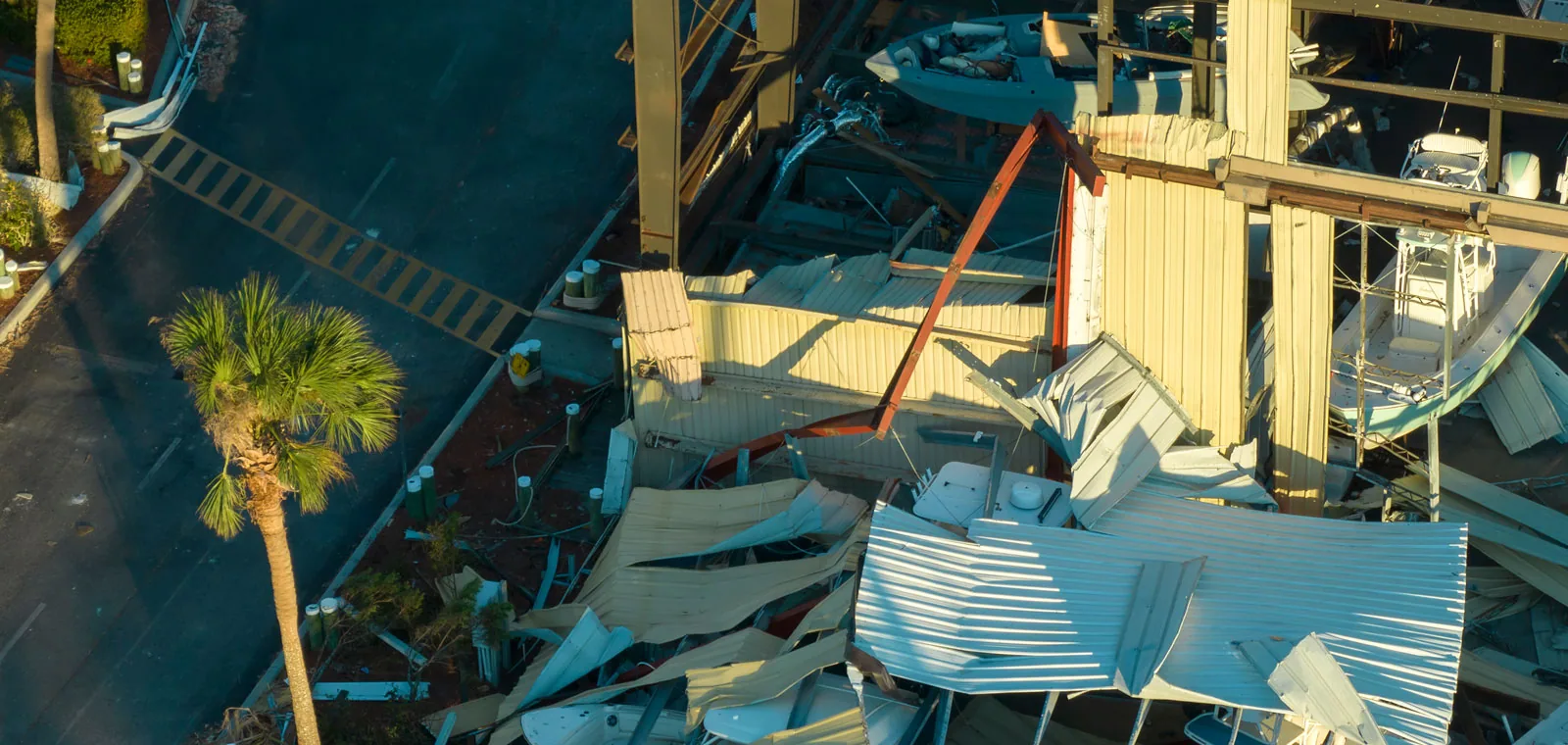
Water may enter through an open lap and travel along insulation or deck before it appears indoors. We compare stain location, roof slope, drains, seams, and penetrations to see whether the reported path fits the evidence. A stain below the seam supports inspection but does not prove the seam is the only entry. The post-storm record can also include a separate hurricane roof review when the event report involves cyclone winds. If several routes are possible, the report states that limit and proposes an infrared survey or test opening to narrow the question.
Palm Bay's seasonal rain tests vulnerable seams. The field record still needs the event date, seam condition, roof zone, and any water path observed during inspection. Active water gets temporary protection with its own scope and return plan. For urgent entry, our emergency roof response is documented separately from the permanent repair plan, while the permanent repair is prepared.
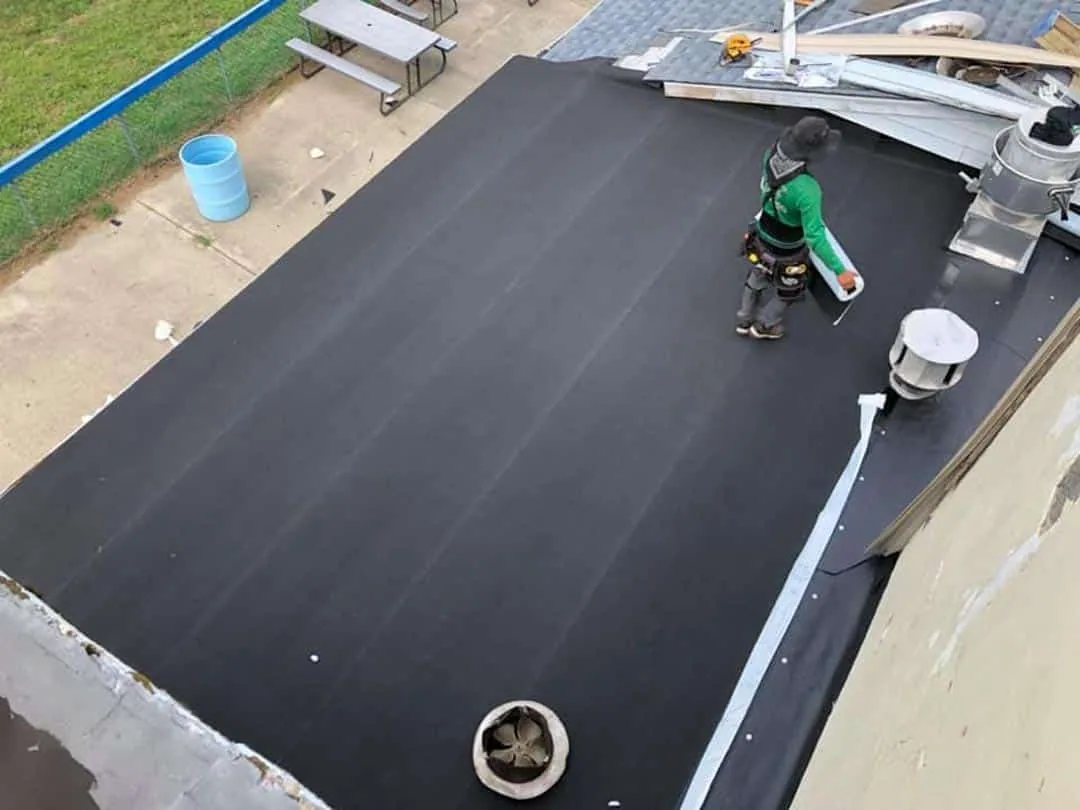
A compatible seam repair depends on surface condition, material, movement, and how far the separation extends. Preparation may include cleaning, drying, removing failed material, and restoring the original joining method. A patch that crosses a contaminated or wet edge can fail to bond. If the opening repeats along a long run, multiple isolated patches may not provide a defensible repair boundary. We explain whether a local repair, seam replacement, or broader section is supported by the inspection.
Cost and schedule reflect access, seam length, membrane type, moisture below the surface, and how the building operates during work. A repair to an EPDM assembly uses different materials than a heat-welded TPO seam. The scope identifies the assumed roof system and what could change if concealed conditions appear. We do not extend the work into uninspected areas without a documented reason and owner review.
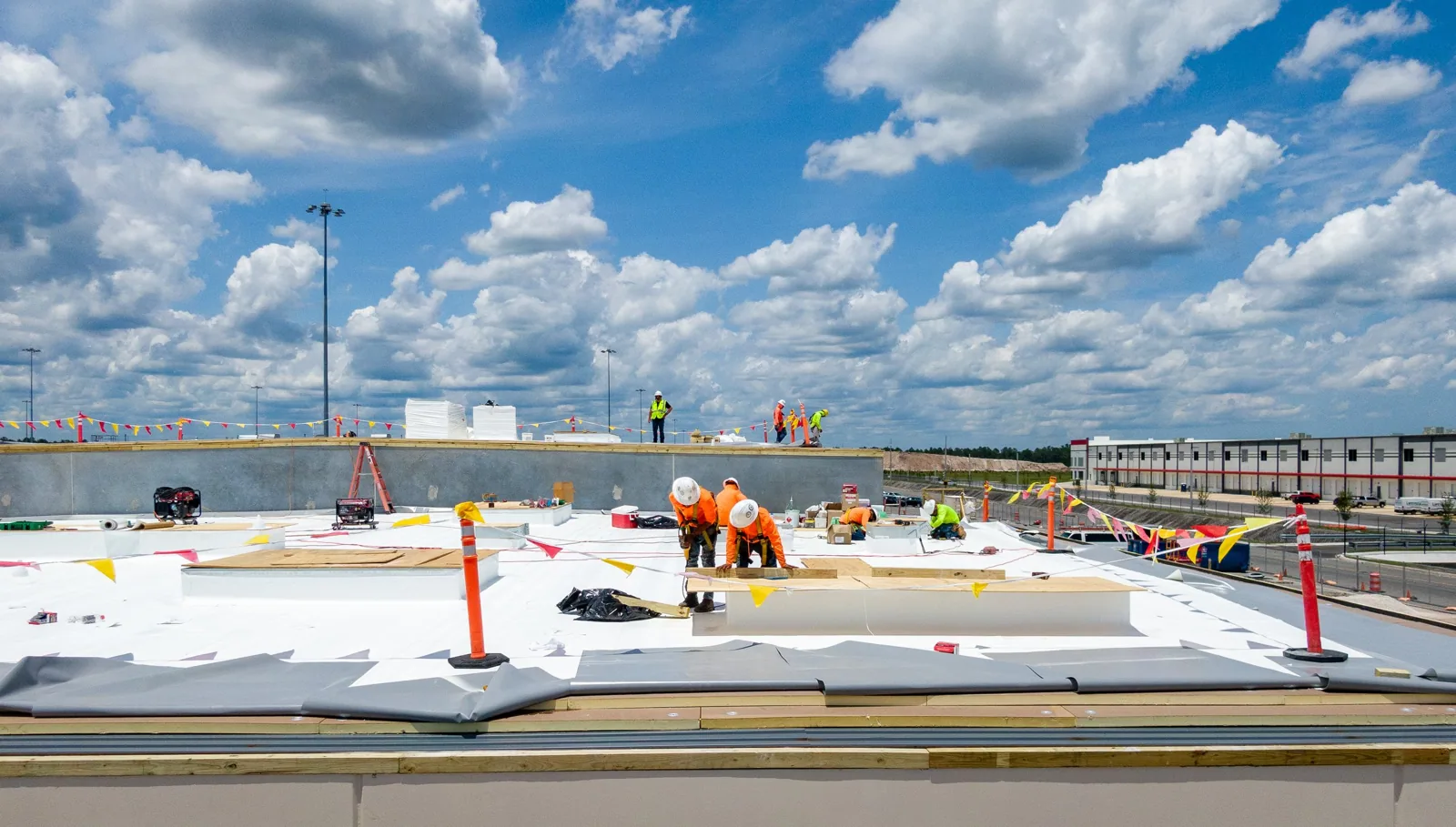
Before repair, the crew confirms safe access, weather conditions, and whether the surface is dry enough for the selected process. Work is staged to keep tools, debris, and temporary protection within the approved zone. If the building is occupied, we coordinate roof access and the interior area below when relevant. Near Palm Bay Hospital on Malabar Road, operational coordination carries a different need than a small flex suite. The job record names the contact, access limits, and work window.
Where removal exposes wet insulation or a deteriorated deck, the repair pauses at that point for documentation and scope review. The owner receives photographs and a description of the condition before the boundary changes. If a test opening is required, its location and closure are recorded. A linked occupied-building work plan can set access and sequencing expectations when repair takes place around normal operations.
Closeout images show the seam before preparation and after the repair. The record lists material, repair length or defined boundary, roof zone, date, and any limits on testing. We state whether the work addressed the reported leak path or whether interior evidence still needs follow-up. A roof condition report can preserve the finding alongside other maintenance needs and help the owner compare later inspections.
Local access varies between the Port Malabar industrial listings and commercial space along Babcock Street. A tenant schedule may determine when the roof can be reached. We record those constraints rather than imply that every roof zone was examined. If the seam remains stable at follow-up, that becomes another dated observation. If it opens again, the new record gives the next inspector a clear starting point.
Learn more →
Learn more →
Learn more →
Learn more →
Learn more →
Learn more →
Learn more →