
A dark line at a curb or wall can mark a failed flashing detail. The visible stain may sit below the entry point. We inspect the transition, adjacent membrane, fasteners, and surface condition before assigning a cause. The record separates the reported leak from the observed opening. It also names the roof zone, access limits, and any temporary protection applied while a permanent repair is prepared.
Palm Bay weather records include Irma, Ian, Nicole, and a 2005 F-1 tornado. Those events do not establish what happened at an individual roof curb or parapet. The 5200 Professional Center is listed with office suites on Babcock Street, while The Crossings at Babcock is marketed for ground-lease or build-to-suit retail. We confirm the address, access contact, and observed roof condition before proposing work.
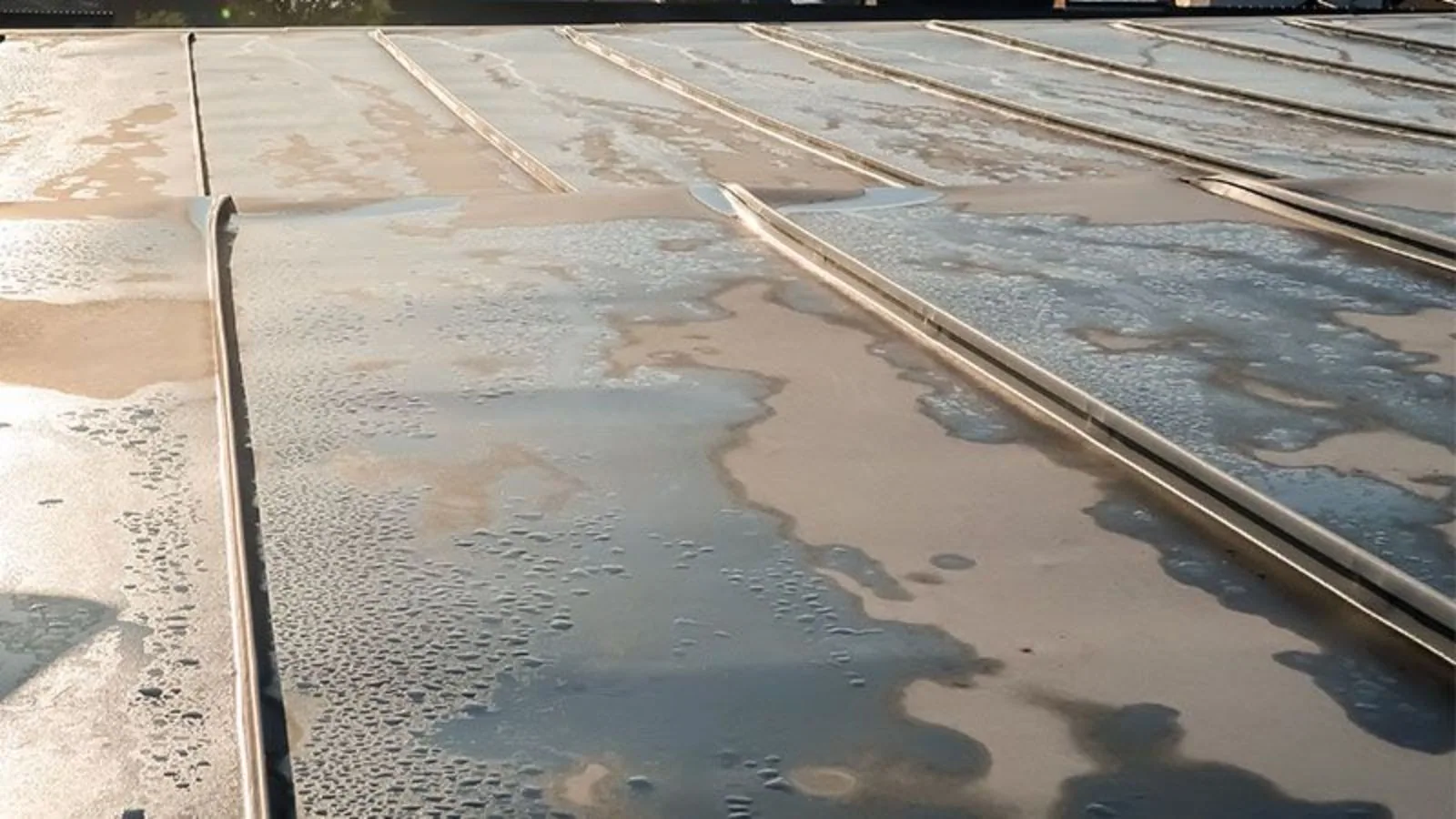
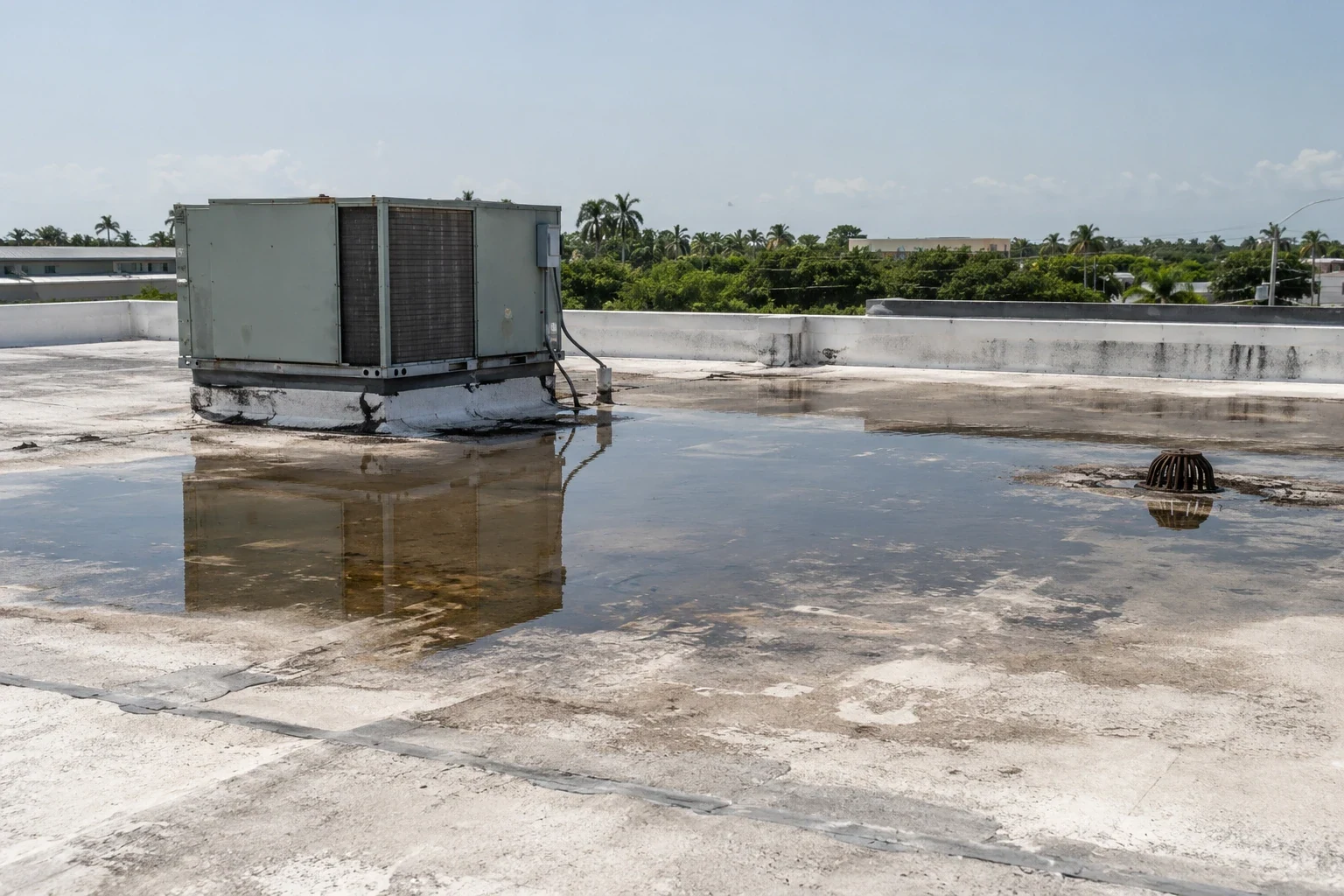
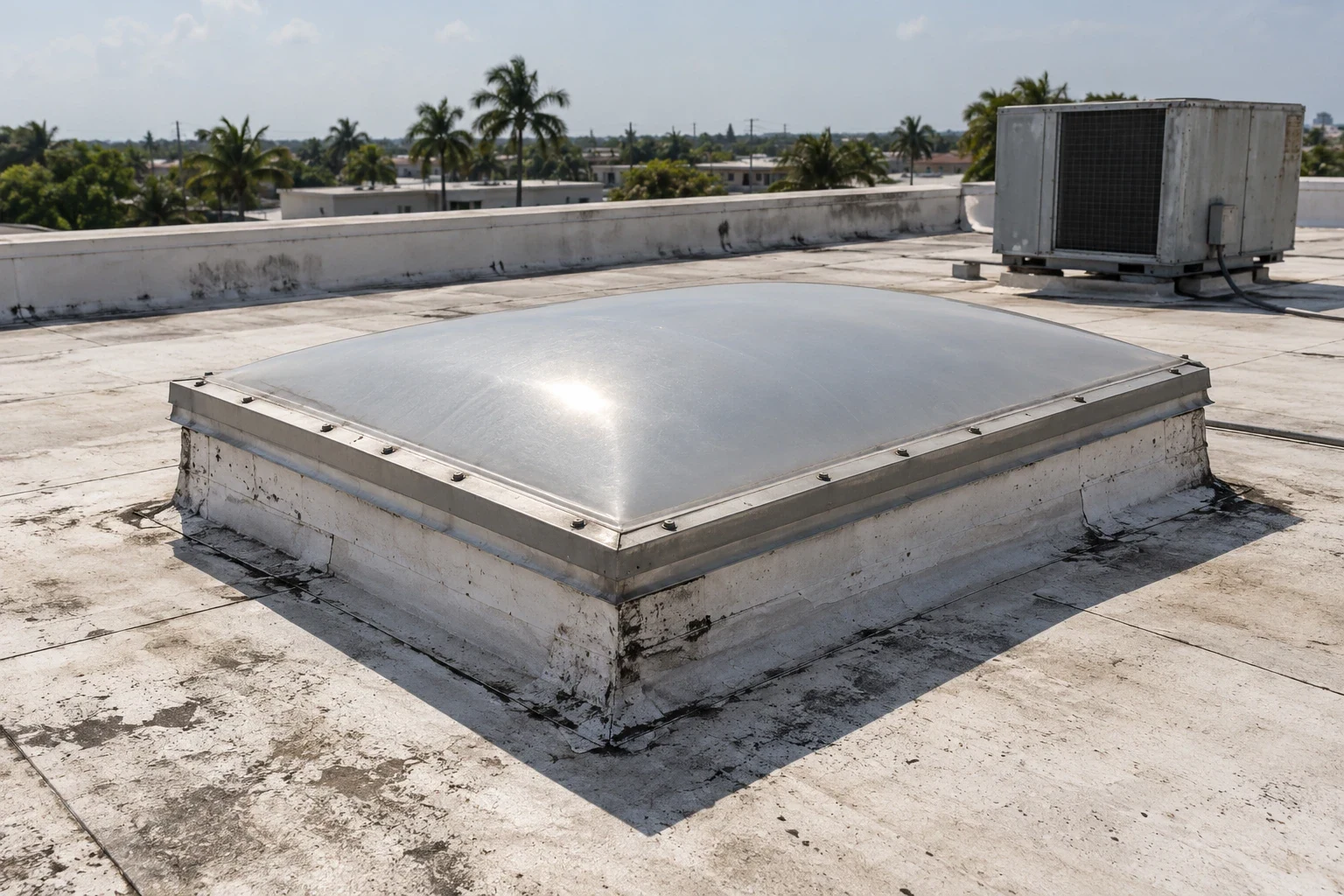
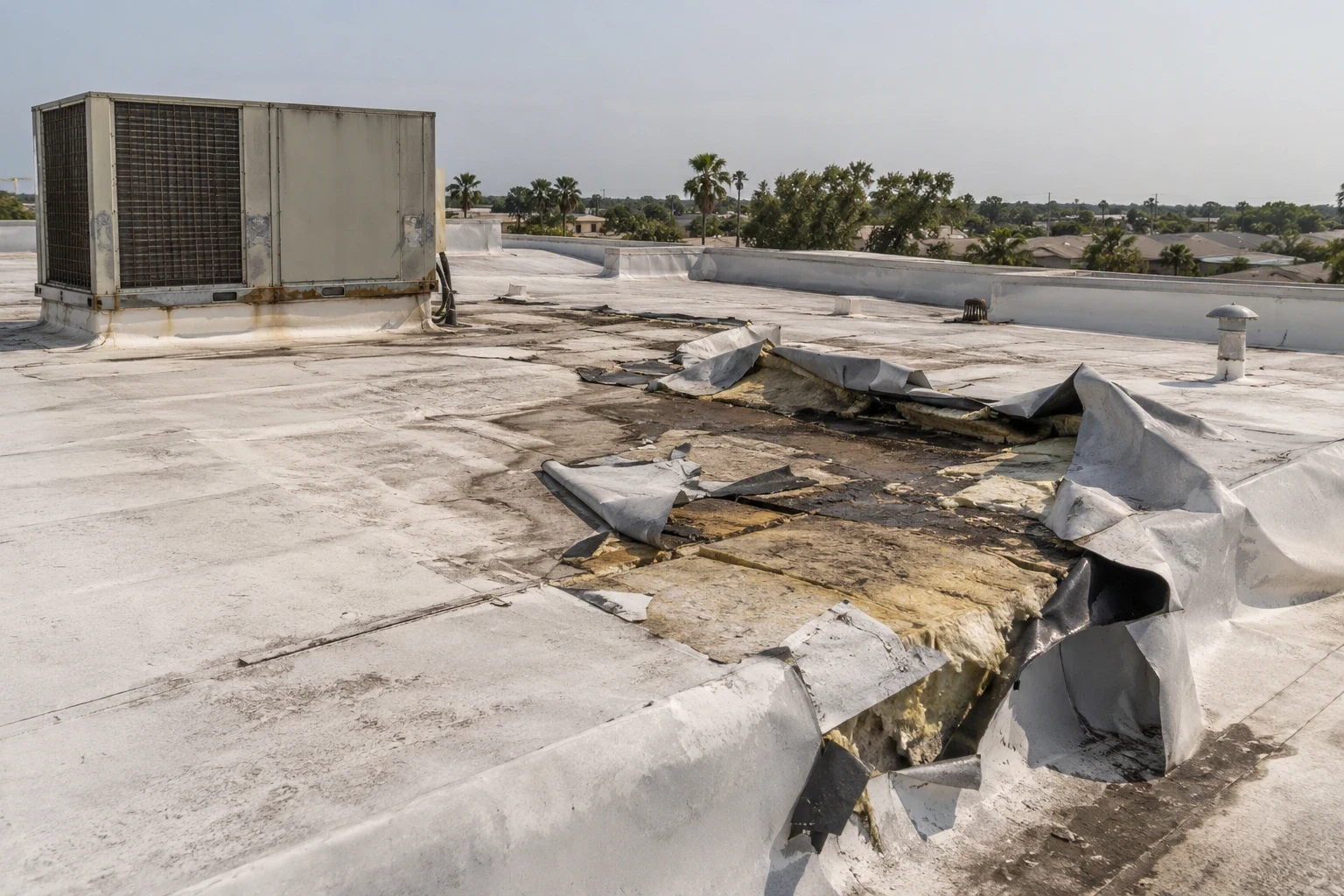
Flashing is the part of the roof assembly that turns membrane up or connects it to a penetration, wall, curb, drain, or edge. Failure can appear as a split, loose termination, cracked sealant, open lap, corrosion, or a gap between materials. We check the transition from more than one direction. A close photograph captures the surface, while a wider image places it in the roof zone and shows nearby seams and drainage.
The inspection asks whether the membrane remains attached, whether the substrate is stable, and whether the detail can accept a compatible repair. A sealant bead over a moving gap may conceal the opening without correcting it. If the leak report points toward an outlet, a penetration and flashing inspection includes the curb or base and its tie-in. The finding states which portion failed and which parts remain unconfirmed.
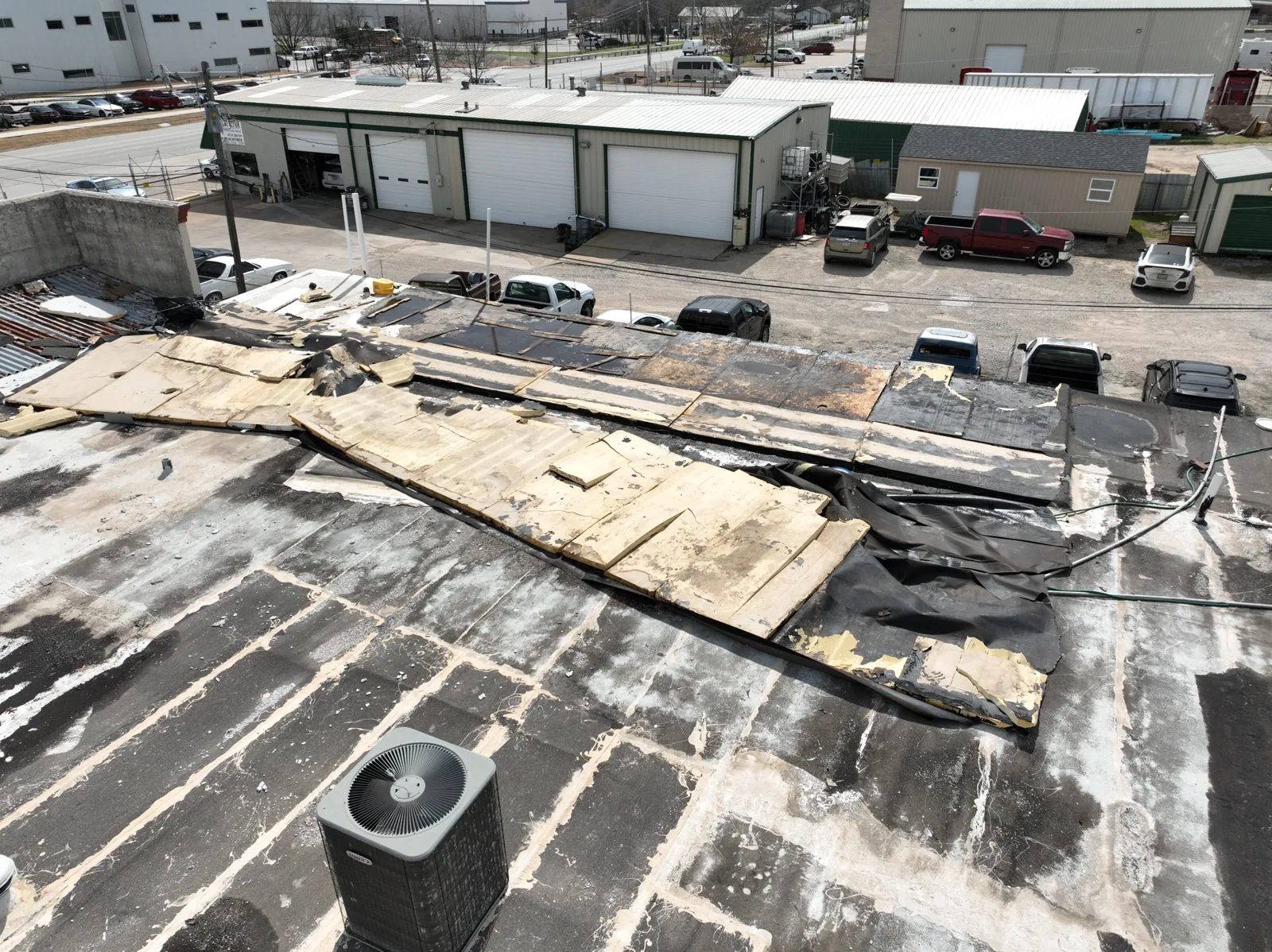
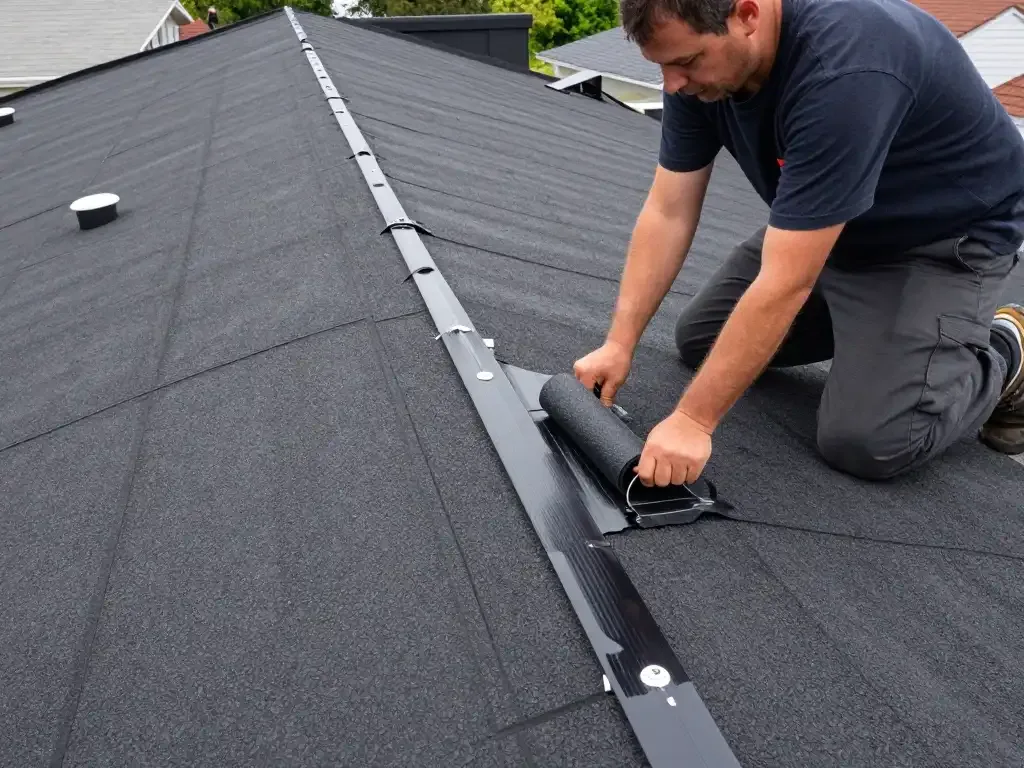
Repair compatibility depends on the roof system and the existing materials. TPO, PVC, EPDM, modified bitumen, metal, and coating assemblies use different preparation and attachment methods. We identify the existing membrane before selecting a patch or replacement detail. Dirt, oxidation, wet substrate, and old repair layers can affect adhesion. If the surface cannot be prepared within the repair boundary, the scope says what must be removed or tested first.
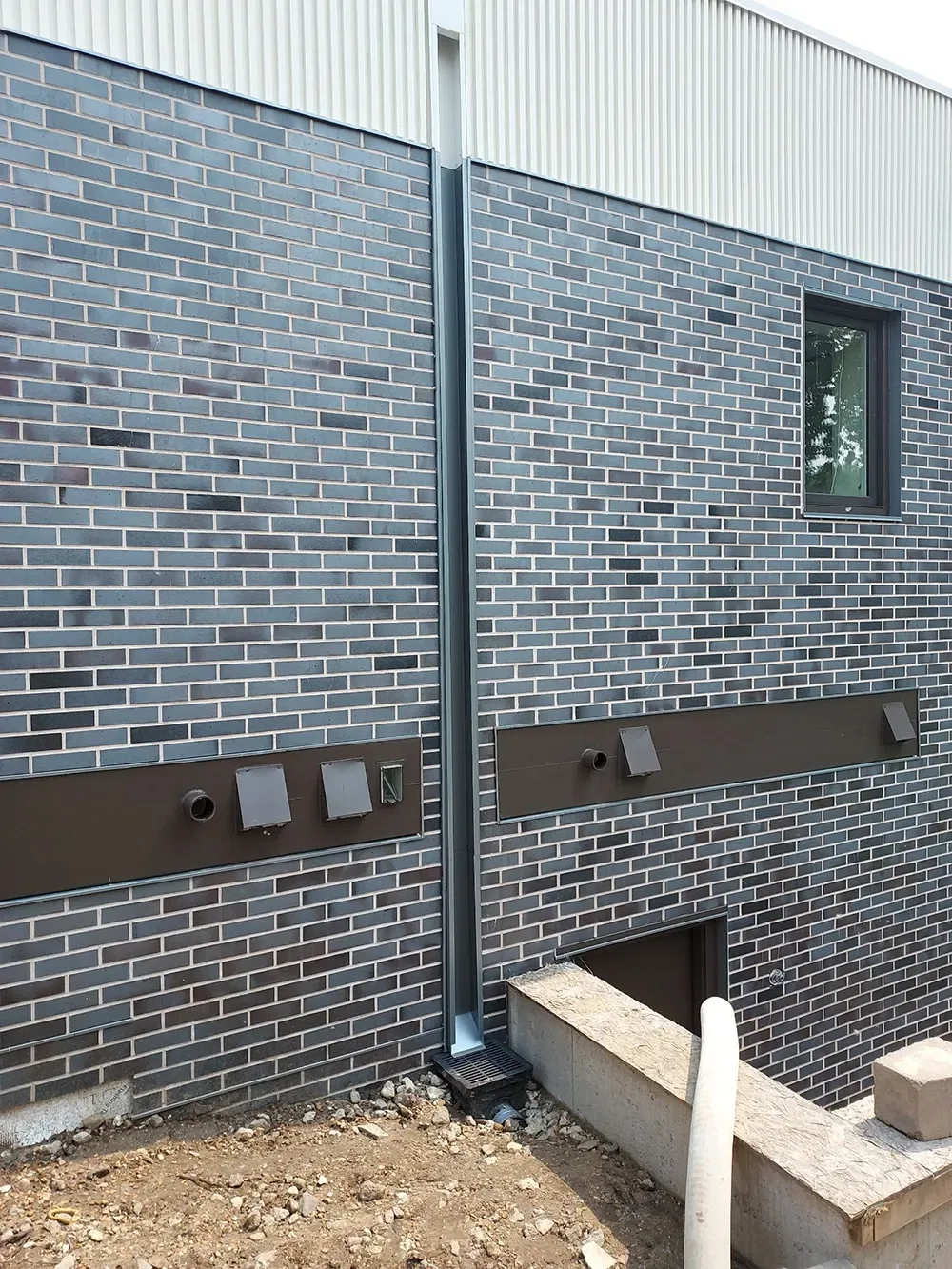
Florida's current building code is the 8th Edition, effective statewide since December 31, 2023. Code applicability and permit needs depend on the project scope and local review. We record the proposed roofing work without claiming that every small repair has the same approval path. When an edge or wall junction also needs attention, related coping and edge metal work can be scoped alongside the flashing repair, with each transition listed separately.
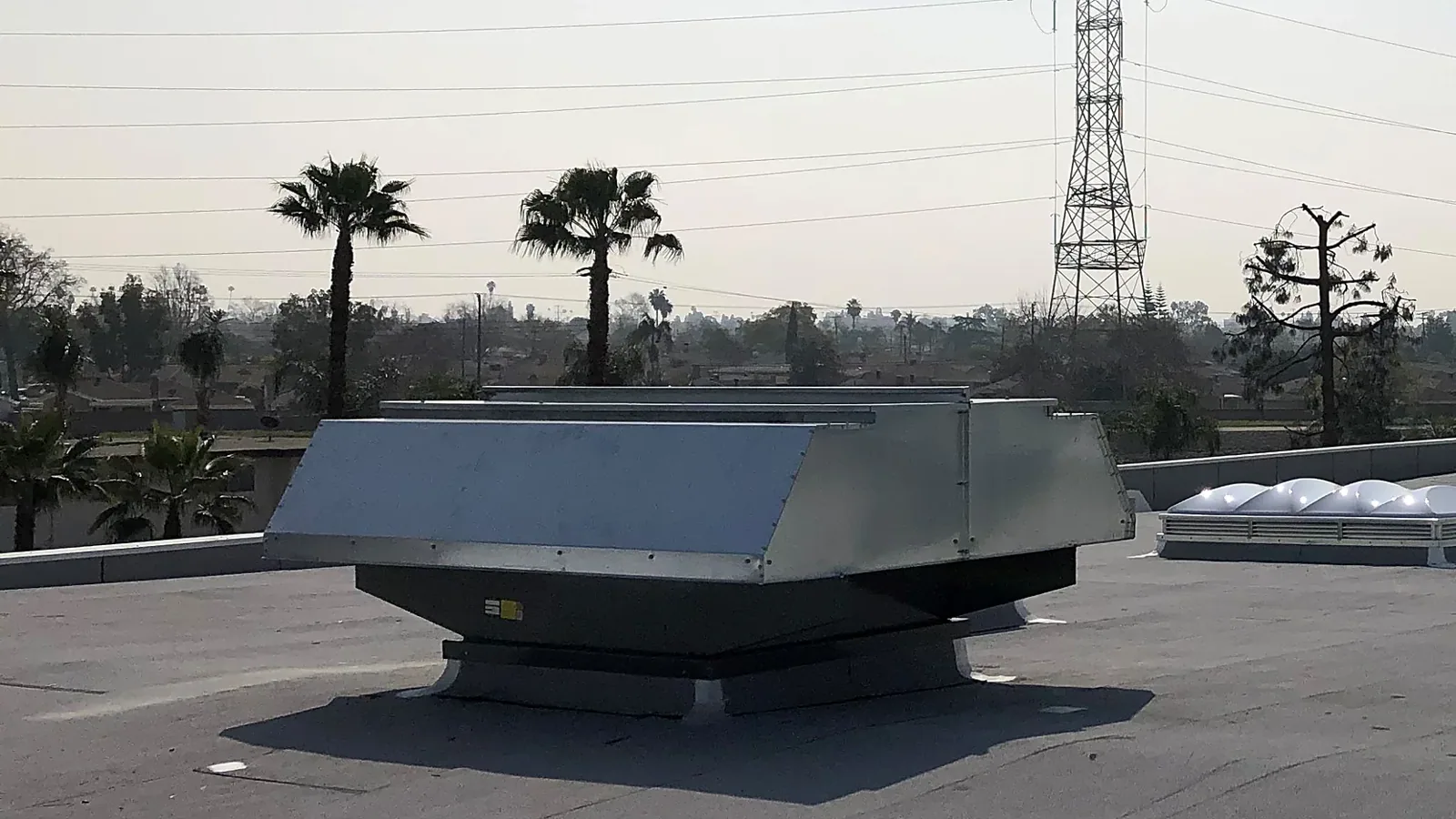
A flashing opening can admit wind-driven rain that travels along insulation or deck before appearing inside. We compare the reported room and ceiling condition with roof details above and around that area. The match may be direct, partial, or uncertain. A roof photograph cannot establish concealed moisture by itself. After a cyclone, we also use a distinct hurricane damage assessment to separate the event report from visible failure. Where evidence is incomplete, we identify a moisture survey or test opening that could answer a specific question.
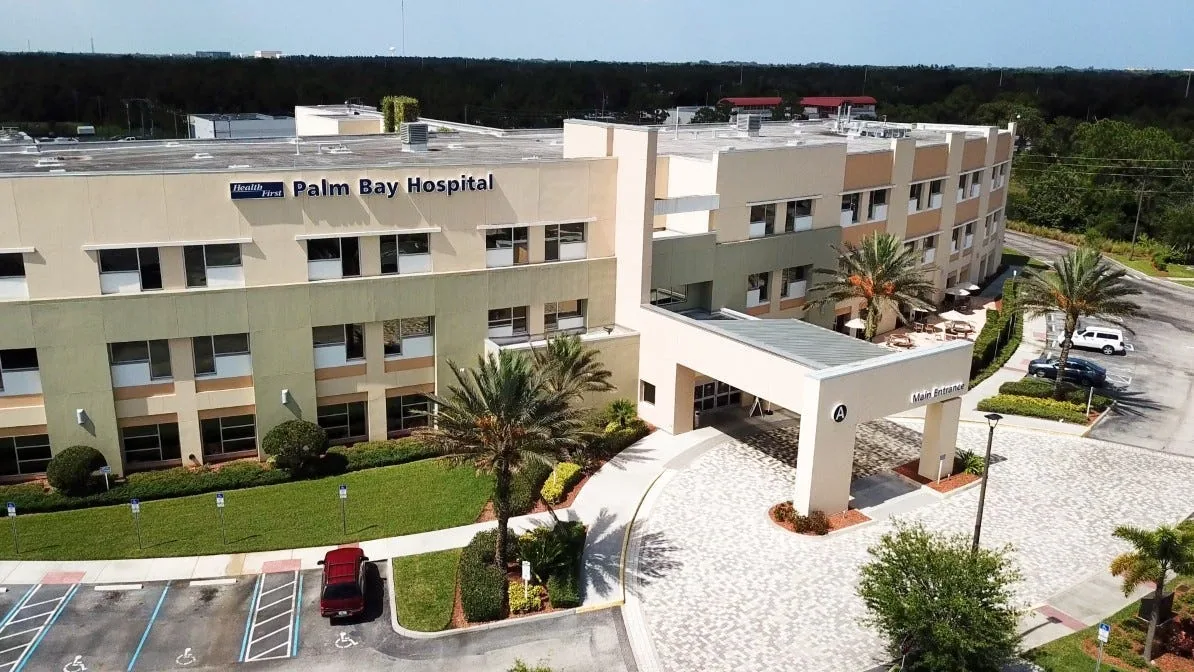
The Palm Bay Hospital campus sits on Malabar Road and handles continuous healthcare operations. A repair near an occupied institution needs clear access coordination, dust and water control, and a defined work window. The same record discipline helps at a small office suite or retail building. We use the same separate-event method on a ponding-water investigation when water remains after the storm has passed. An active leak response can include temporary protection, followed by a separate permanent repair scope once materials and substrate are ready.
A repair boundary may follow a curb base, wall termination, or short run of membrane. It should include enough sound material to complete a compatible tie-in. We state whether the scope includes removing failed flashing, preparing the surface, installing replacement components, and closing the perimeter. If water damage extends past the visible detail, additional work is not assumed. A test opening or change in the repair limit is recorded before the scope expands.
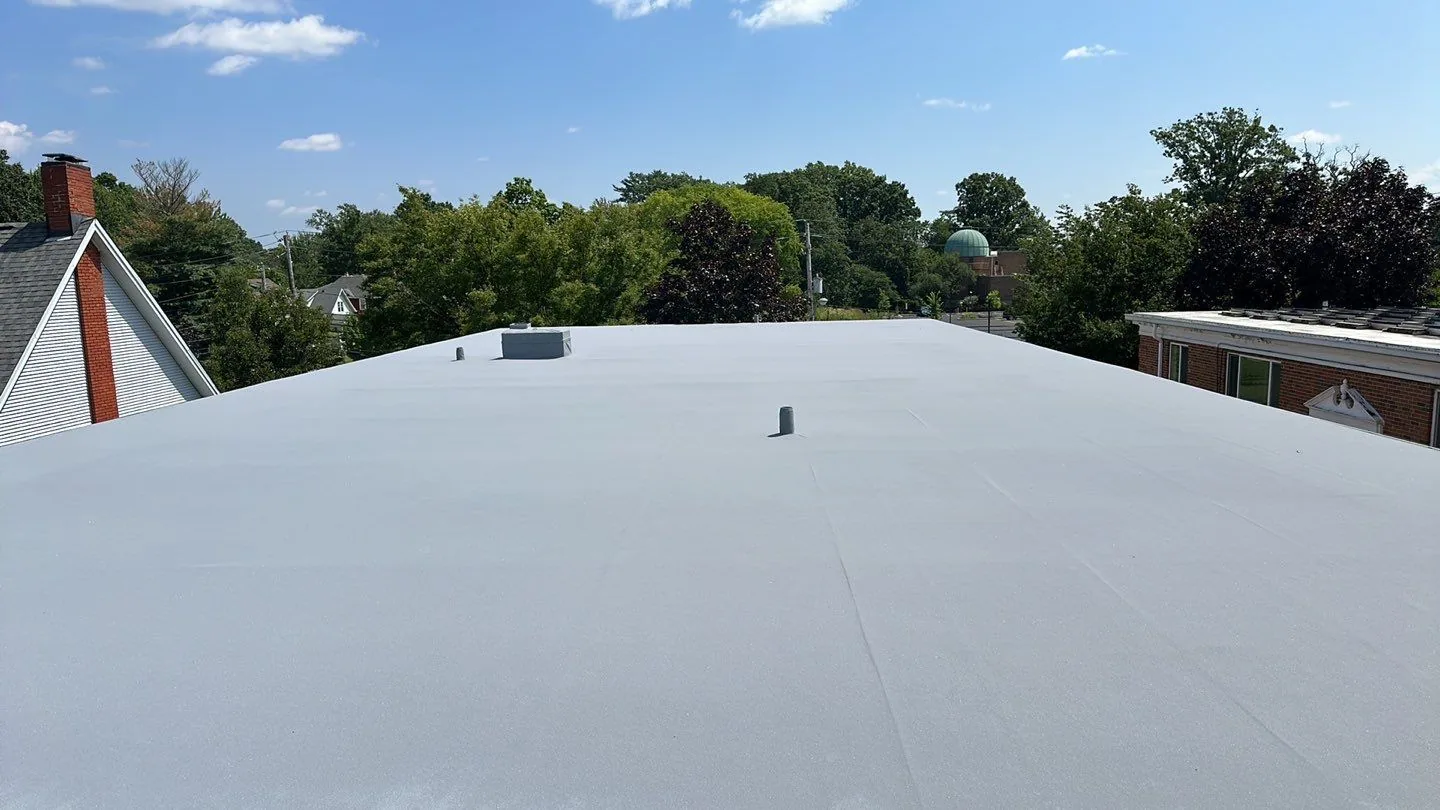
Cost and timing depend on roof access, detail geometry, system type, substrate condition, weather, and whether the building remains in operation. Palm Bay station normals show hot summer days and substantial annual rain, so the actual work window and surface dryness matter. The scope avoids a promised completion date until access and conditions are known. For a TPO membrane detail, preparation and heat-weld conditions are checked against the material on the roof.
Closeout images show the repaired detail at close range and within its roof zone. The report records materials, work completed, repair boundary, and any part that could not be tested. If a leak was reported, it states whether the interior condition was revisited and whether the observed roof opening matched the likely path. A dated condition record helps the property team compare future findings without relying on memory.
Commercial corridors vary across Palm Bay. The Crossings at Babcock is marketed for ground-lease or build-to-suit retail, while Palm Bay Station offers shop and ground-lease formats. These listings do not tell us what roof details exist on a specific occupied building. They make coordination with tenants, access contacts, and future work important. We close with the event date if known, the inspected transition, outstanding limits, and the next action.
Learn more →
Learn more →
Learn more →
Learn more →
Learn more →
Learn more →
Learn more →
Learn more →