
A stain near the kitchen may follow an exhaust curb, drain, or roof seam. We record the room, event time, and equipment status before tracing the water path above. Palm Bay's retail plans include restaurant uses in the Bayside Lakes trade area. Each operator's kitchen, access, and roof assembly must be confirmed on site.
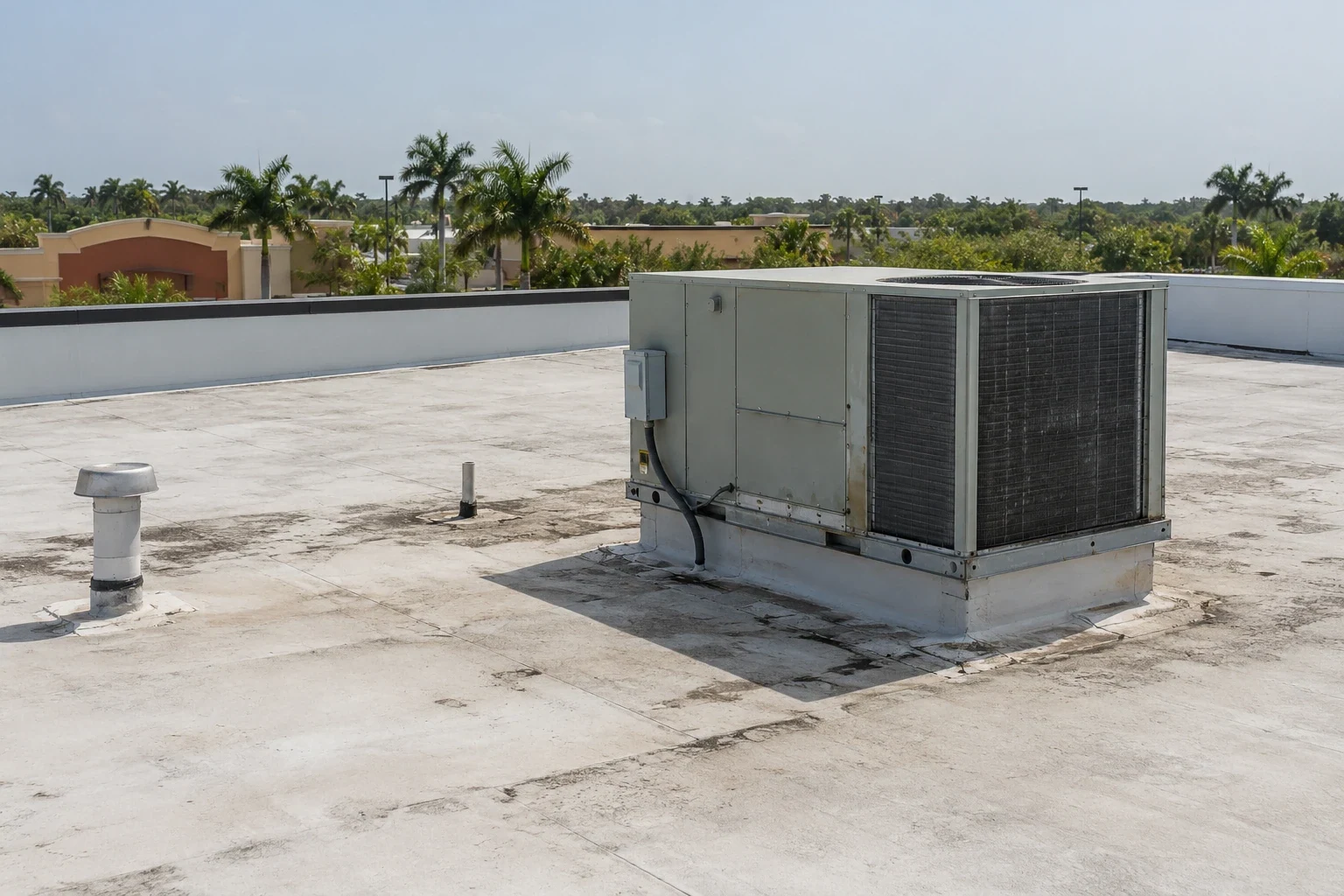
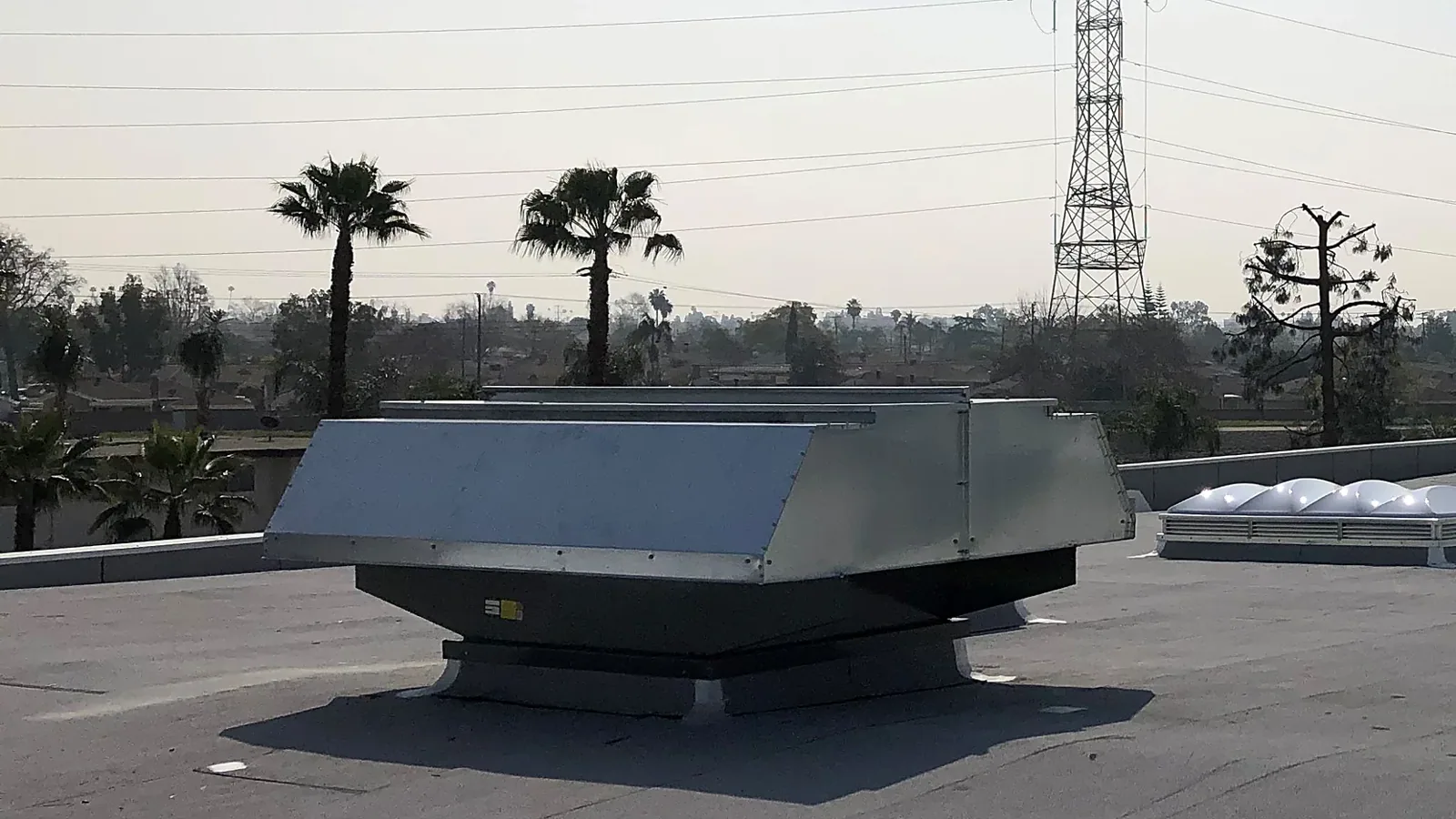
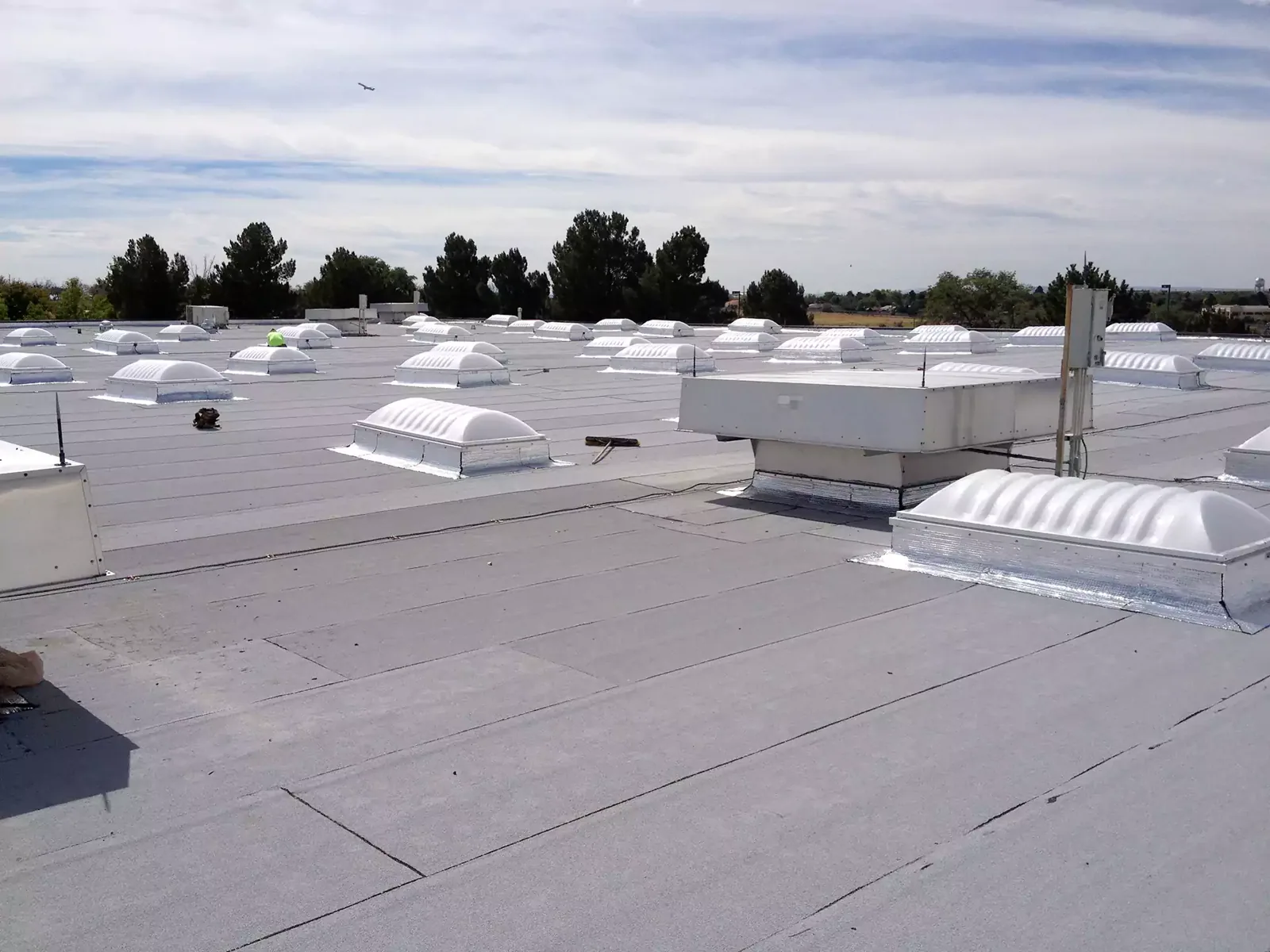
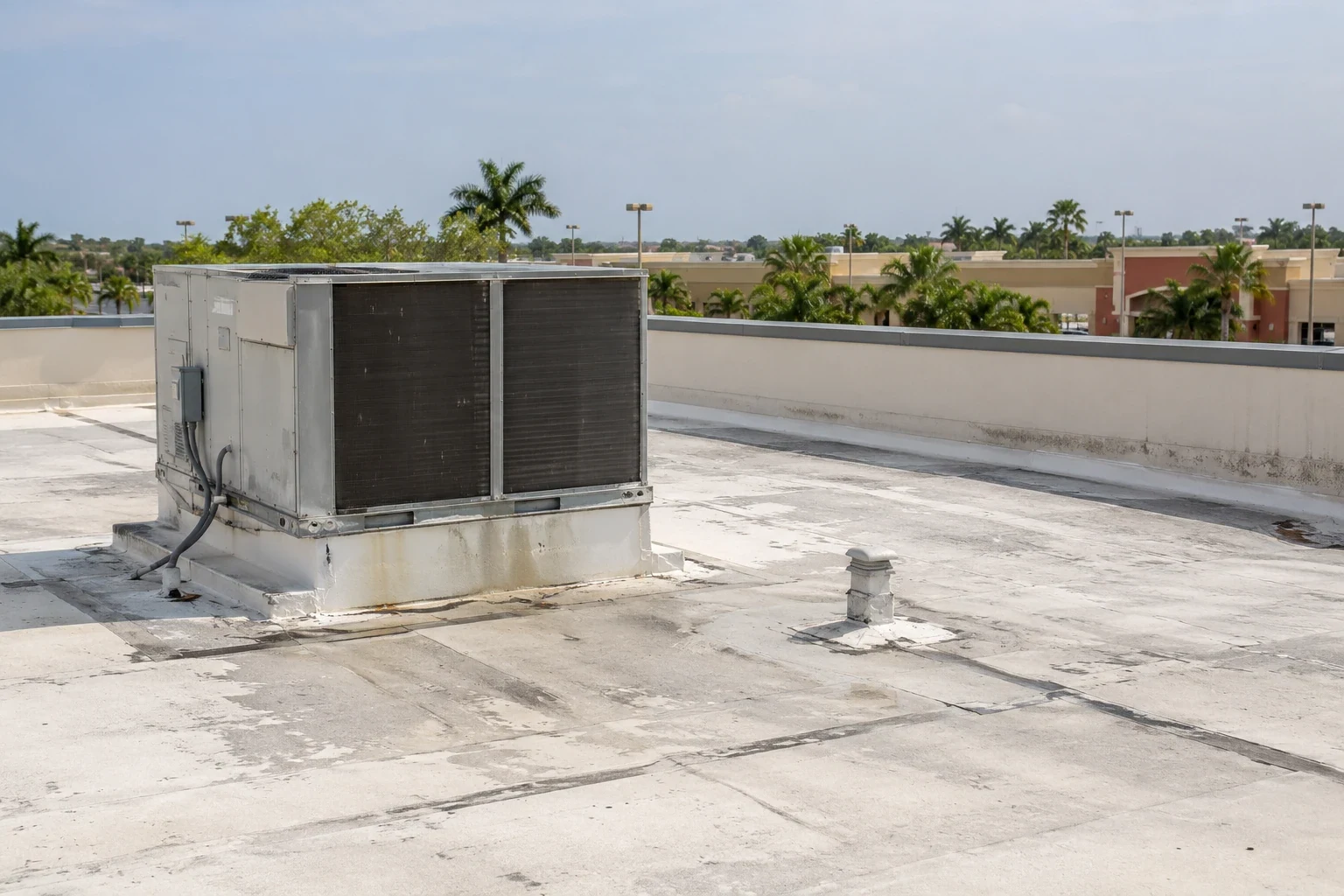
Kitchen exhaust changes the roof surface around discharge fans and ducts. Inspect curb flashing, metal, sealant, fasteners, and any residue around the opening. Grease can collect on nearby surfaces and attract dirt, while heat can affect adjacent materials. A curb and support inspection can record the condition at fan bases and other service attachments.
Check whether duct or fan work altered the roofing detail. An unused opening, loose support, or patch over an older curb may become a separate water path. Photograph the current equipment and the roof transition. The scope should identify who handles hood and duct service and who repairs the roof flashing.
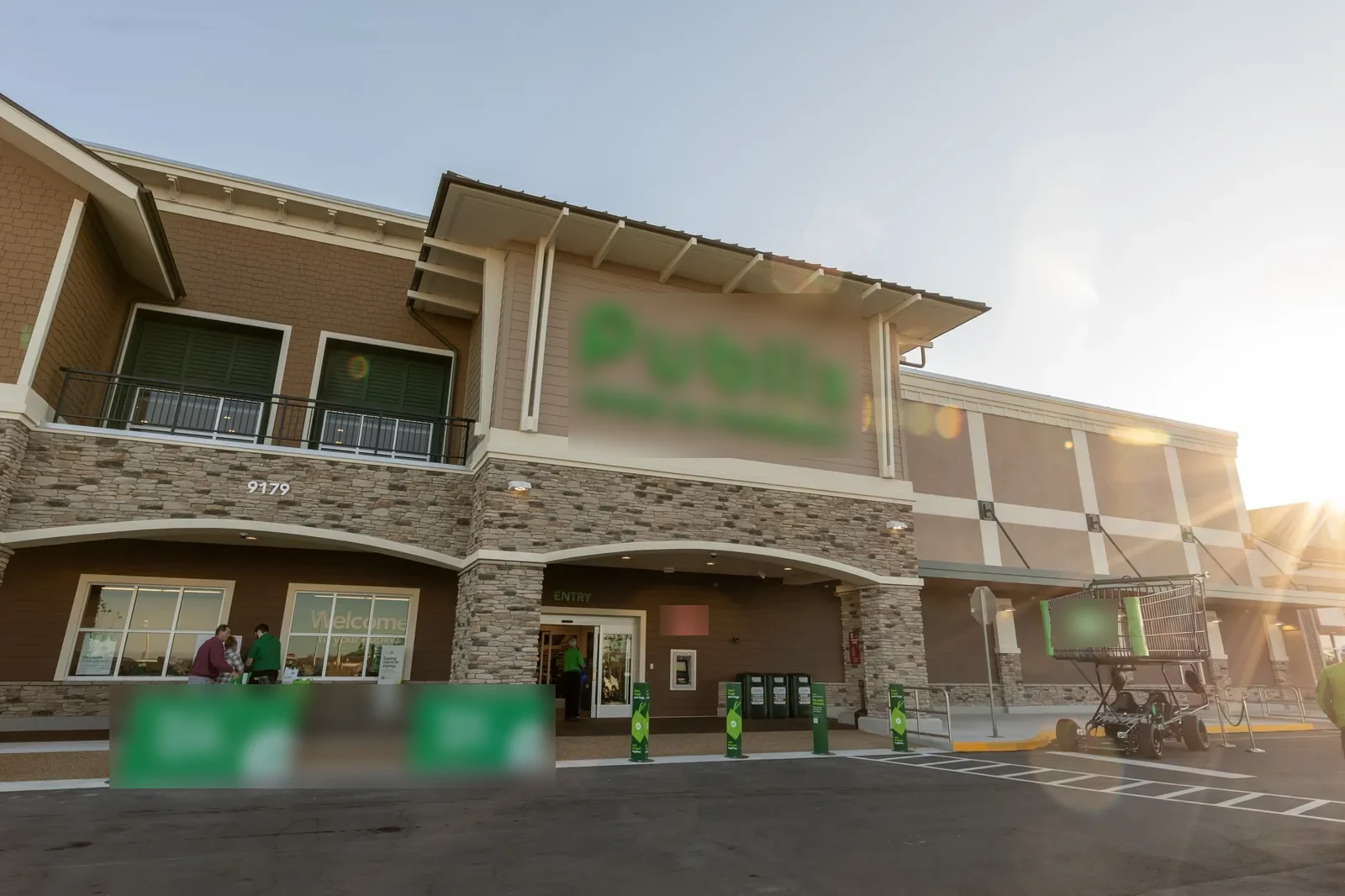
A grocery store roof inspection may also address refrigeration equipment and receiving. A restaurant roof adds cooking exhaust and kitchen timing. Similar roof materials do not mean the same access or cleaning plan. Confirm which equipment is operating before work begins.
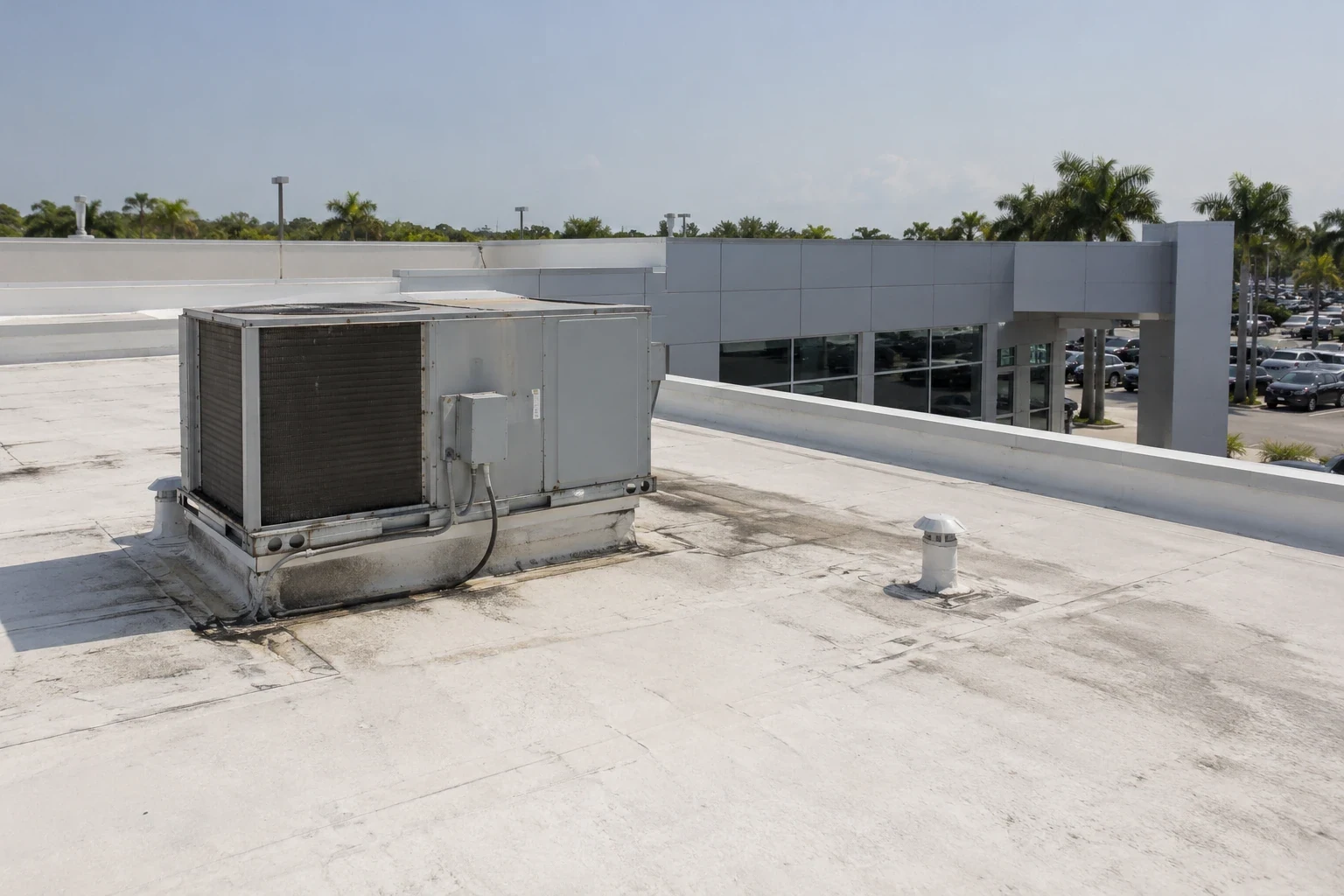
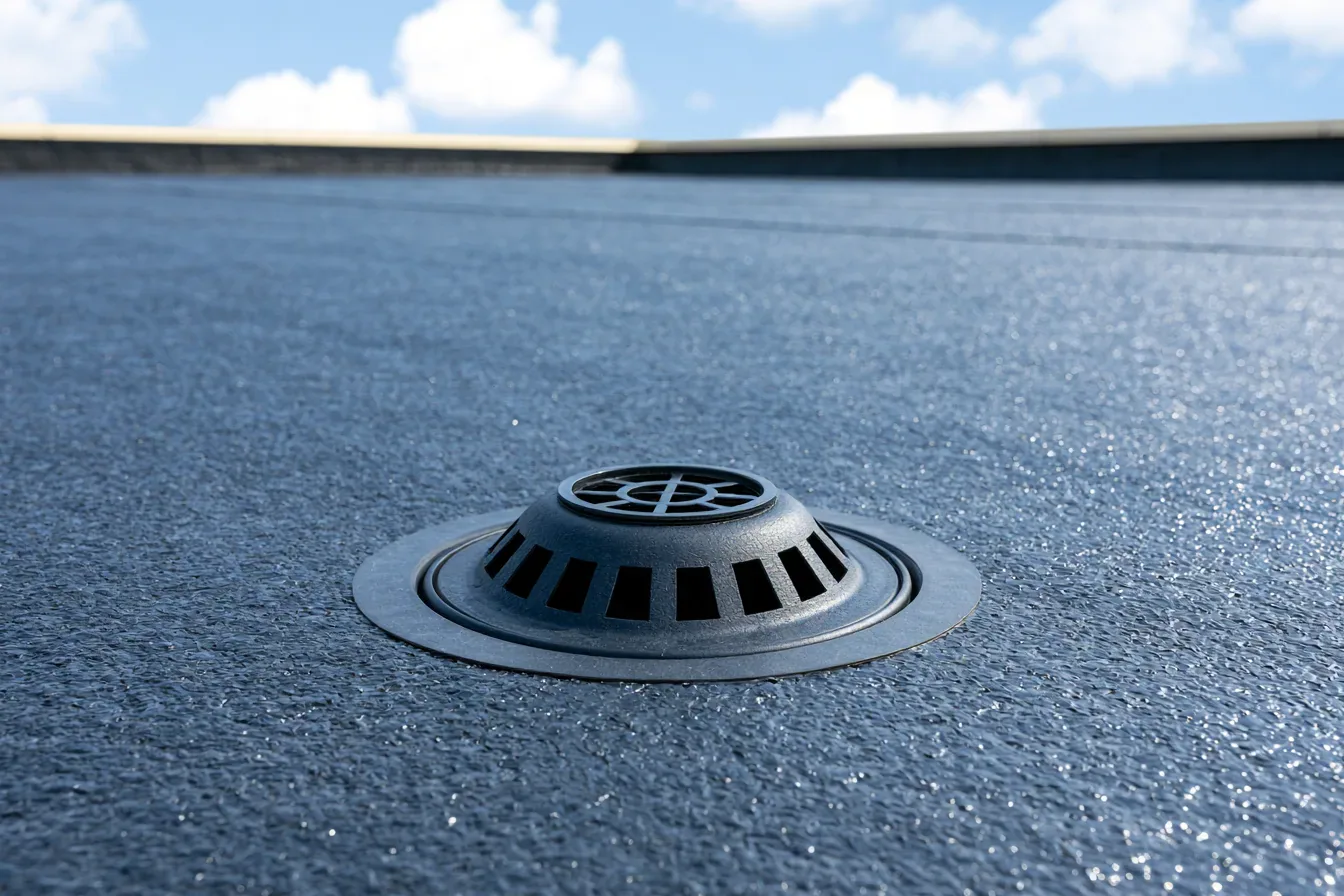
Inspect drain bowls, scuppers, overflow openings, low areas, and water marks. Grease or debris from rooftop service may restrict a drain, but a blocked outlet and a failed flashing are different findings. A drainage review can map the outlet path and record whether water remains after clearing.
Interior moisture may come from roof leakage, condensation, a plumbing line, or kitchen washdown. Record when the condition appears, which equipment is running, and where it is visible. Compare that report with roof evidence before assigning a cause. If access is unavailable, list the area that could not be checked.
The Shoppes at Cypress Bay leasing plan includes restaurant uses among grocery, pharmacy, fuel, auto-parts, banking, and personal-service tenants in the surrounding trade area. That is local retail context, not a tenant roster for any particular restaurant. Confirm the actual site operator and property manager before coordinating inspection.
Melbourne's 30-year records show hot summer periods, with the region averaging more than 55 inches of rain each year. These regional records help with planning, but do not establish a roof leak at a restaurant. Check the surface and forecast on the day of work. A wet substrate or approaching storm may require a stop and a temporary cover.
Hurricane Irma rainfall measurements include heavy totals at several named Palm Bay points. Those readings are specific to the event and location. They do not establish damage at another restaurant. After a storm report, inspect the roof edge, exhaust flashing, seams, and drains, then record the observed condition without assuming the cause.
If active water reaches food preparation, electrical service, or customer areas, coordinate with the manager before entering or covering the room. Temporary protection has its own date, materials, and return plan. Permanent repair follows when the roof surface and system requirements allow it.
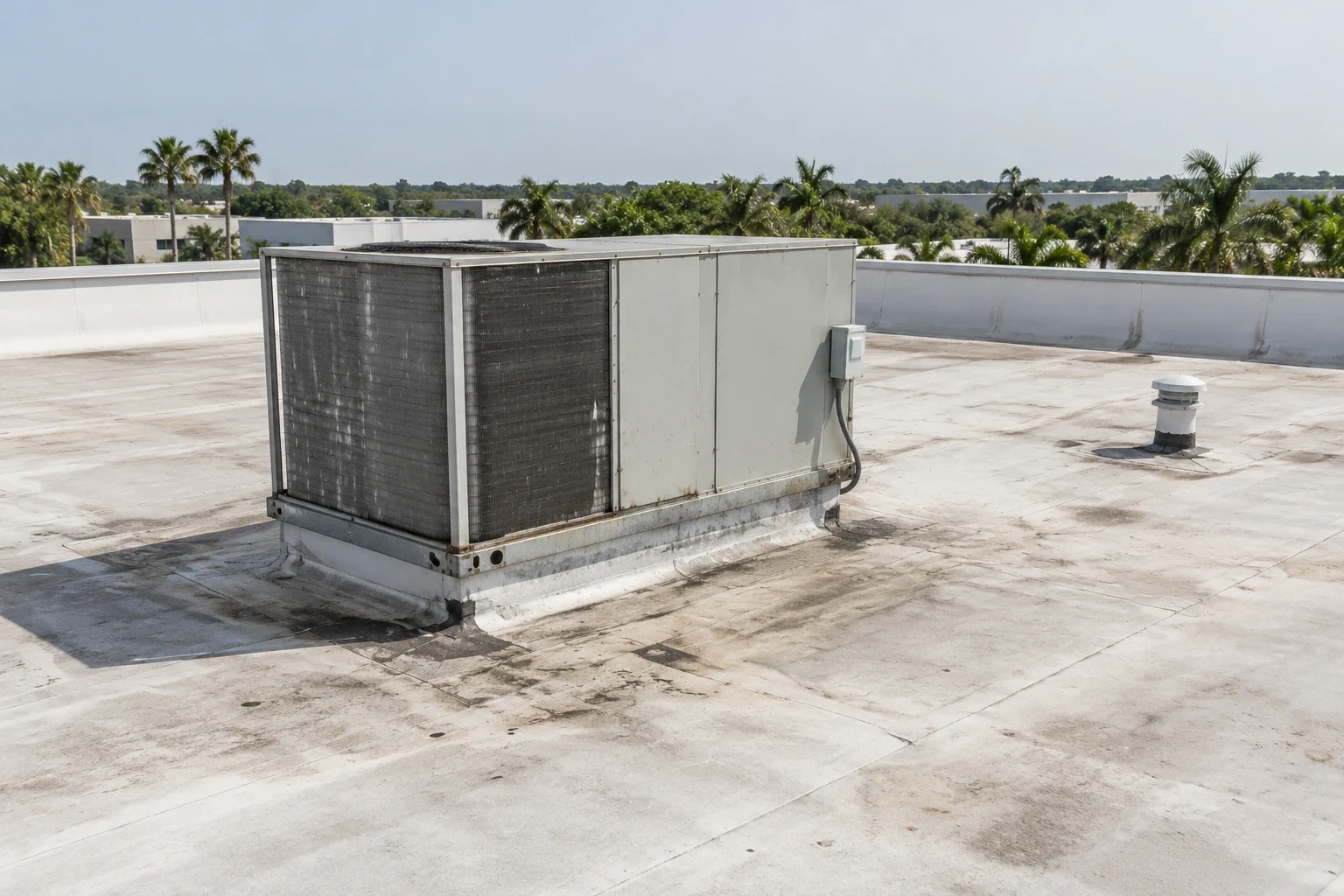
Confirm opening time, prep shift, deliveries, waste pickup, hood cleaning, and roof hatch access. Identify the area below the repair and any dining room, kitchen, or walk-in that needs protection. Set lift position and barriers away from customer entries. The restaurant decides which doors and service paths must remain open.
Port Canaveral's real-estate portfolio includes restaurants alongside offices, warehouses, and marinas serving cruise, cargo, and maritime activity. That regional mix shows how restaurant operations may sit within larger commercial service areas. It does not describe a Palm Bay restaurant's schedule or building. Confirm the current operator's hours and property rules directly.
Some work can be staged before opening or after service, but cure time and weather may affect the sequence. State the planned start, stop conditions, and protection steps. If a temporary measure remains overnight, note who checks it and when the crew returns.

A failed fan curb may need localized flashing work. Multiple open details, wet insulation, corrosion, or recurring leaks can require wider testing. A test opening confirms layers at one location only. Record what was found and keep adjacent roof zones marked as untested until inspected.
Separate roof repair from exhaust cleaning, plumbing, and interior work. The proposal names roof materials, surface preparation, curb details, drain access, staging, tenant protection, and exclusions. If opening the assembly reveals concealed damage, the owner reviews the added scope before work continues.
Compare repair, recover, or replacement using the installed assembly, prior patches, drainage, equipment, and restaurant schedule. A replacement assessment can show which sections require removal. A condition report preserves photos and open issues for the property manager.
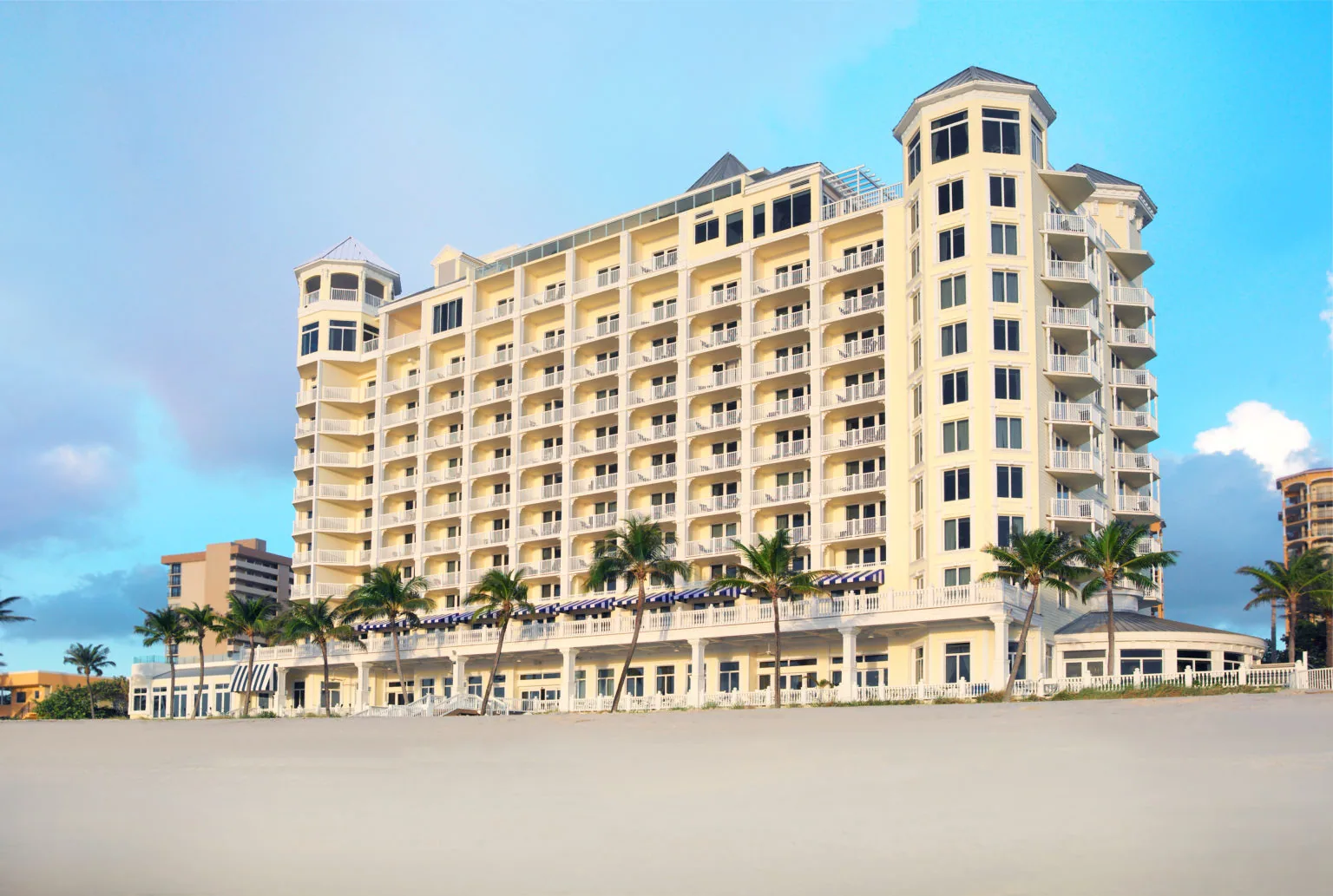
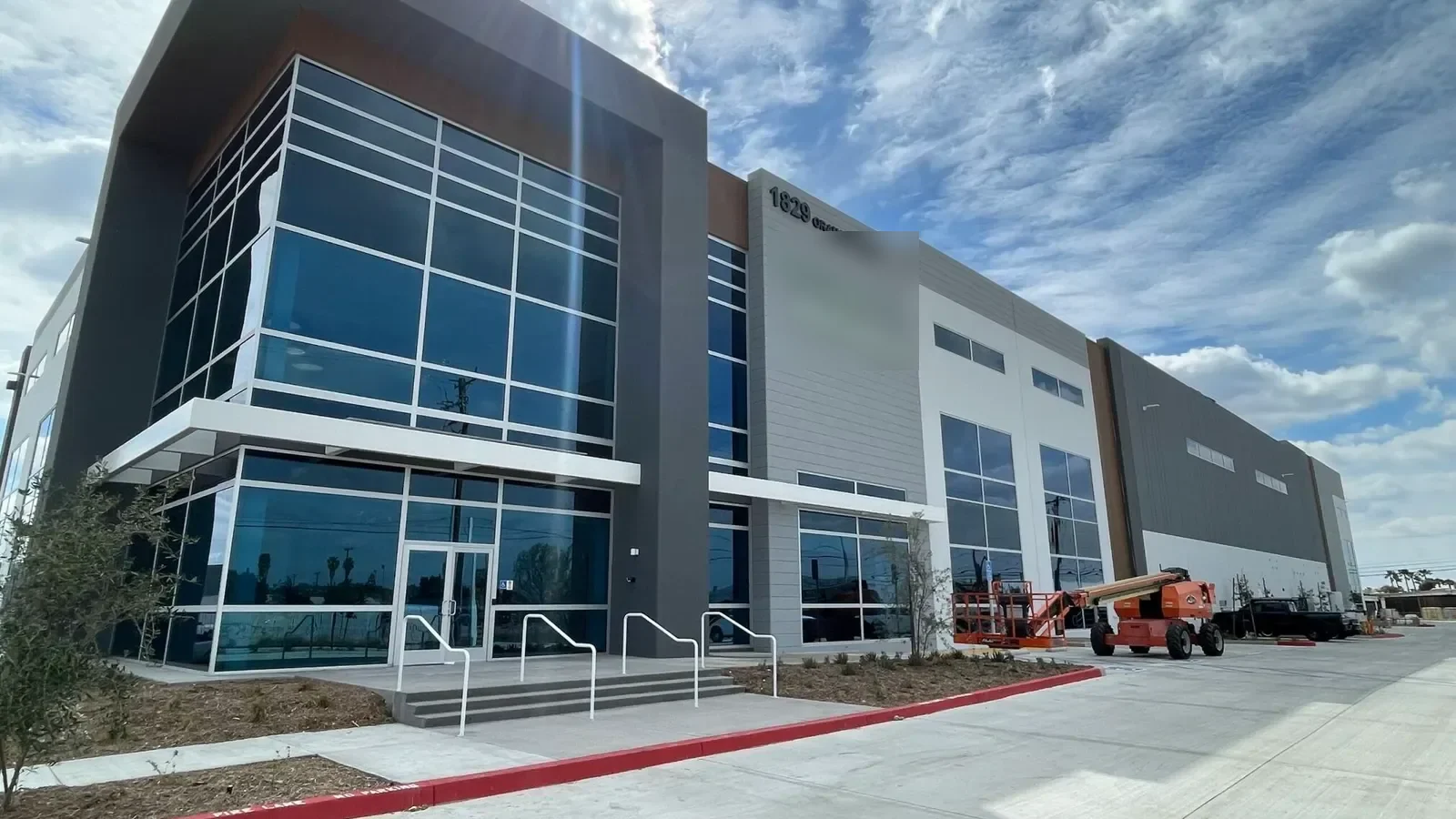
The Shoppes at Cypress Bay is mapped beside The Commons at Cypress Bay West in south Palm Bay. The plan shows nearby restaurant and service uses in a trade area reached by Babcock Street and the St. Johns Heritage Parkway. These facts help orient a service route. They do not identify a specific restaurant roof or its exhaust layout.
A Shoppes at Cypress Bay service area names the local commercial node. Confirm the restaurant address, loading entrance, hood-service contact, and property manager before dispatch. Keep site-specific roof records separate from nearby tenants.
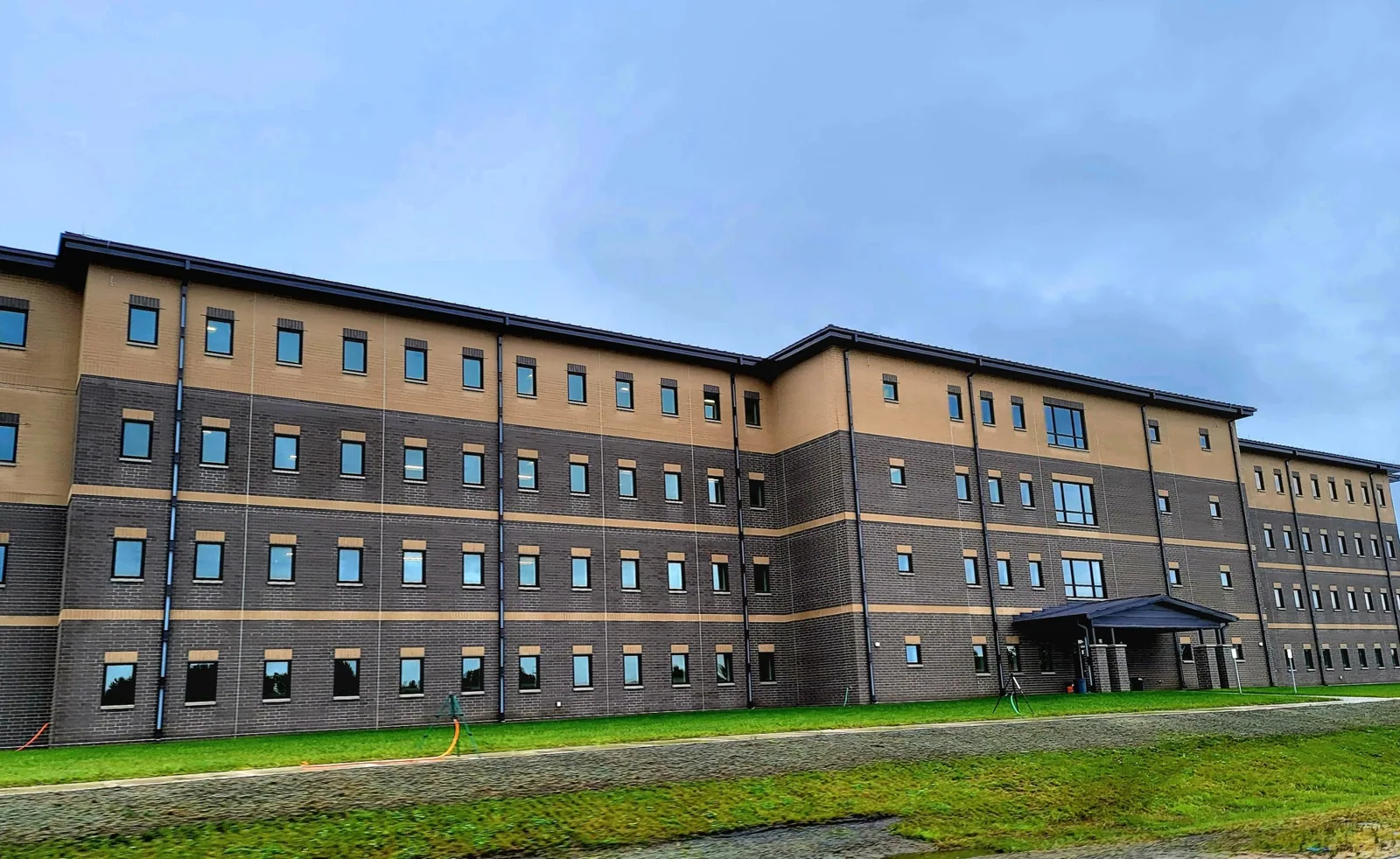
Closeout photos should show the fan curb, surrounding roof, drains, repaired seams, and the affected interior zone where permitted. Record materials, event date, work boundary, access window, grease or debris observations, and unresolved items. State whether the roof repair or kitchen equipment work remains open.
A shopping center roof record may include shared drainage and tenant boundaries. Keep the restaurant's exhaust equipment, kitchen report, and work schedule tied to its own roof zone. Do not treat another suite's repair as completion at the restaurant.
Set a follow-up for repaired curbs and any opening that was unavailable during the first visit. Regular roof checks can note later hood changes, fasteners, and drain debris. Keep maintenance observations dated so the next leak report can be compared with the accepted closeout.
Learn more →
Learn more →
Learn more →
Learn more →

Learn more →
Learn more →
Learn more →