
A water mark can remain after a storm even when the roof is dry at inspection. The important question is where water collected, how long it remained, and whether the drain or roof geometry explains it. We record the reported condition and the roof evidence separately. Palm Bay receives frequent heavy rain; nearby Melbourne climate normals show rainfall peaks in June and September. That regional pattern supports careful drainage checks. It does not establish ponding on a particular roof. We map drains, scuppers, low areas, overflow points, and access limits before recommending work.
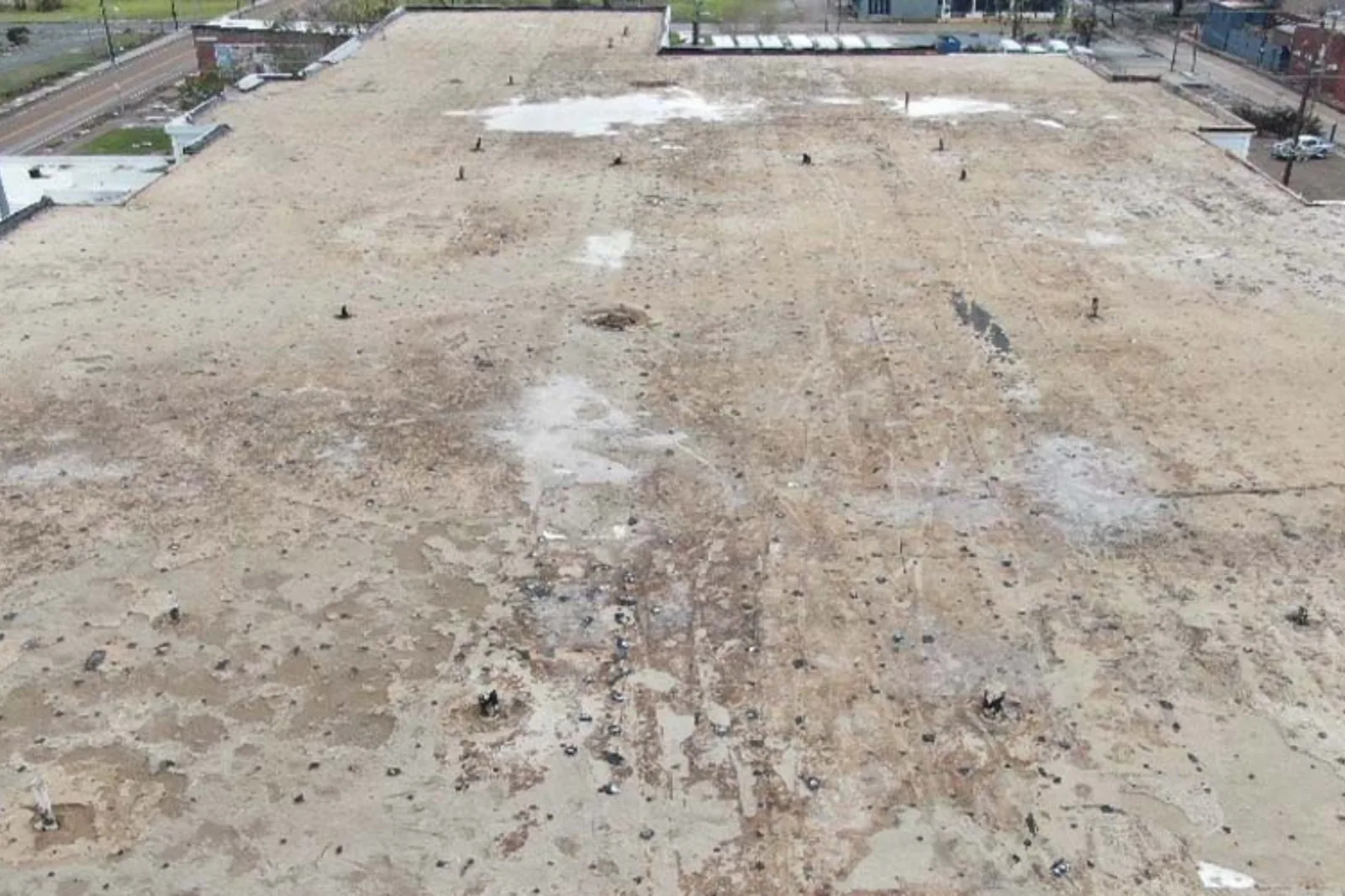
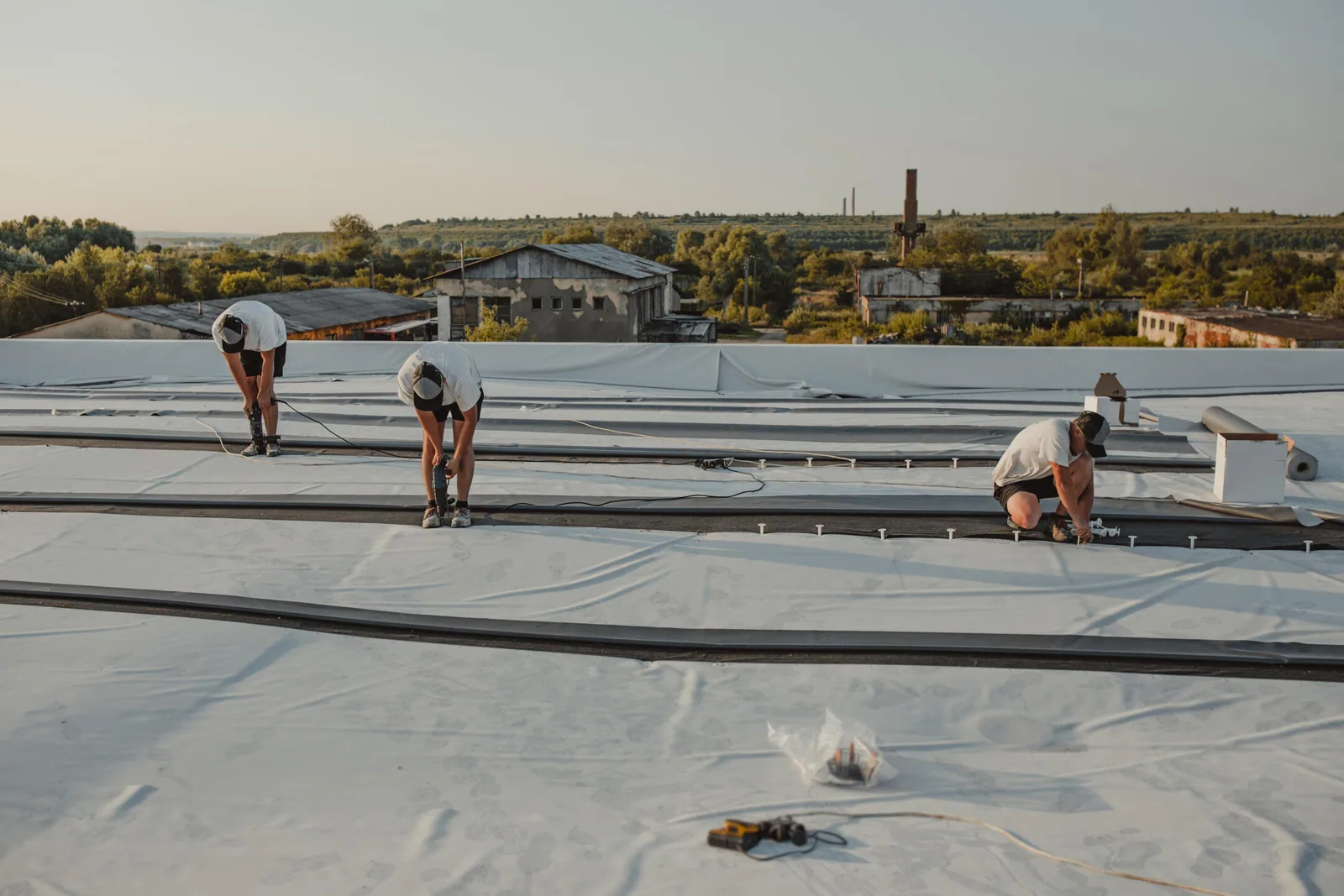
The review begins at each water outlet. We inspect the drain bowl, strainer, clamping ring, visible piping transition, and membrane around the assembly. At scuppers, we look for debris, blockage, damage, open seams, and a clear discharge path outside the wall. We photograph conditions before clearing material so the record shows what the crew found.
A blocked strainer may explain slow drainage. A restricted pipe, damaged bowl, or poor slope can require other trades or additional investigation. We do not call an outlet corrected because loose leaves were removed. The report identifies whether water flows after the cleaning and what could not be checked. A roof inspection can document the full roof section and nearby details. A maintenance visit can schedule repeat checks when debris returns.
Overflow routes need the same attention as primary outlets. We confirm whether visible scuppers and overflows are open and whether nearby coping or edge details show water marks. The inspection notes discharge location and any access restrictions. We confirm a drain connection from drawings or accessible piping before assigning its outlet path.

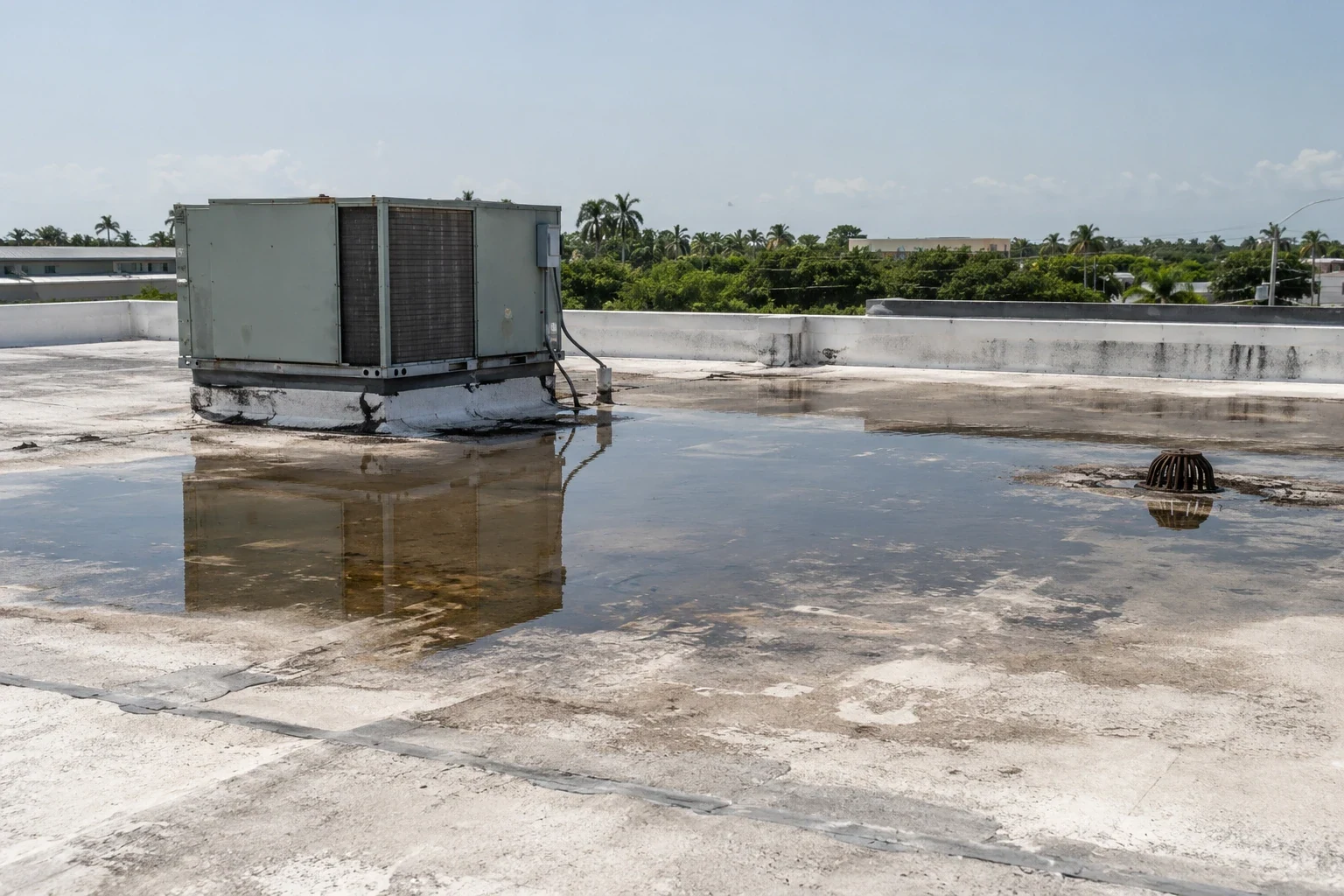
Water depth, duration, and extent matter. A photo taken soon after rain can show a temporary surface condition, but it may not explain why water remains. We record the date, roof zone, extent visible, and conditions at the time. If the roof is dry, we do not describe old staining as active ponding without supporting evidence.
Possible contributors include blocked outlets, insufficient slope, deflection, settlement, displaced insulation, or a drain set above a low point. The correct remedy depends on what inspection confirms. Clearing a drain cannot change roof elevation. Adding material at a low point may redirect water toward another area. A ponding water assessment can connect the observed low area to a specific corrective scope.
At Malabar Road's commercial node, listings include retail, industrial, and medical properties. That mixed inventory illustrates why access and drainage review are building-specific. The address cannot tell us whether a roof uses internal drains, perimeter scuppers, or another layout. Each plan should show the outlets and overflow path actually present.
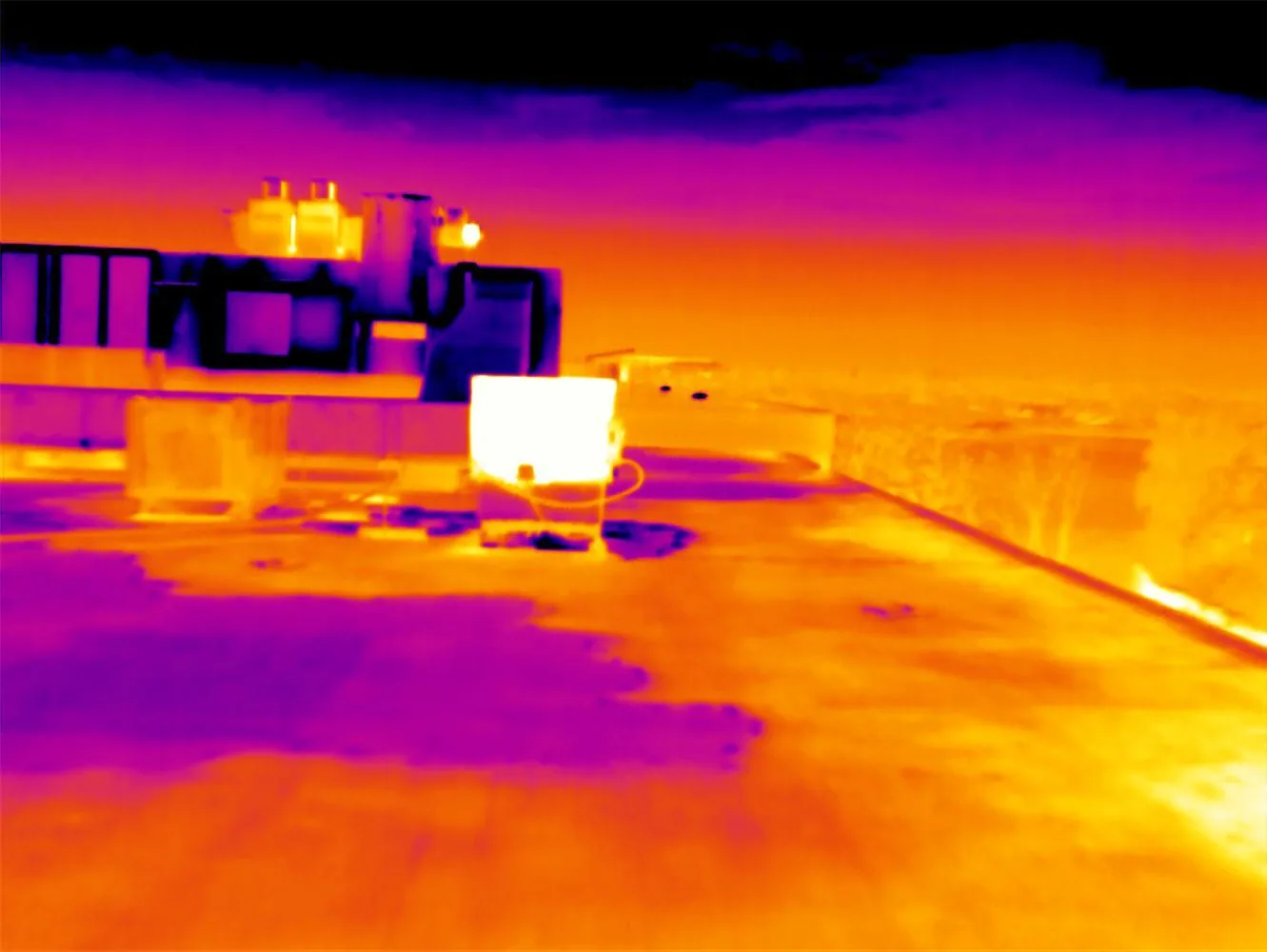
A cricket redirects water around an obstruction or toward a drainage point. We inspect its surface, seams, tie-ins, and direction of fall. A displaced or poorly integrated cricket can leave a collection area behind a curb or rooftop unit. The report notes the geometry and nearby outlet rather than treating the visible puddle alone.
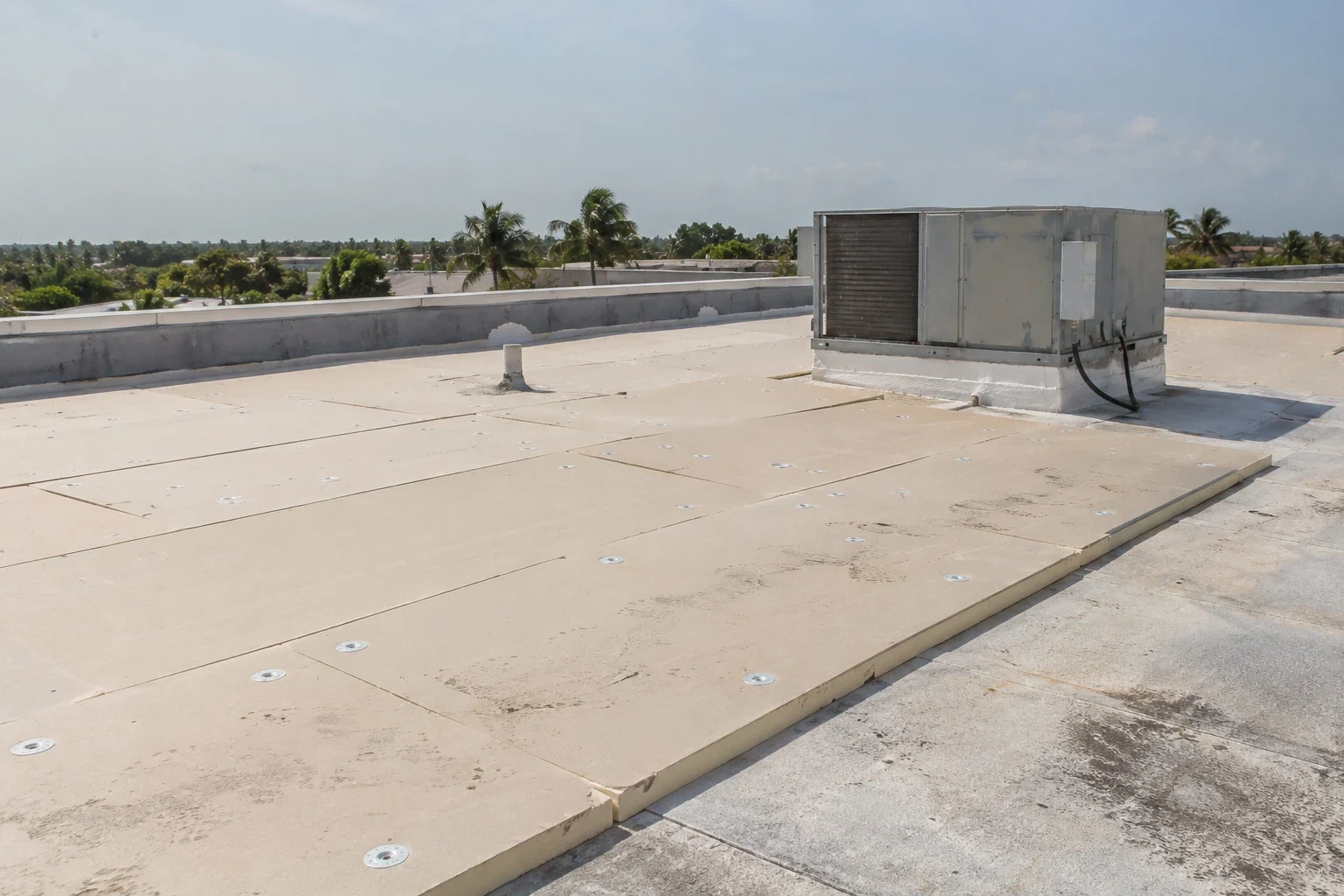
Retrofit work may require tapered insulation or a revised drainage plane. That can affect membrane attachment, flashing height, curb clearance, and perimeter transitions. A tapered insulation review can evaluate how slope changes fit the existing assembly. If roof water is entering at a nearby seam or curb, repair that detail as its own scope before considering a broader slope correction.
Where concealed layers may be wet, a test opening can check one location. The result applies to that location; inspect other roof areas separately. We mark the opening, exposed materials, and restoration performed. If destructive testing is not authorized, the report says so and leaves the concealed condition unresolved.
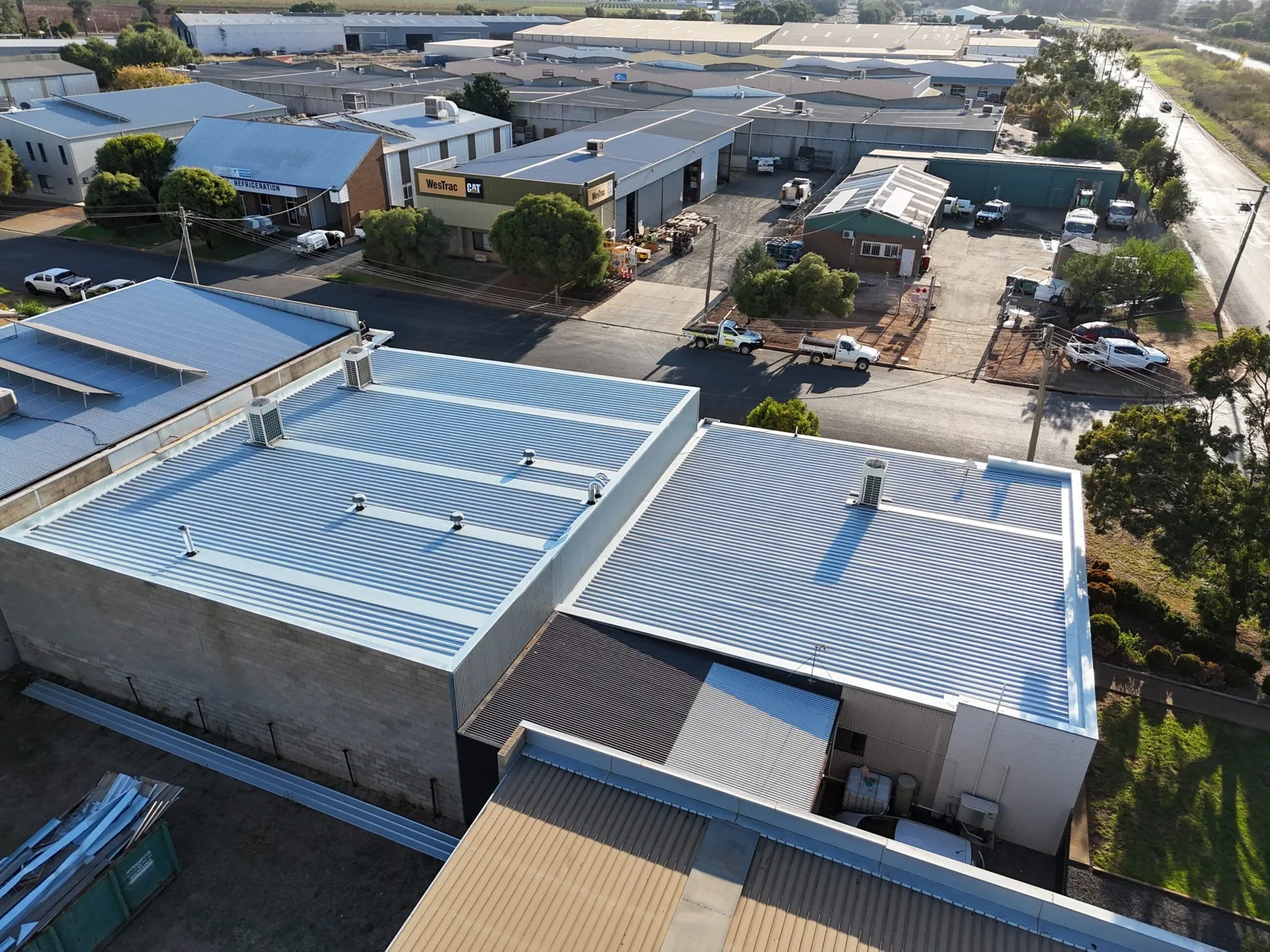
A written correction names the blocked or failed component, proposed work, material, roof zone, and flow check. Work may include debris removal, drain or scupper repair, flashing replacement, or a designed slope adjustment. If a pipe, deck, or structural issue is suspected, the proper trade or engineer may need to assess that part. We keep those dependencies visible.
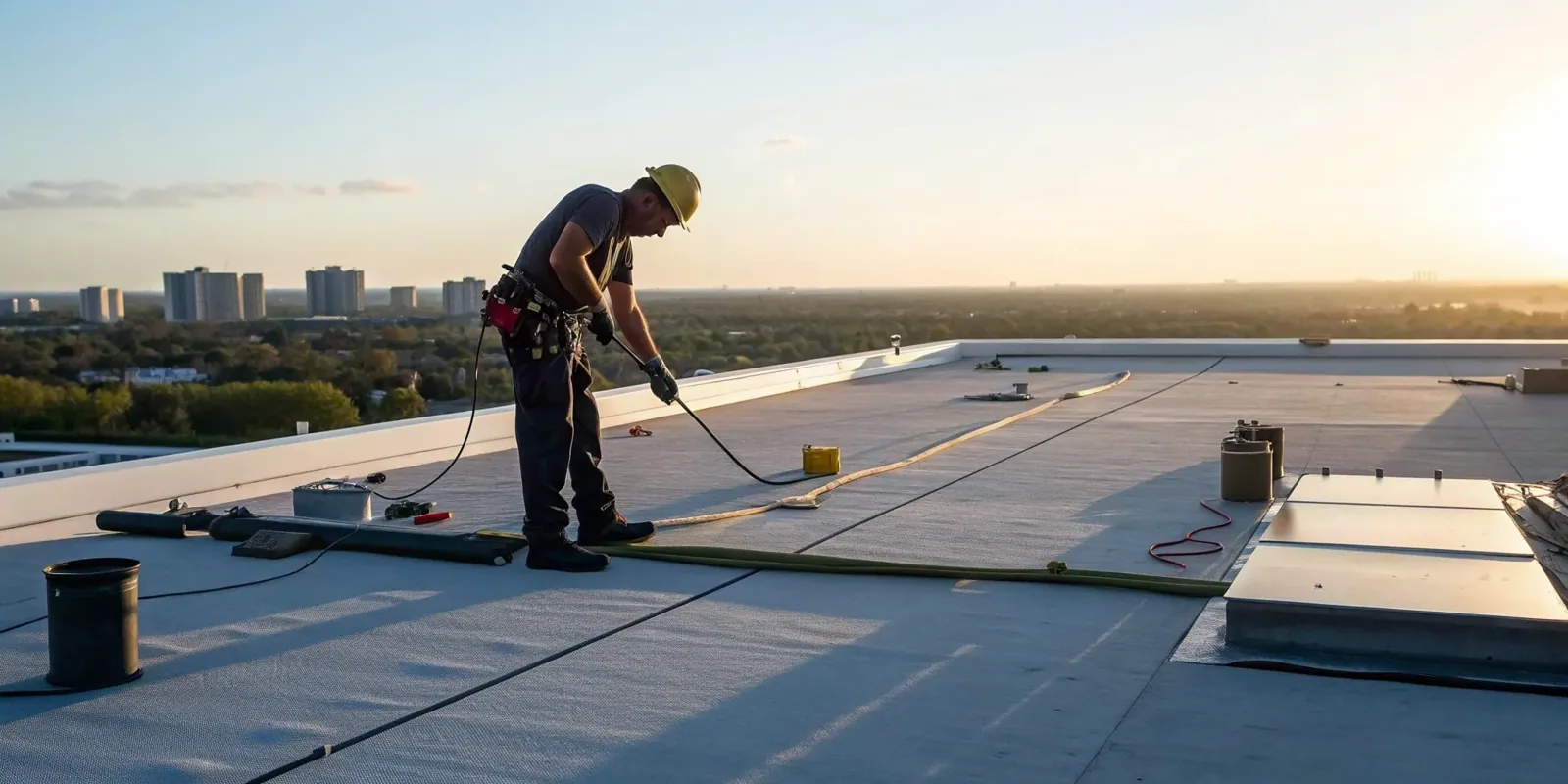
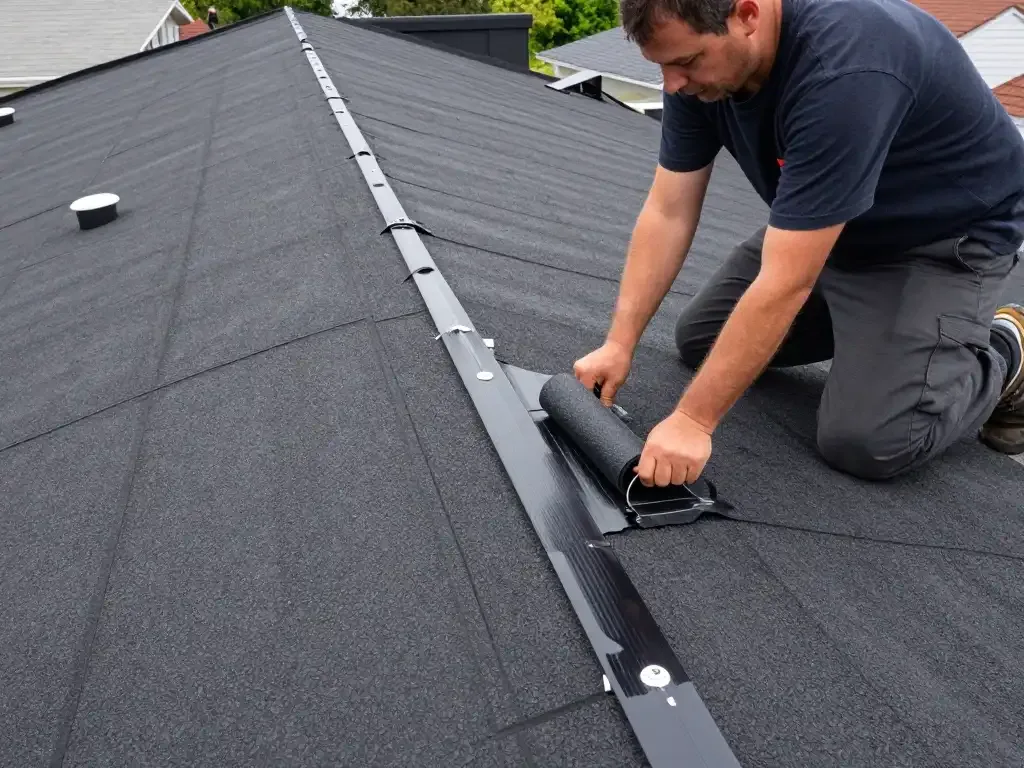
Before permanent repair, we protect open areas and confirm that work will not obstruct an overflow route. The crew photographs the detail before and after correction. A roof repair scope can address the membrane around an outlet. If water entry is active, leak repair can set temporary protection while the permanent boundary is confirmed.
Florida's 2023 Building Code took effect statewide on December 31, 2023. Drainage alterations that become permitted work need project-specific review under applicable code and design documents. A roof walk records visible conditions; project documents and the authority having jurisdiction govern compliance. It records visible conditions and describes the work being proposed.
Closeout states what was cleared, repaired, or altered and what flow check was possible. A dry day may limit direct confirmation of drainage performance. We can confirm that an outlet is open and record visible flow when water is available. One check cannot prove performance in every storm.
The dated record includes photographs, roof zone, outlet identification, observed low areas, work boundary, and remaining access or testing limits. A condition report preserves those details for the next visit. For a multi-building portfolio, a roof program record can track repeat blockages and follow-up work by property.
Palm Bay Station is a retail project on Bayside Lakes Boulevard with shop and build-to-suit space. At retail properties, customer traffic and delivery access can constrain the work window. We confirm staging and ground-level protection with the site contact before removing debris or opening a drain assembly. The location fact informs coordination, not the condition of its roof.
Learn more →
Learn more →
Learn more →
Learn more →
Learn more →
Learn more →
Learn more →
Learn more →