
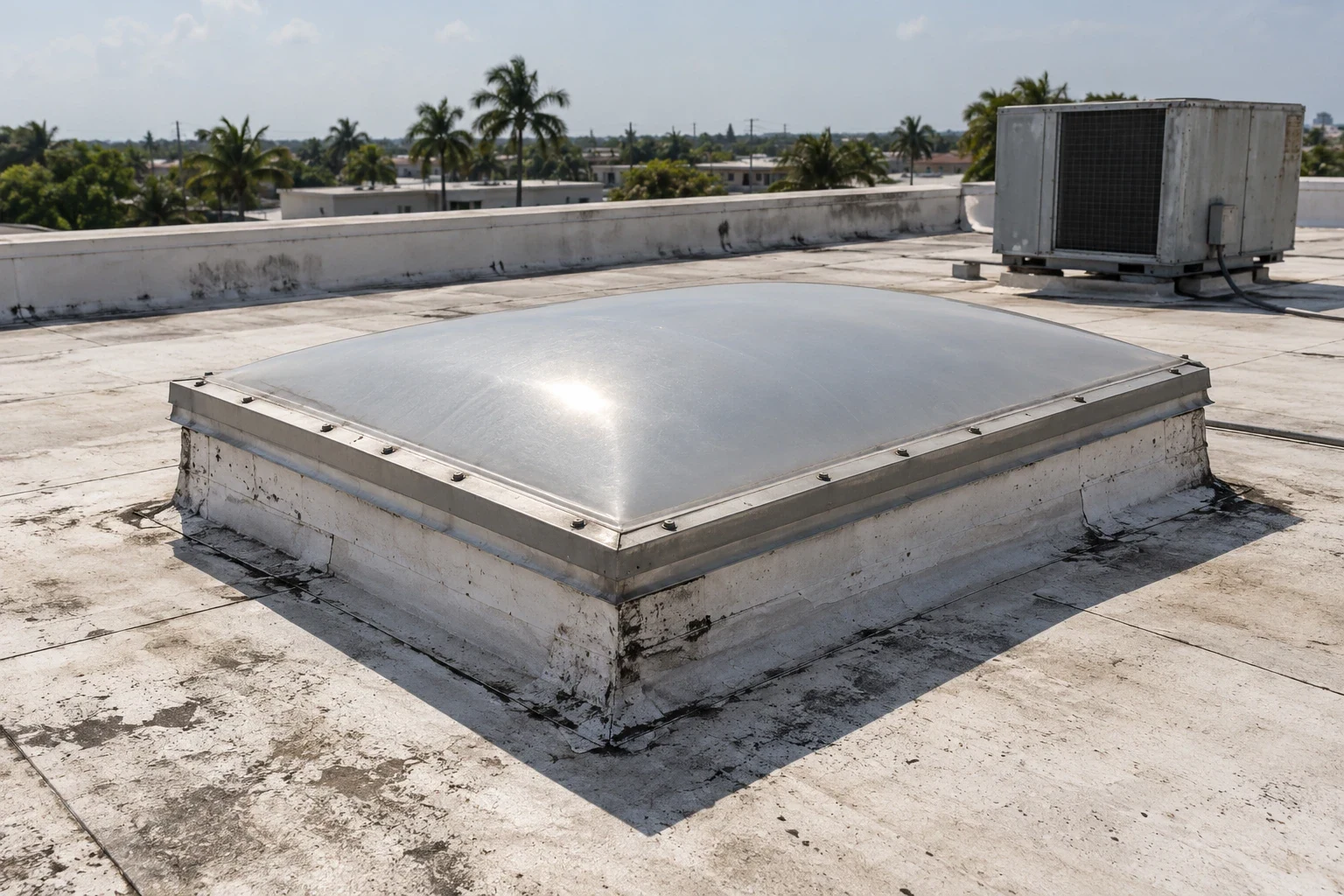
A ceiling stain below a skylight does not show whether water entered at the glazing, curb, flashing, or a nearby seam. The inspection follows each possible path and records what was visible. Palm Bay has hot weather and frequent rain. Summer highs in nearby Melbourne average near 89°F, while seasonal rainfall is substantial. Those figures describe regional conditions, not the temperature or leak history of a specific roof. We note the event date, interior location, roof zone, access limits, and active water status before setting a repair boundary.
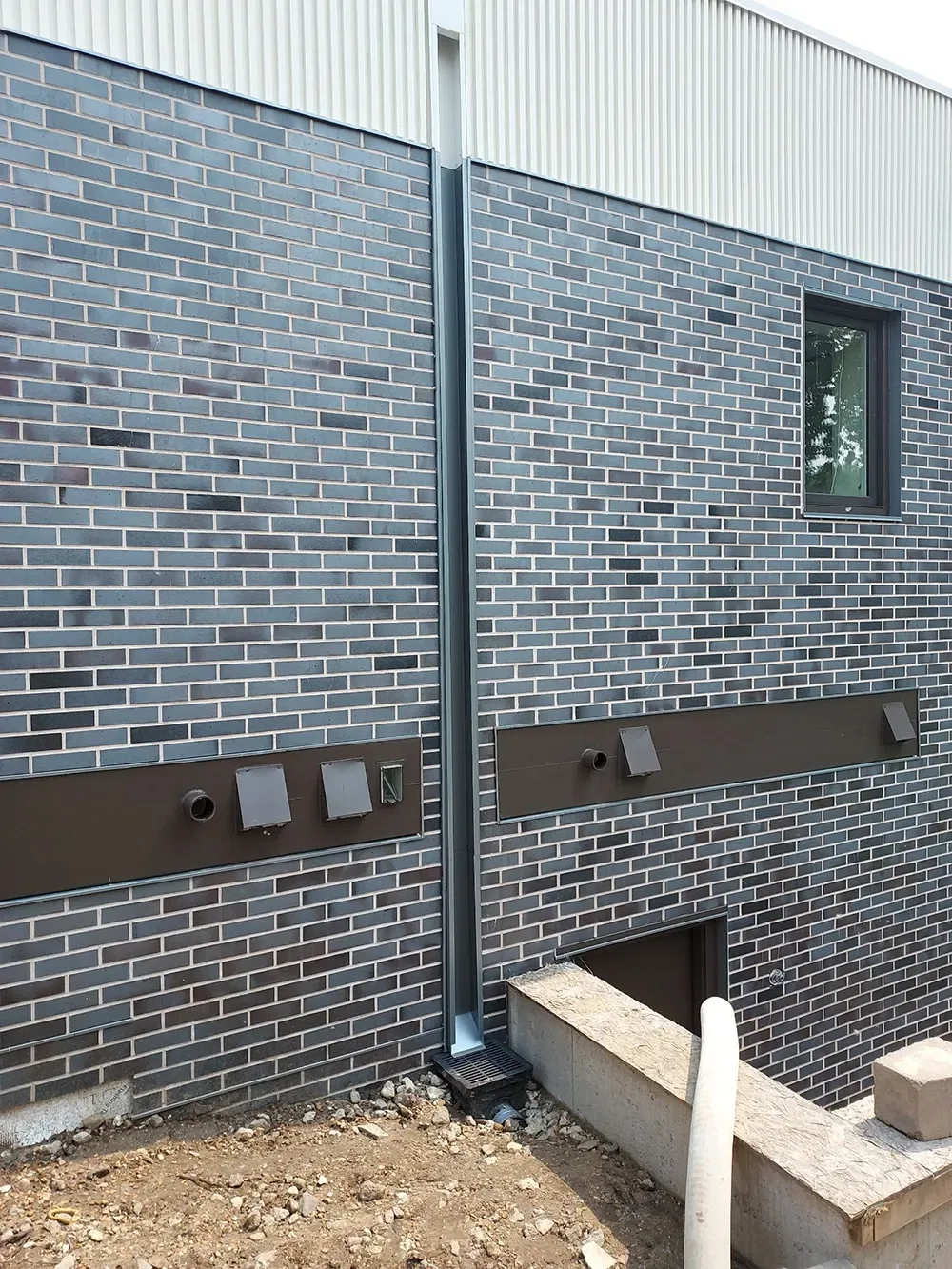
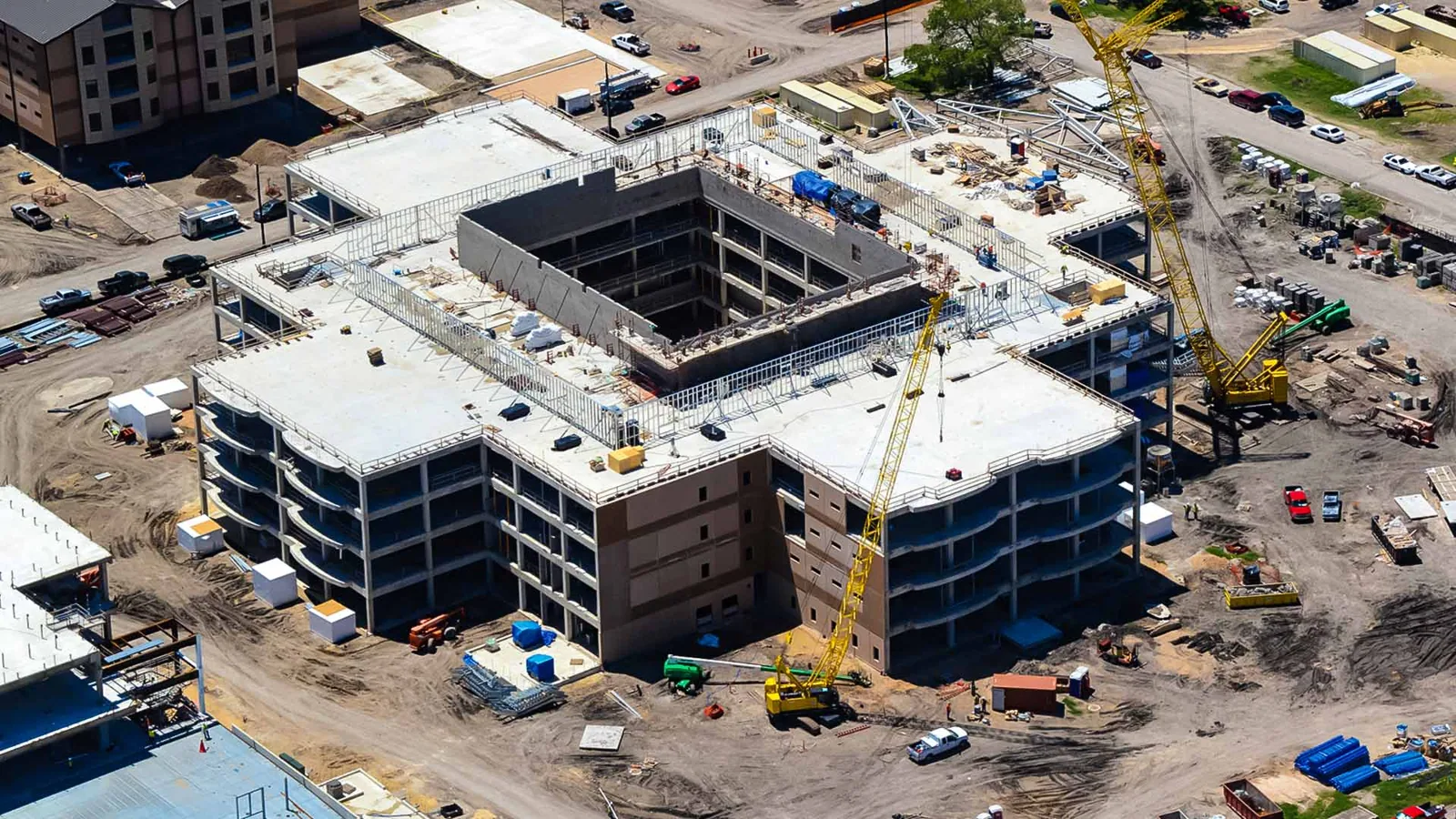
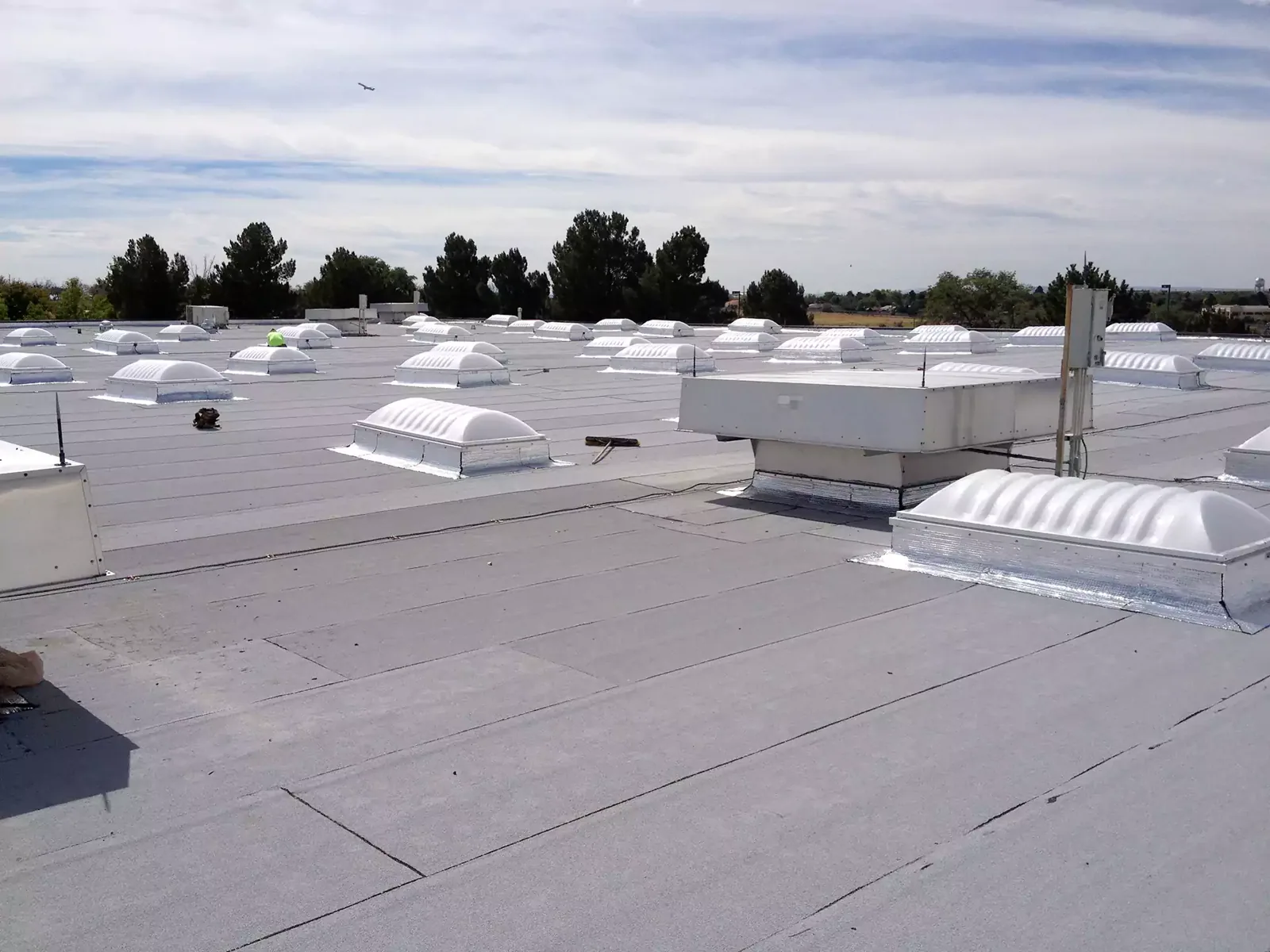
We inspect the frame, glazing, curb height, curb corners, flashing transitions, fasteners, sealant, and surrounding membrane. Cracked glazing may be visible from the roof, but condensation, failed gaskets, and concealed curb conditions can require separate evaluation. The report identifies which components were checked and whether interior access was available.
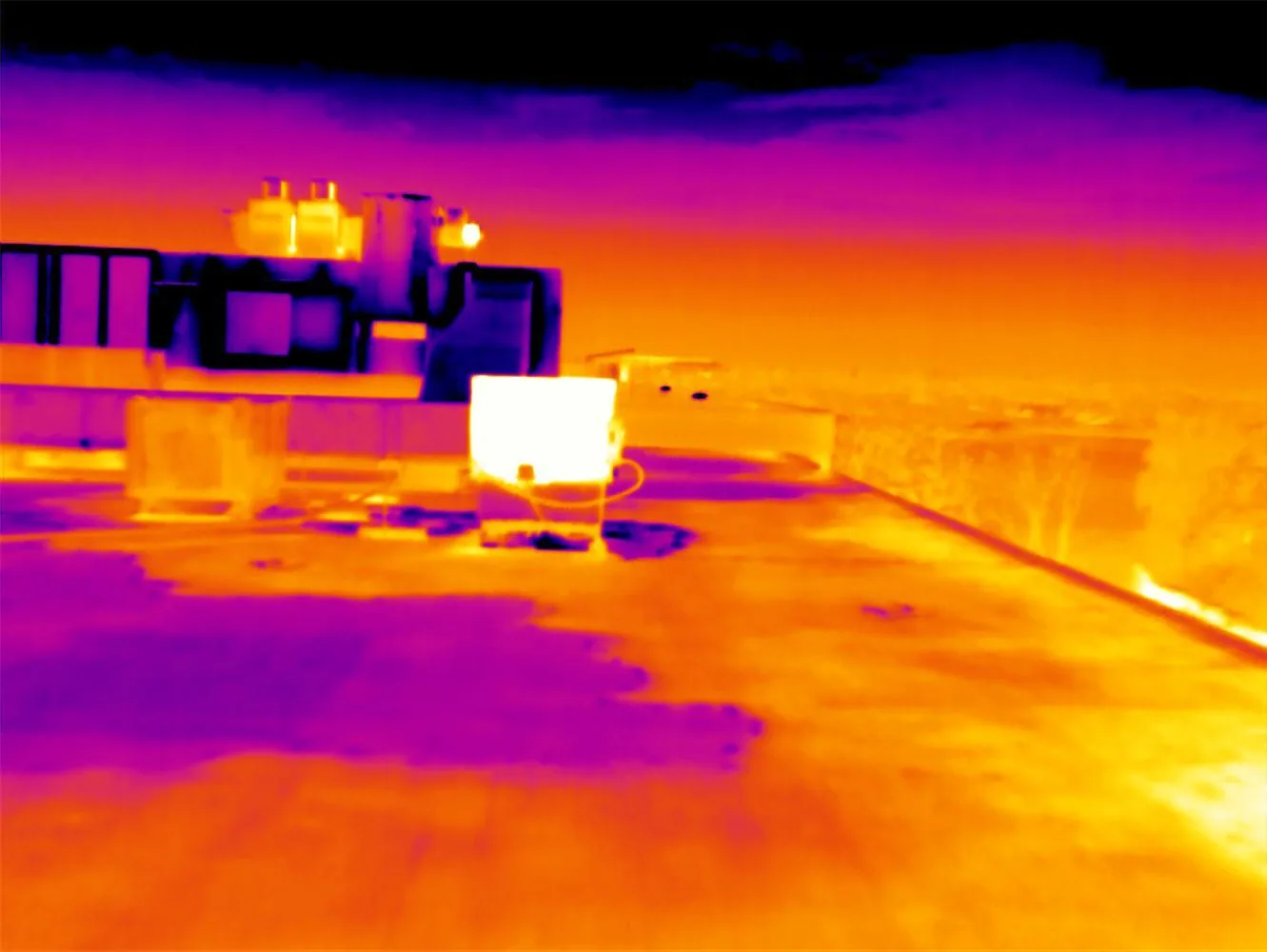
Water may travel from an upslope seam or nearby equipment base before appearing beneath a skylight. We check adjacent details and slope direction instead of assuming the fixture is the source. Photos show the opening in context, then close views of each suspect joint. A roof inspection can document the full zone. If the interior stain persists without a visible roof opening, an infrared survey may help identify areas for further investigation, subject to its limits.
Curbs need enough height and sound attachment for the roof detail. A curb buried by later overlays or surrounded by wet material may not be suitable for a simple surface patch. The Diligence Notes records height and surrounding layers where visible. If a test opening is needed, its location and restoration are included in the scope.
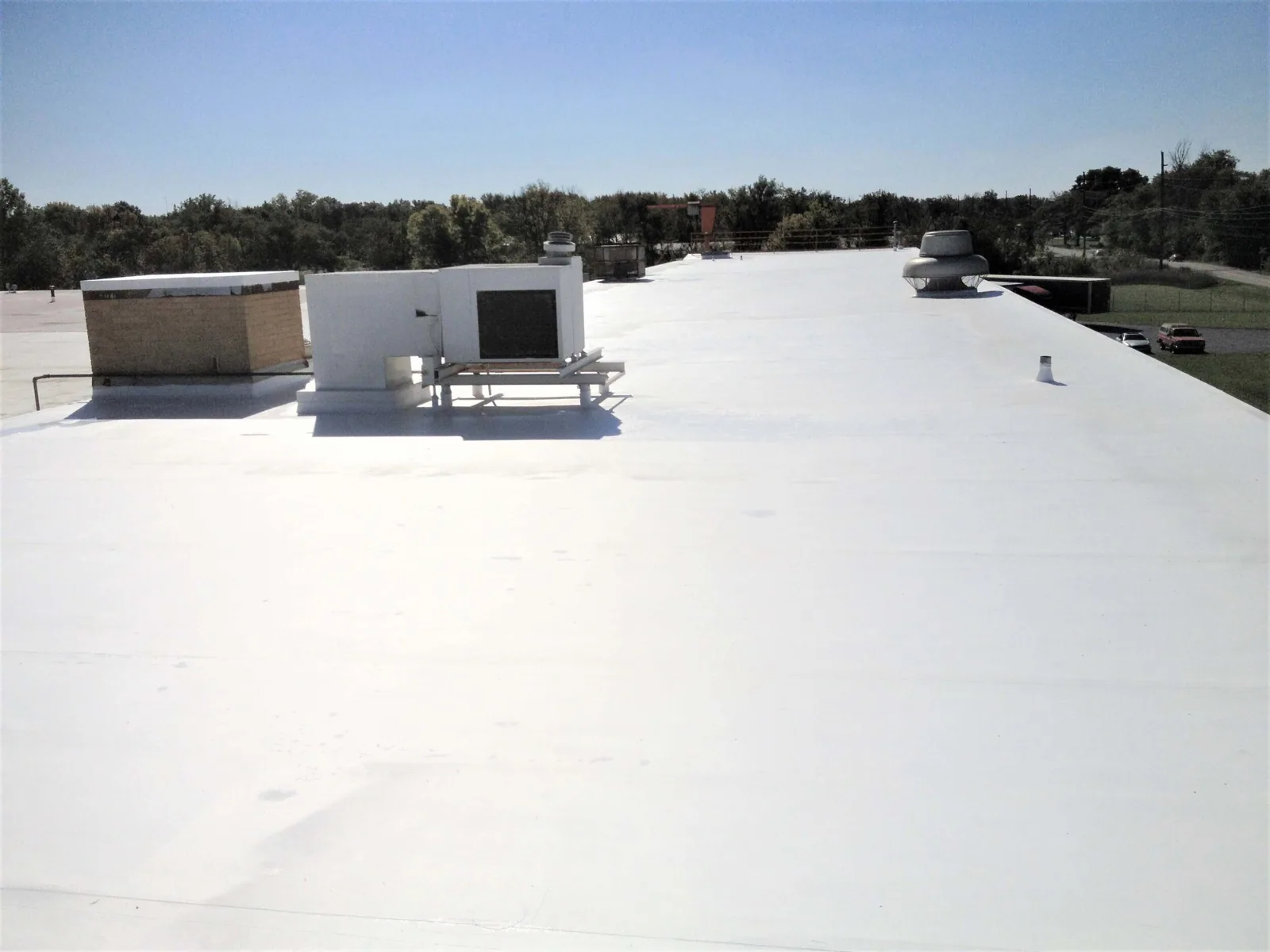
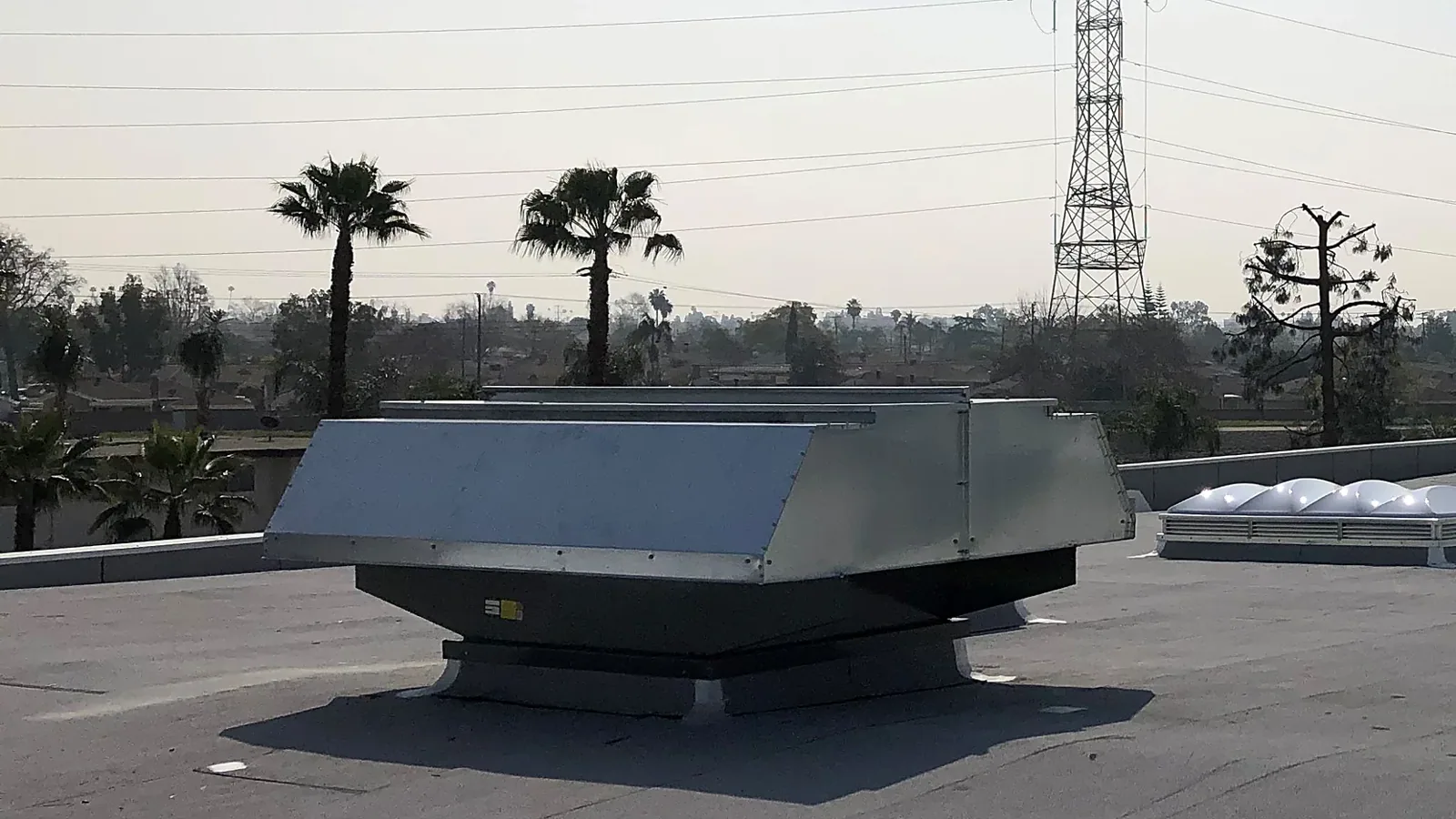
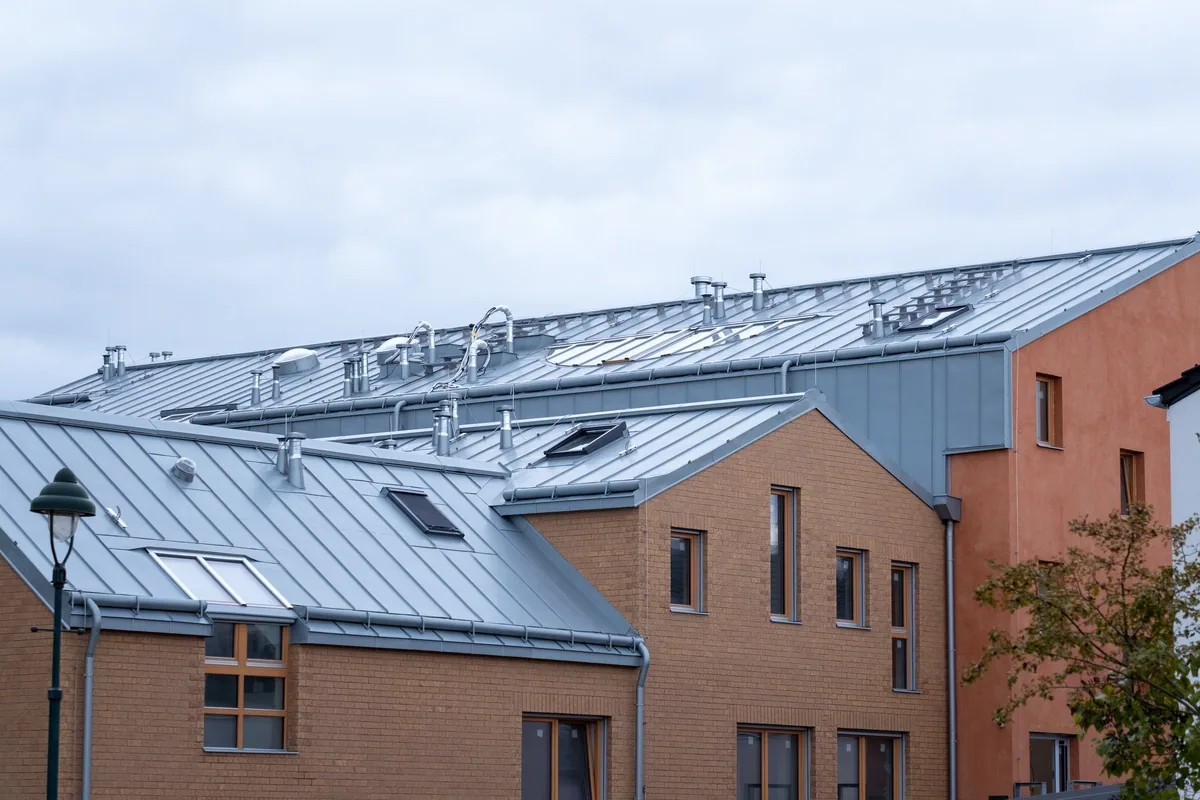
Each pipe, conduit, antenna, exhaust, and equipment support creates a transition through or above the roof. We check the boot or flashing, clamp, base, membrane weld or lap, and movement at the supported item. Loose sealant may be a symptom. The repair needs to address the detail that is opening.
Multiple trades can alter penetrations after a roof repair. Ask for service dates and contractor notes when available. We record whether the item appears to have shifted, whether the flashing is compatible with the roof, and which areas were inaccessible. A curb and support review can coordinate roof details around serviceable equipment. If separation is at a membrane lap, a seam inspection can check adjacent weld or adhesive conditions.
Palm Bay Flex Business Park markets spaces for engineering and light industrial operators beside the L3Harris campus. Such uses may have rooftop equipment and service paths, but the property description does not establish the penetrations on a particular building. We confirm the actual equipment layout, roof assembly, and maintenance access with the property representative.
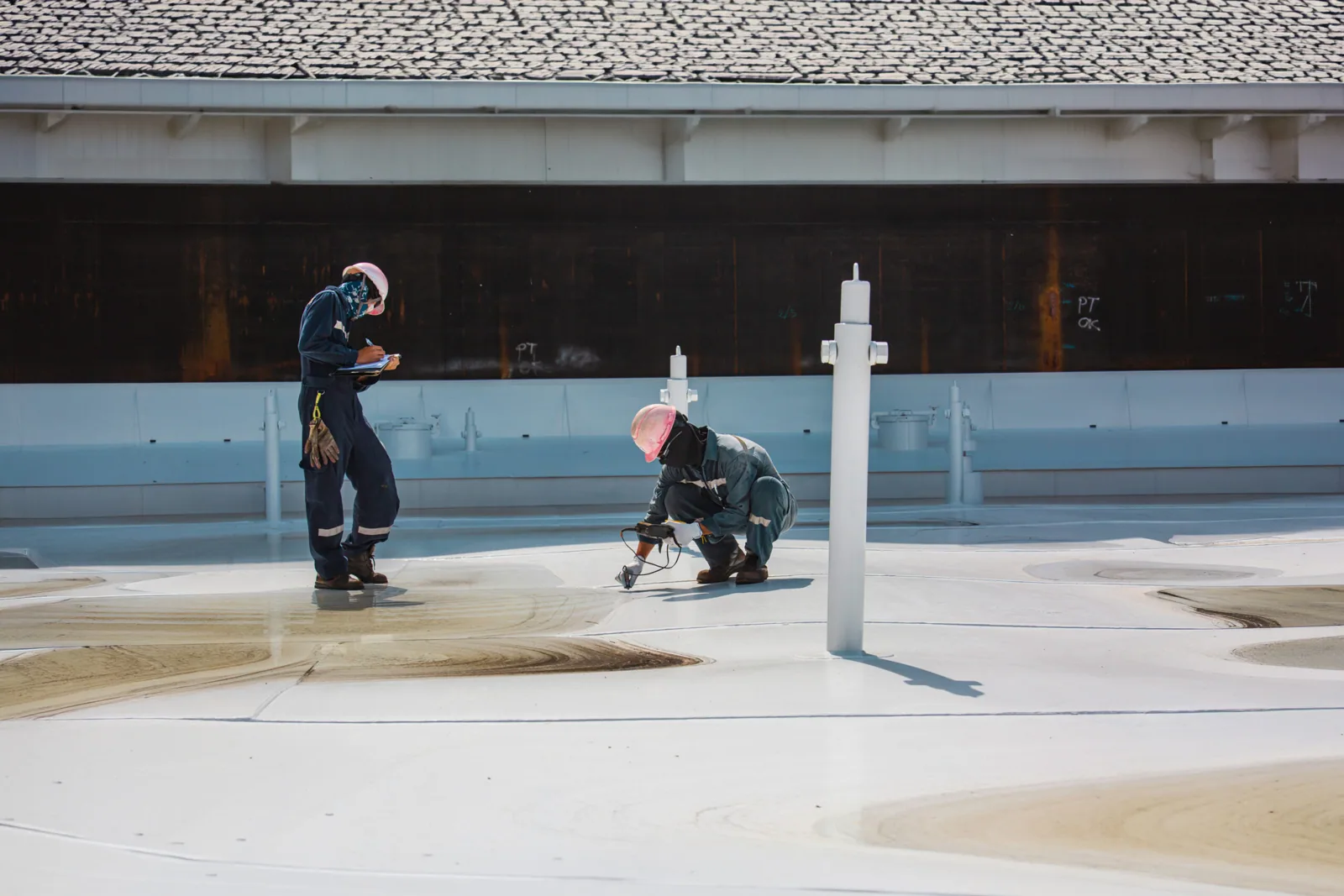
The occupant identifies where and when water appeared. We compare that report with roof observations while keeping source and cause separate until evidence connects them. A wet ceiling can be below a long horizontal path. We note the nearest accessible roof area and what was checked between it and the reported interior location.
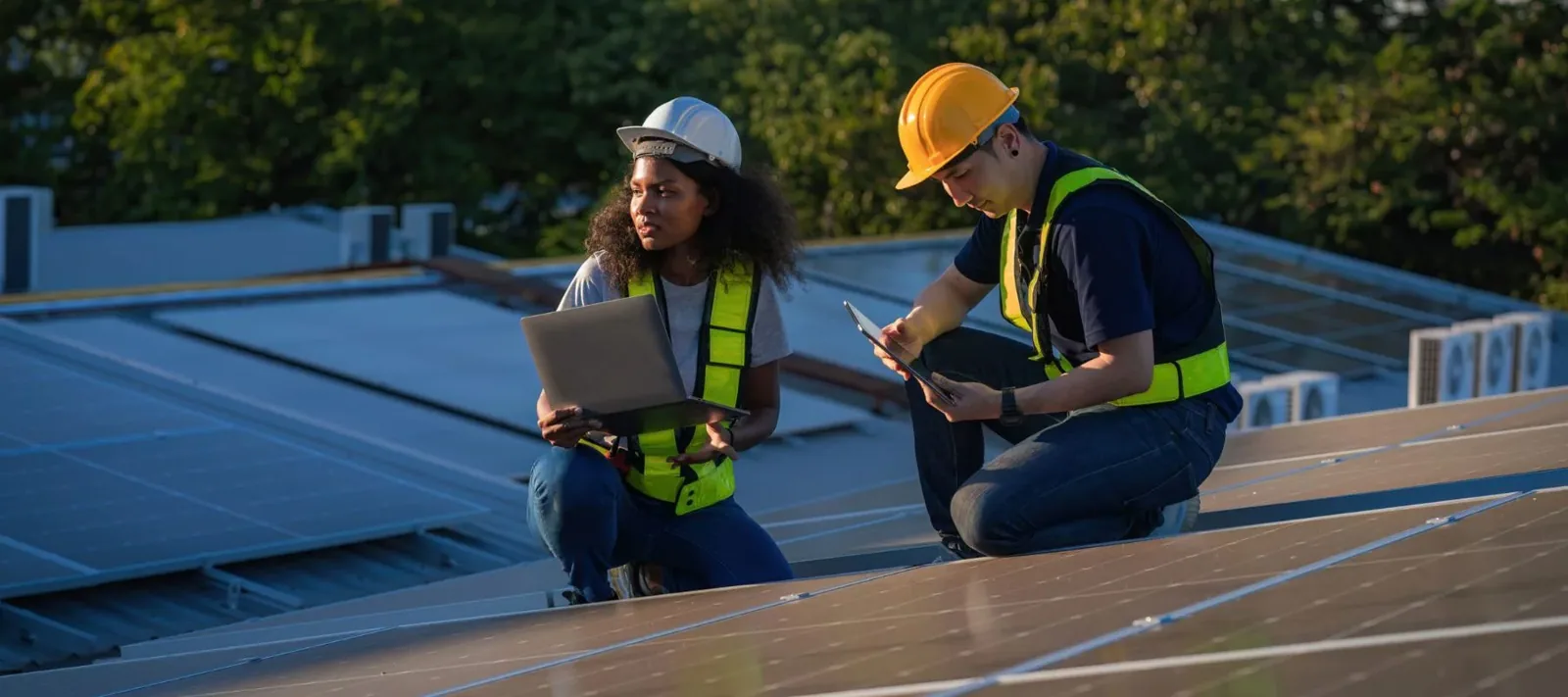
Occupied buildings may require escorts, shutdown windows, or protection below the work area. We ask the site contact to identify sensitive equipment, rooms, and tenant schedules. A planned research and technology district is located near Melbourne Orlando International Airport. A roof inspection at an active research property would need to follow its own access controls and equipment protection plan. We do not infer those rules from the district name.
Temporary protection is documented by location and date. It can limit entry while the permanent scope is prepared, but it is not the final flashing repair. If water is actively entering, the record names who was notified, the protected area, and the next inspection step.
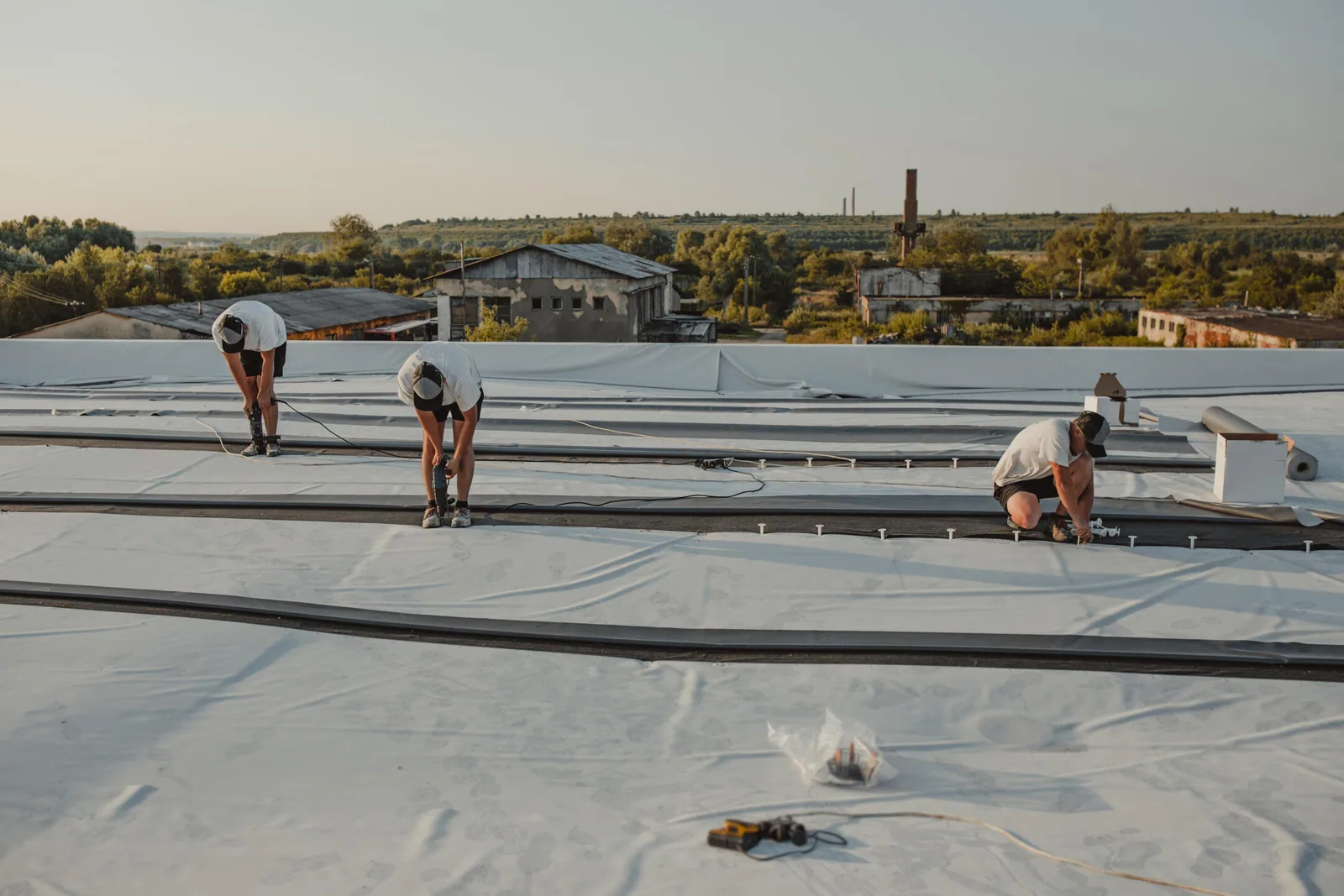
The scope identifies the penetration, existing system, flashing material, preparation, attachment or welding method, and boundary. A compatible boot may repair a sound pipe detail. A deteriorated curb or unstable substrate can require broader work. We describe concealed conditions that could change quantity or method before opening the assembly.
Do not apply a generic sealant bead over an unknown roof system. The material must suit the membrane, metal, and exposure. A commercial repair scope can define permanent work. If the surrounding membrane has broader failure, a replacement evaluation can assess how many details depend on the same assembly.
Before closing the work area, photograph the repaired flange, curb corners, seams, and adjacent field. The record should show tie-ins and any section left for another contractor. If equipment must be lifted or disconnected, schedule that work with its service provider. Roof flashing work alone should not imply that electrical, mechanical, or interior components were tested.
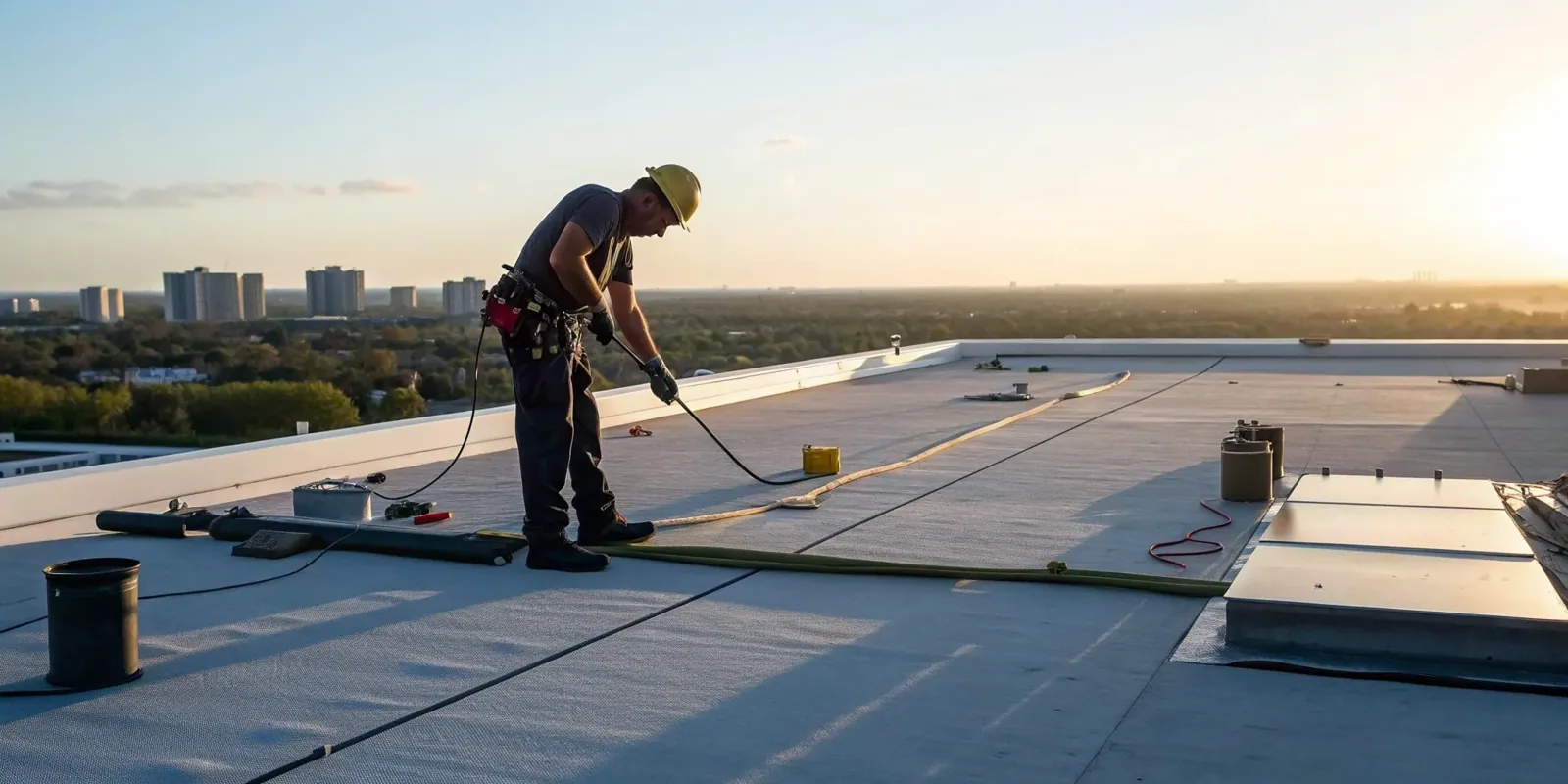
Closeout records the original report, inspection date, affected roof zone, repair material, photographs, completed boundary, and access limit. If the source remains uncertain, the record says what was observed and what needs testing. A photo condition report supports later comparison.
After rain, a follow-up can check the repaired detail and nearby transitions. A dry test may not reproduce wind-driven rain or the reported conditions. We note whether the inspection occurred during rainfall, after rainfall, or under dry conditions. A new ceiling stain receives a new date and location, even if it appears below the same skylight.
For a roof with many penetrations, build a location list with each item, flashing type, repair date, and current condition. A maintenance program can revisit the details and record changes. That log helps facility staff distinguish a new opening from an older condition and plan access before the next service call.
Learn more →
Learn more →
Learn more →
Learn more →
Learn more →
Learn more →
Learn more →
Learn more →