
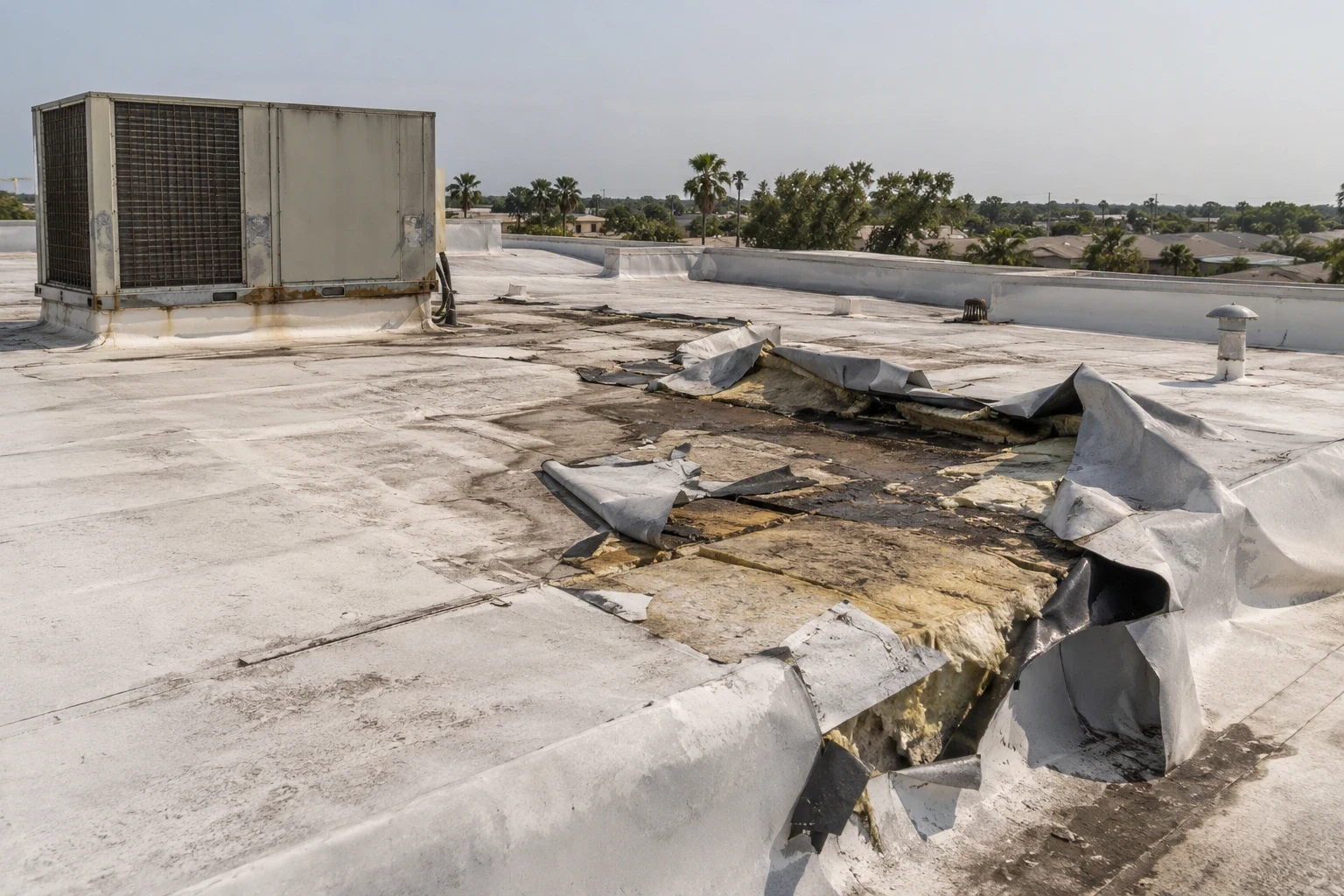
Chalk, faded coating, and brittle surface material can show long-term exposure. They do not alone prove that a commercial roof leaks or needs replacement. We check whether the membrane remains flexible, seams stay closed, and flashing is attached. The record identifies the roof system, affected zones, visible deterioration, and any active water report. Palm Bay's warm climate makes heat and sun exposure relevant, but the inspection must confirm what changed at the property.
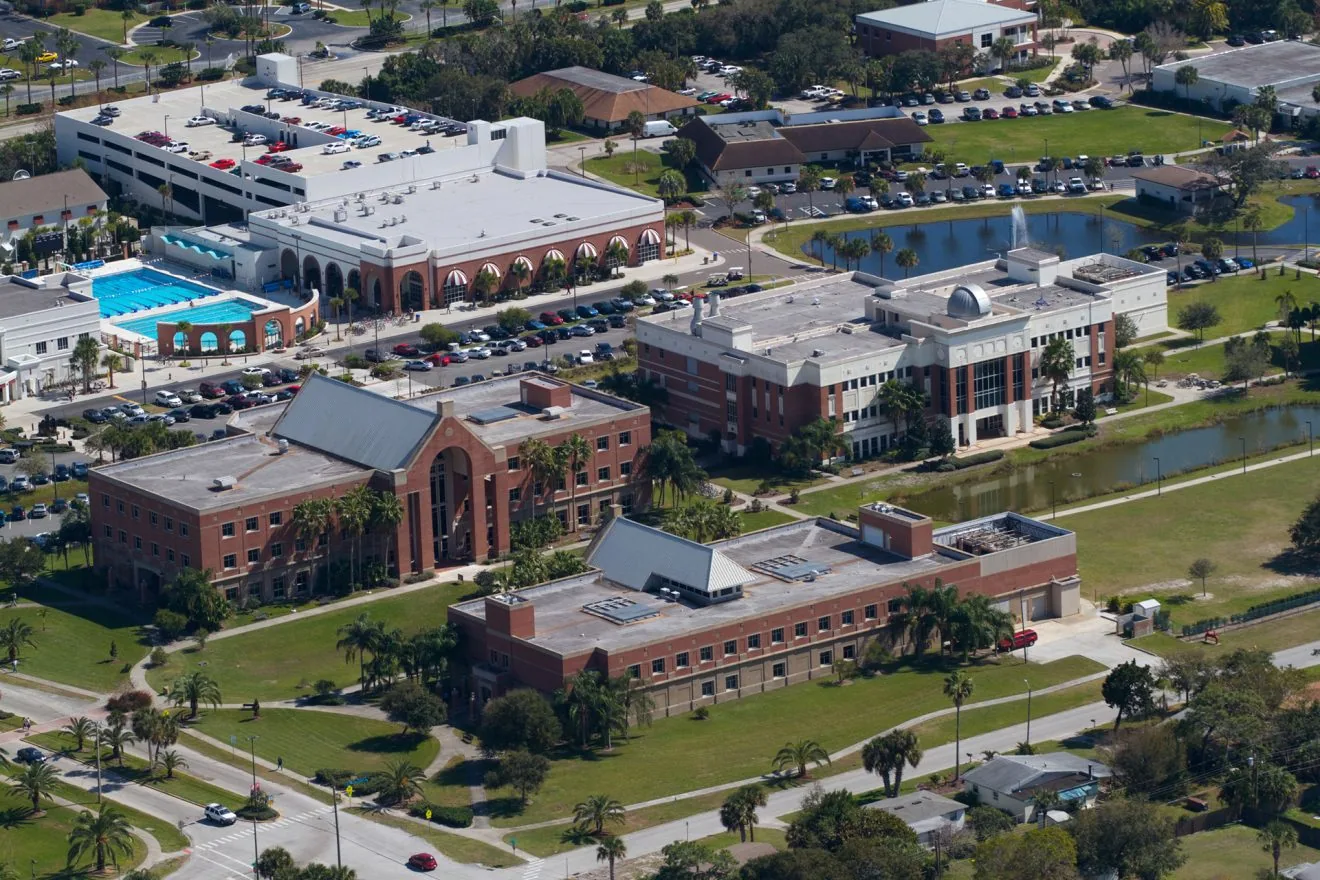
Melbourne International Airport averages 62.7 days a year with highs of 90 degrees or more. Those nearby climate values are context, not temperatures measured at roof level. Buildings near Melbourne Orlando International Airport and The Crossings at Babcock have different roof layouts and access needs. We document the observed condition at each address and tie coating or membrane recommendations to the material found there.
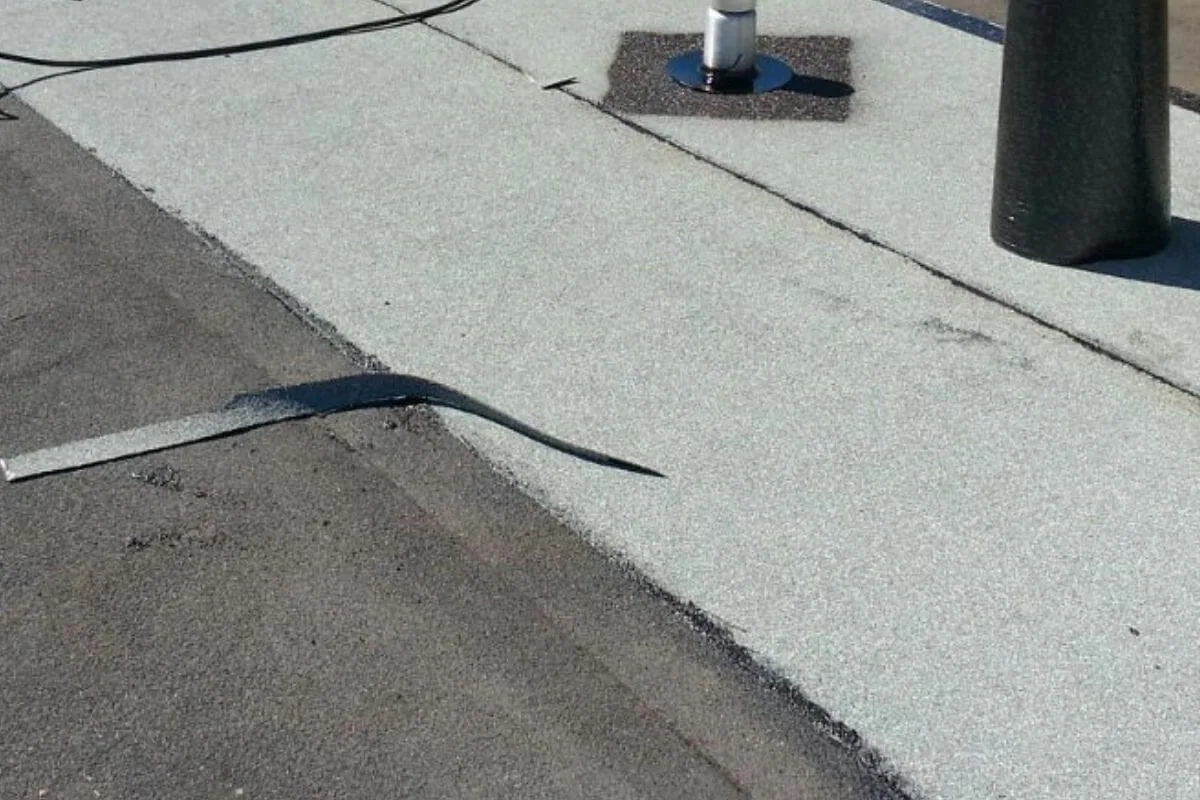
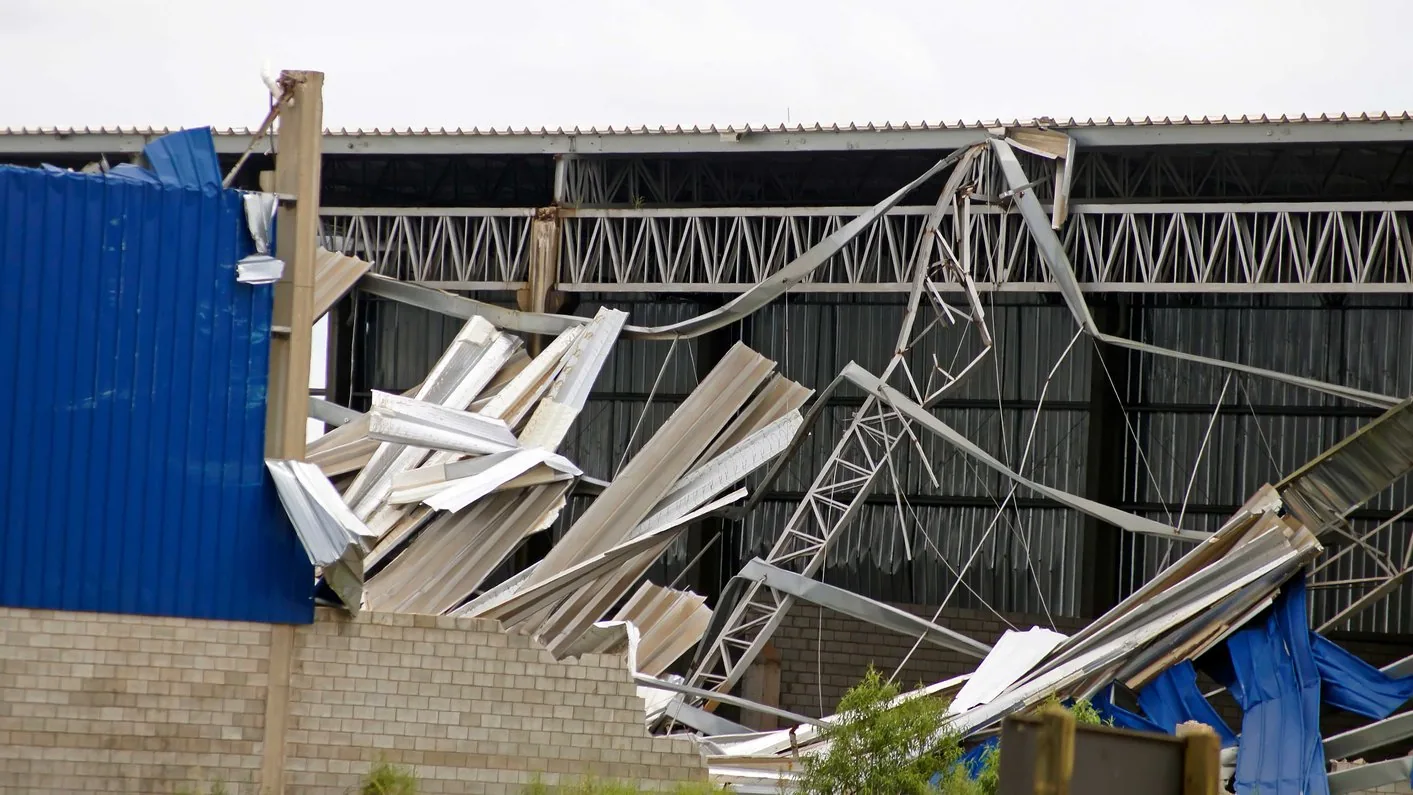
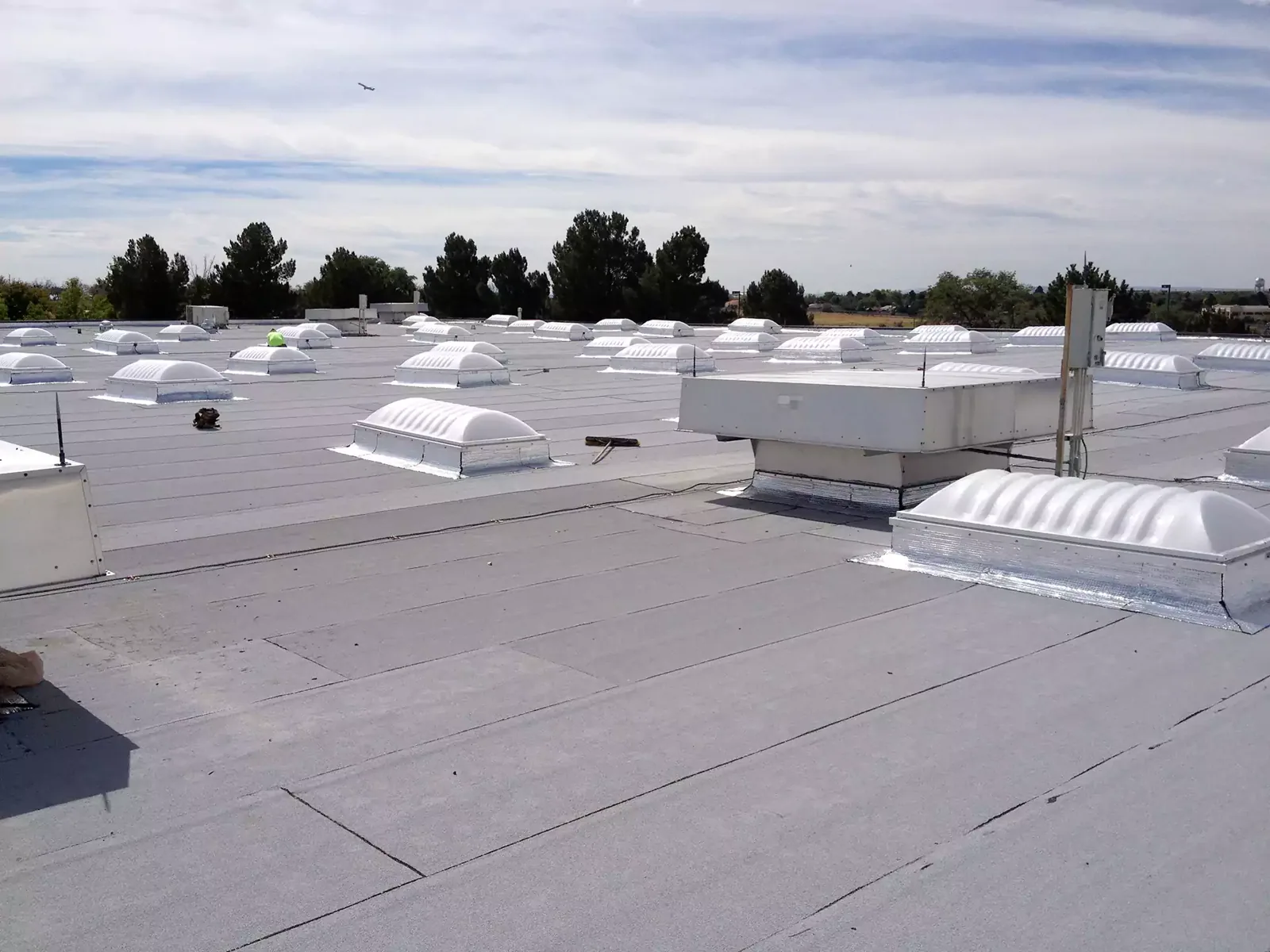
Heat and ultraviolet exposure can age exposed surfaces, but symptoms vary by roof system. We inspect coating thickness and adhesion where applicable, membrane texture, seams, laps, fasteners, penetrations, and existing repairs. A chalky surface may need cleaning and testing before any new coating is considered. A cracked seam or exposed reinforcement is a separate failure. Photographs show both the affected area and nearby material for comparison.
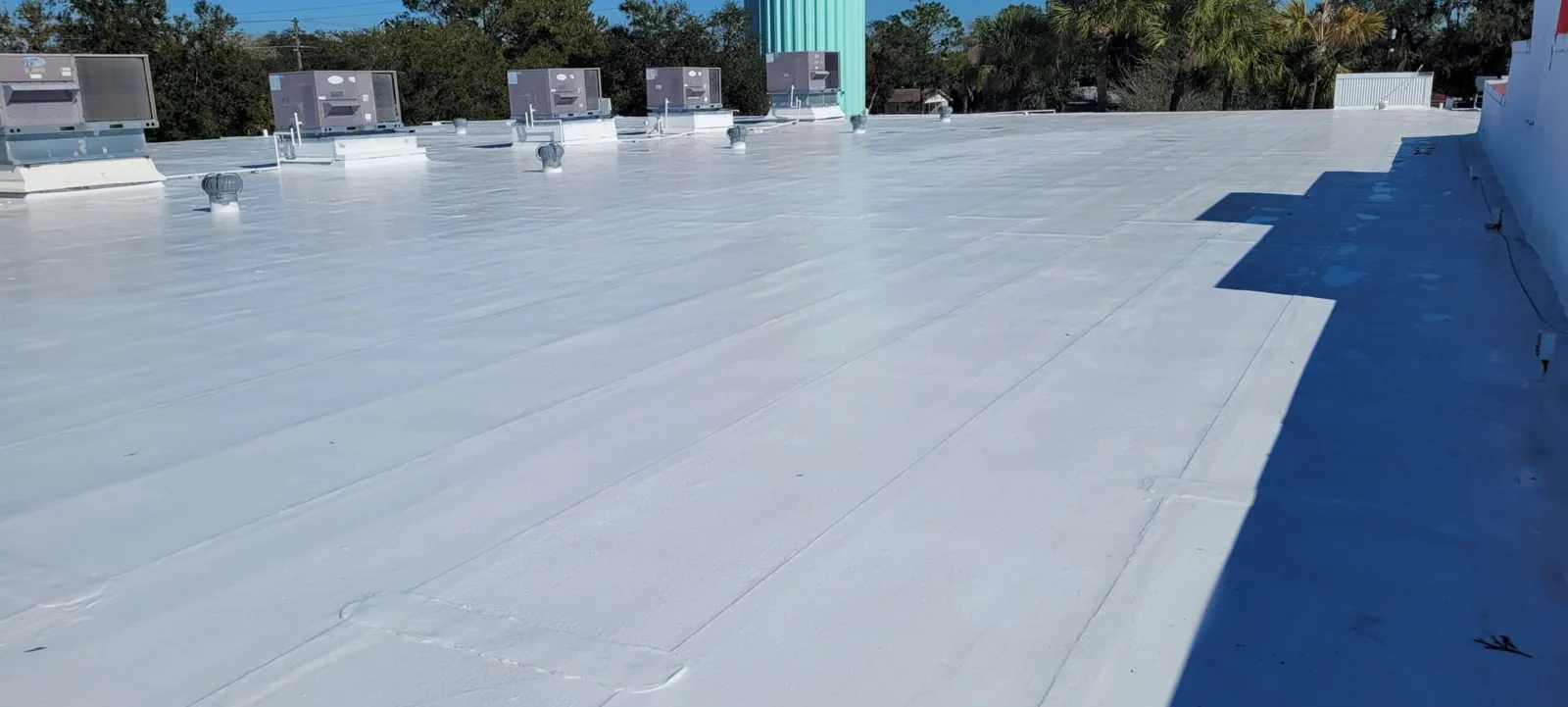
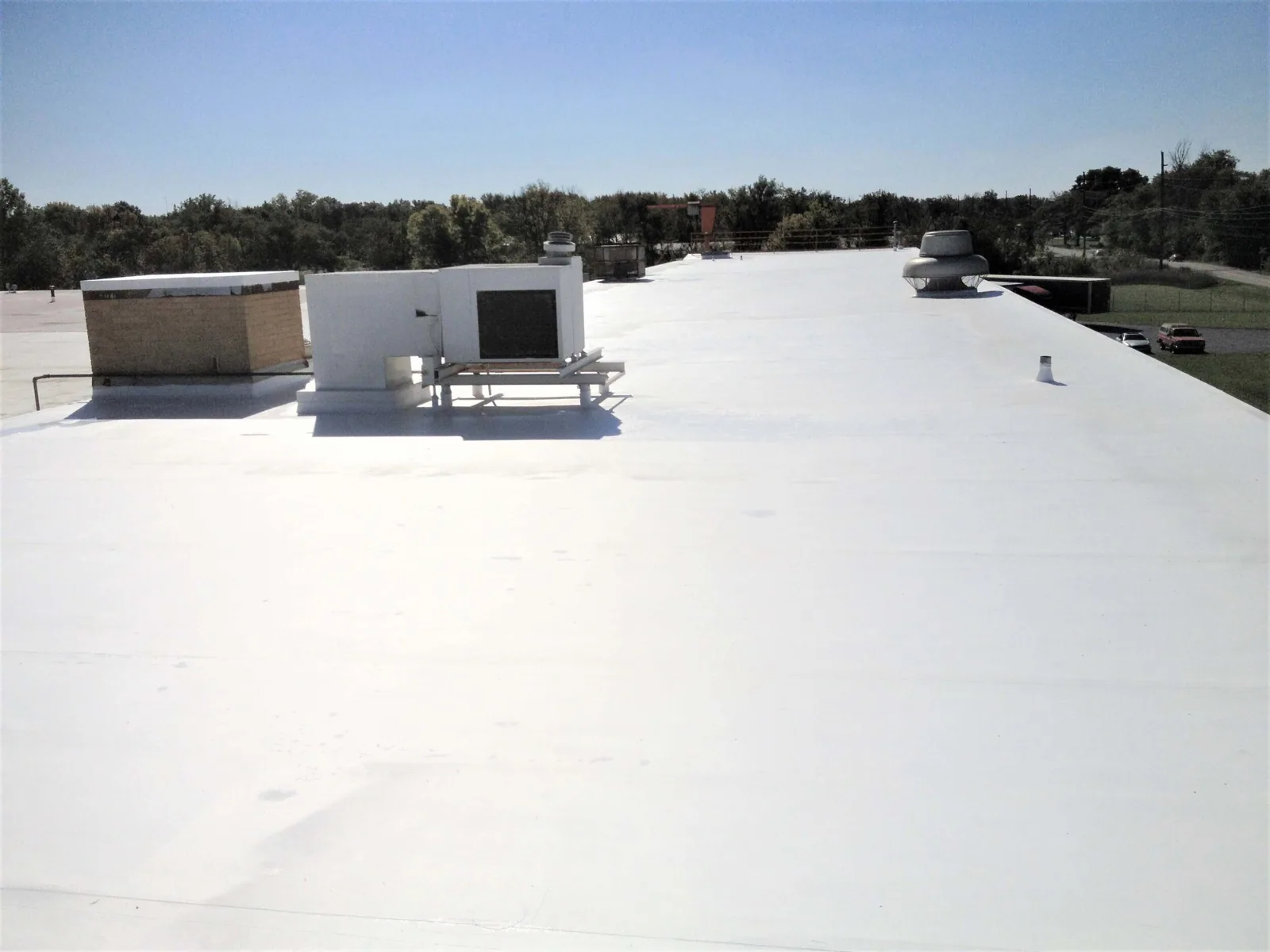
We identify whether the assembly is TPO, PVC, EPDM, modified bitumen, metal, or an existing coating. A silicone layer over an acrylic system, for example, requires compatibility checks. Existing patches are mapped before testing because they can hide a previous repair boundary. We also look for loose fasteners, open laps, and changes in the substrate. These observations show where preparation must stop and where a test patch may help confirm adhesion. No coating is specified from color or age alone. The silicone restoration option is considered only after the substrate and moisture condition are checked.
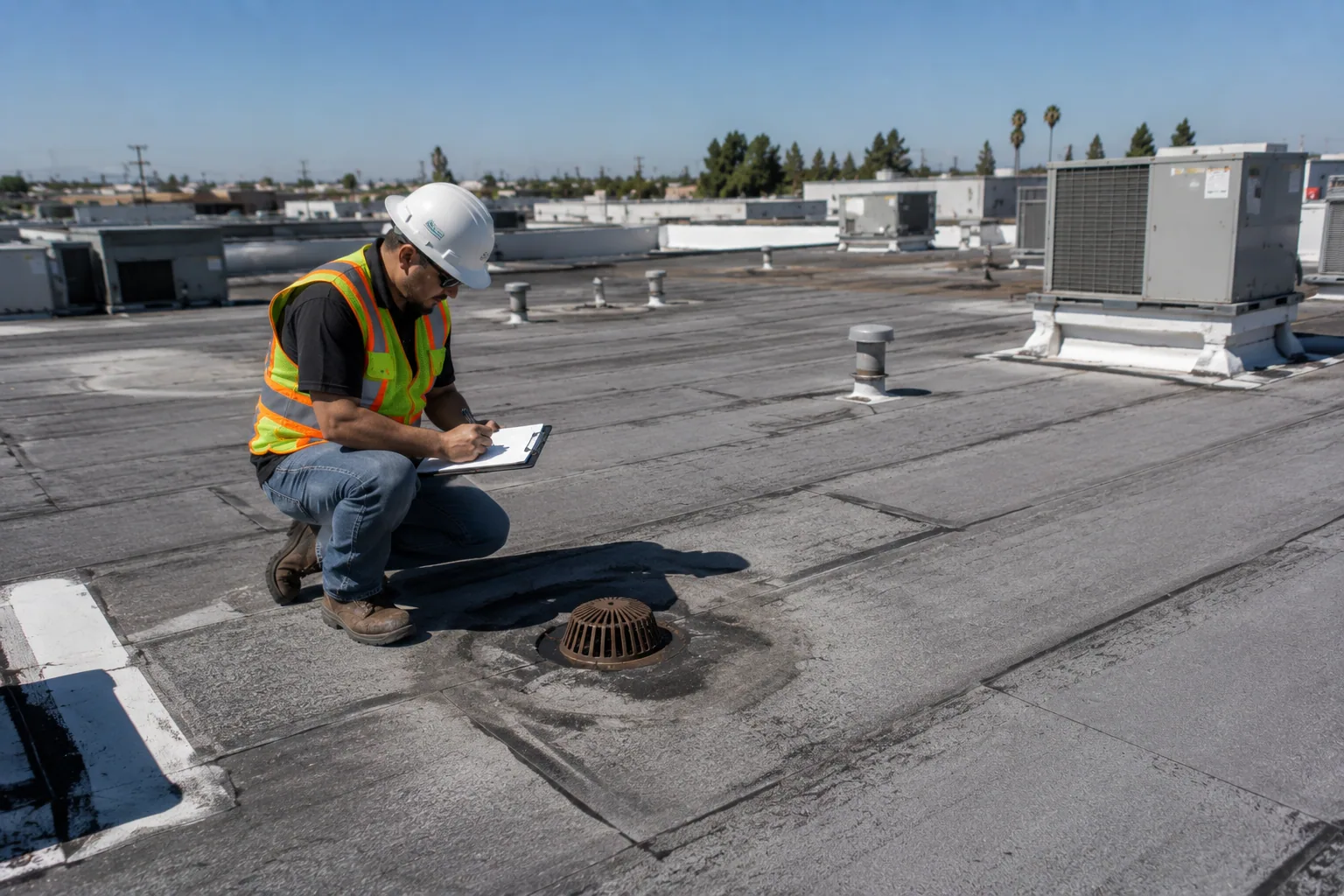
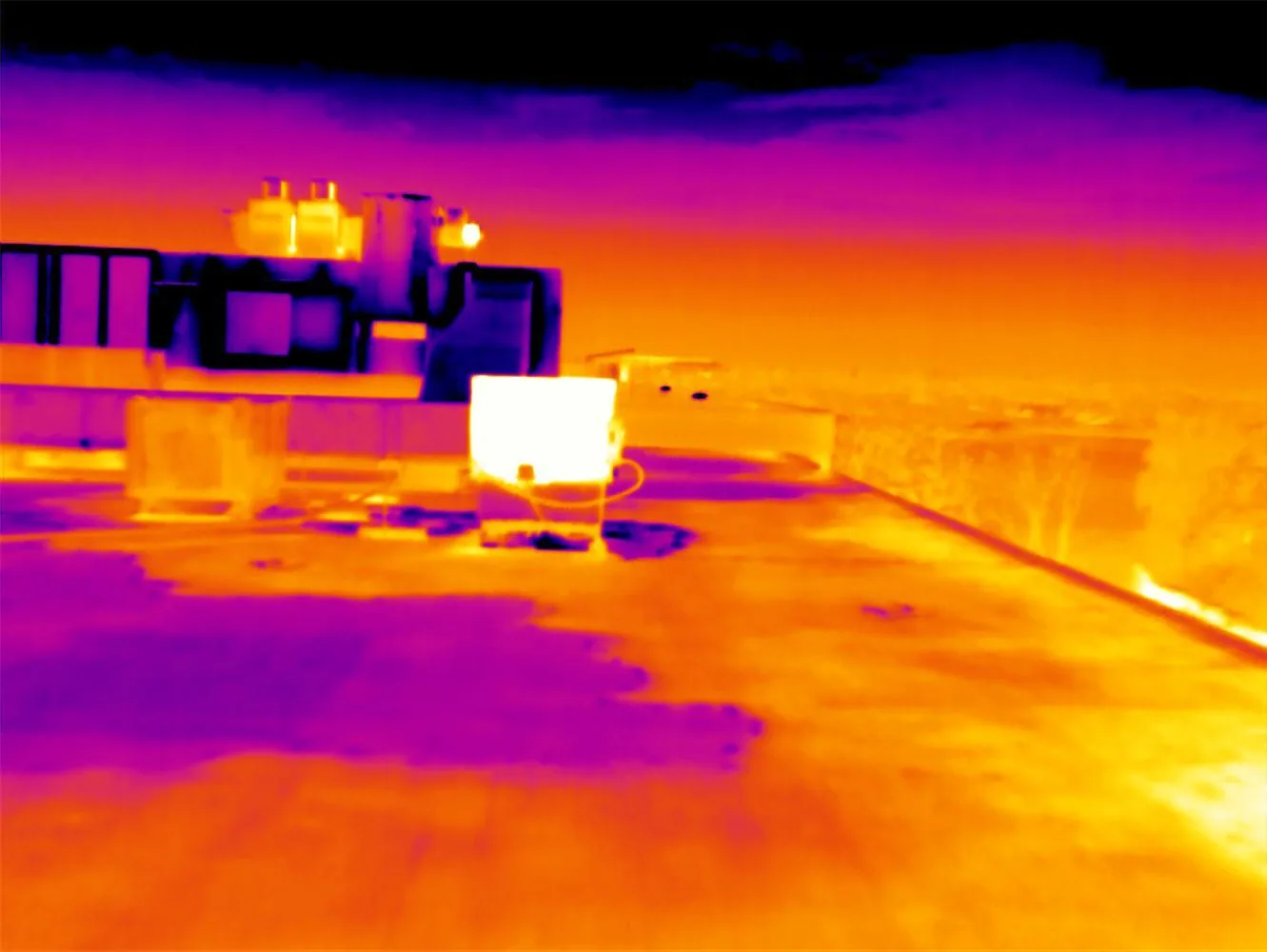
We look for exposed reinforcement, brittle edges, loose fasteners, open laps, coating delamination, and moisture evidence. The report notes which conditions affect watertightness and which are surface wear without a confirmed opening. A moisture survey can help map concealed wet areas, while a controlled test opening can verify a specific assembly question. Each method has limits. A dry-looking surface does not prove that insulation below it is dry.
Roof temperature and surface condition affect repair timing. Cleaning, drying, primer, coating, or welded membrane work can each require suitable conditions. Palm Bay's nearby climate normals show significant annual rain and hot summer days. We use that regional context in scheduling, then rely on conditions at the property on the work date. A moisture survey may be recommended before restoration where the roof history or inspection evidence warrants it.
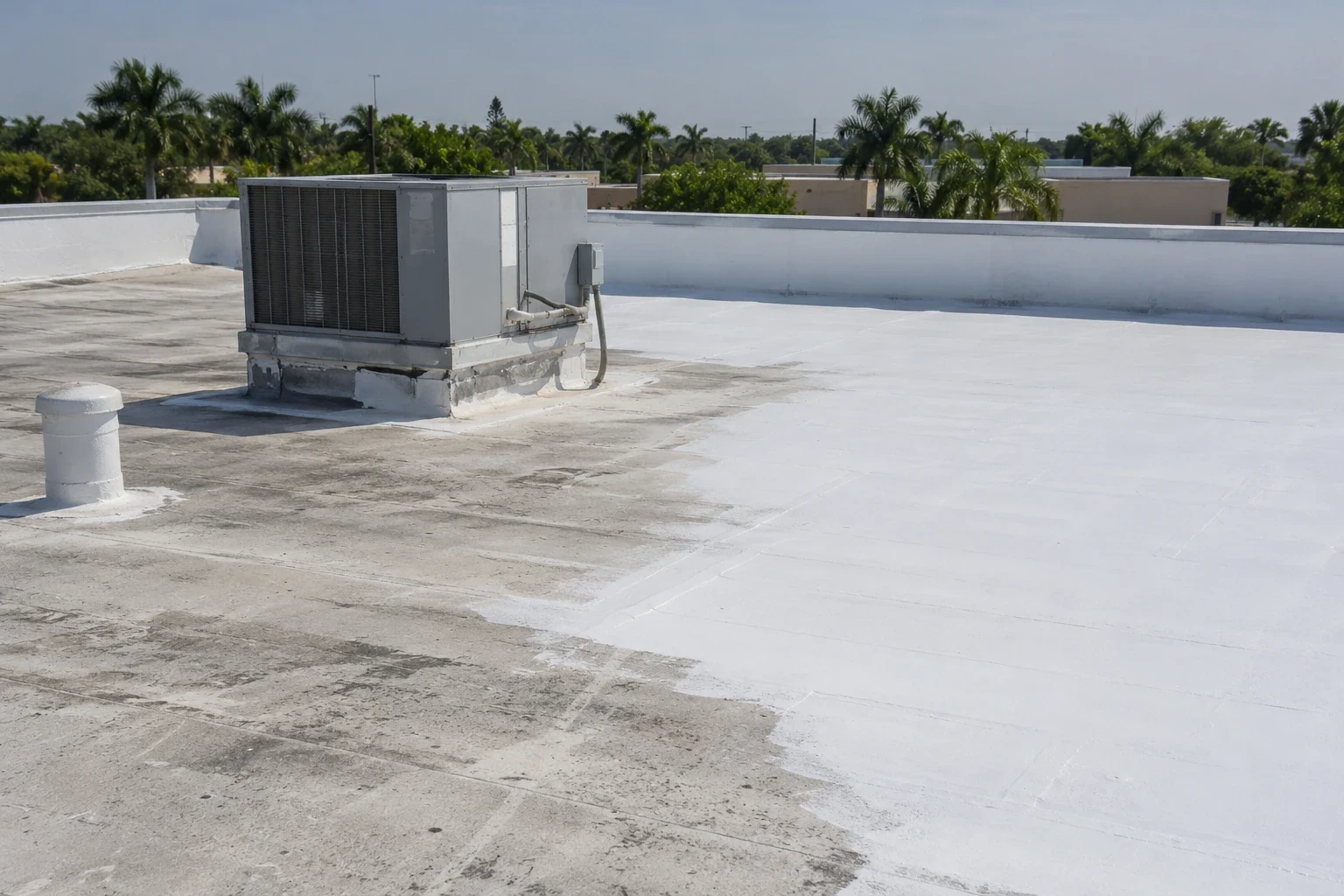
A localized repair can address a confirmed opening when adjacent material remains sound. Restoration may be considered when the existing assembly is suitable, dry, and capable of accepting a compatible coating. Replacement becomes more relevant when deterioration is widespread, attachment has failed, or the substrate cannot support a durable tie-in. We explain the evidence for each option and state any assumption that a test opening could change.
Cost and timing depend on roof area, access, repairs needed before coating, substrate moisture, system compatibility, and operating constraints. A coating scope may require cleaning, surface preparation, repairs, primer, and a final application. It is not simply a finish layer. We record the specified coverage, dry-film checks when required, and areas excluded from application. Those details make a future inspection comparable to the completed work. A coating restoration plan describes preparation and inspection hold points. A replacement scope lists removal, protection, and tie-in work when restoration is not supported by the condition.
The Florida Tech Research Park was planned with aviation training, applied research, and a joint-use research compound near the Melbourne airport. The Crossings at Babcock is marketed for ground-lease and build-to-suit retail. Those local uses represent different operating patterns, not roof conditions. We confirm the actual work hours, access contact, interior sensitivity, and equipment routes before staging the repair. A tenant schedule can shape when a roof is inspected and when odors or noise are acceptable.
For a building near the Florida Tech Research Park, roof access and nearby operations belong in the job record. At The Crossings at Babcock, retail occupancy and delivery routes may matter. We document any area not reached and any temporary protection. If a storm also caused damage, the hurricane event review remains separate from gradual heat and UV observations.
Before restoration, we photograph representative surface areas, seams, penetrations, and repair details. The record identifies the date, roof zone, test areas, moisture findings, and areas excluded from the scope. After work, the closeout documents preparation, materials, application or repair limits, and any inspection checks required. This baseline supports future maintenance without treating one heat-related observation as a conclusion about every roof surface.
Melbourne climate normals provide nearby regional context, while the property record shows the actual condition at the roof. The distinction remains useful if the owner later compares a new stain or surface change. We can add dated notes to a roof condition report and identify any follow-up area. If the roof has a puncture from maintenance traffic, it receives its own puncture repair record, with separate cause evidence and materials.
Learn more →
Learn more →
Learn more →
Learn more →
Learn more →
Learn more →
Learn more →
Learn more →